

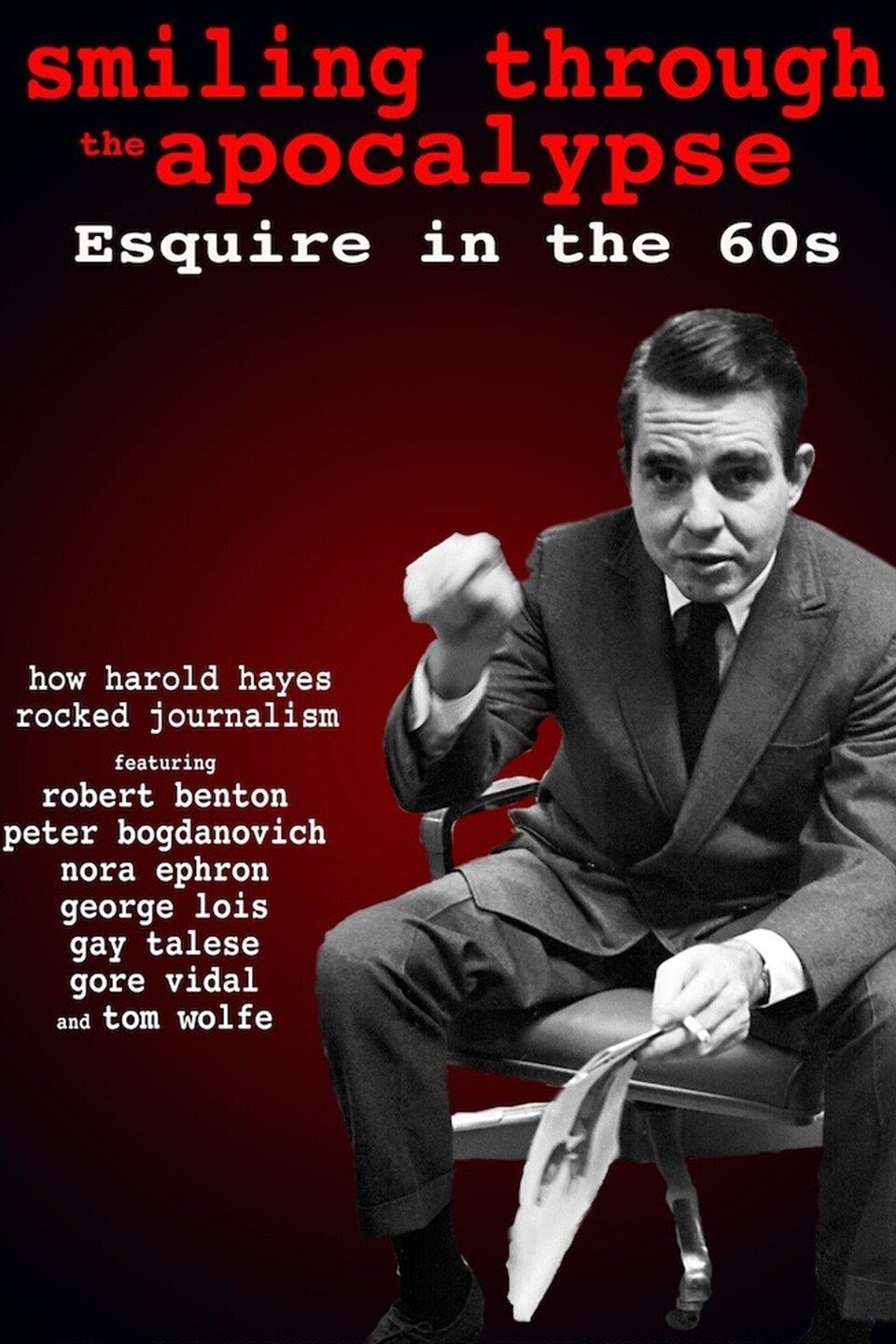
Smiling Through the Apocalypse: Esquire in the 60s
Documentary
Overview
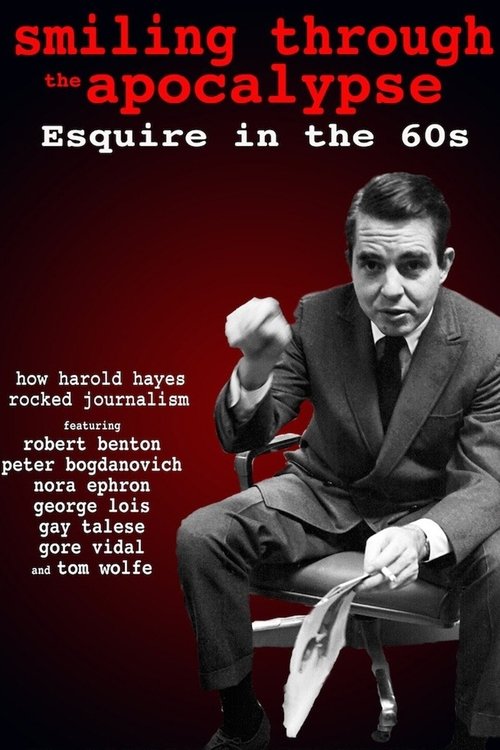
'Smiling Through the Apocalypse' chronicles a man whose editorial instincts produced one of the greatest magazines ever: Harold Hayes, the swinging editor and cultural provocateur of the iconic Esquire Magazine of the Sixties. Through the narrative of his son Tom, a journey ensues opening unprecedented access to some of the Esquire magazine's most compelling talents, from Nora Ephron to George Lois, and Tom Wolfe to Gore Vidal. The film is a story of risk, triumph, and challenge told by the people that helped make the magazine great, and a son who only come to understand his father's editorial greatness 23 years after his passing.




No cast information.
Similar Movies
A roller-coaster ride through the history of American exploitation films, ranging from Roger Corman's sci-fi and horror monster movies, 1960s beach movies, H.G. Lewis' gore-fests, William Castle's schlocky theatrical gimmicks, to 1970s blaxploitation, pre-"Deep Throat" sex tease films, Russ Meyer's bosom-heavy masterpieces, etc, etc. Over 25 interviews of the greatest purveyors of weird films of all kind from 1940 to 1975. Illustrated with dozens of films clips, trailers, extra footage, etc. This documentary as a shorter companion piece focusing on exploitation king David F. Friedman.
A documentary about the life of former U.S. Secret Service agent, Clint Hill, who served under five United States presidents from Eisenhower to Ford and is known for his act of bravery on November 22, 1963 — shielding Jacqueline Kennedy and the stricken president with his body as the car raced from Dealey Plaza to Parkland Memorial Hospital.
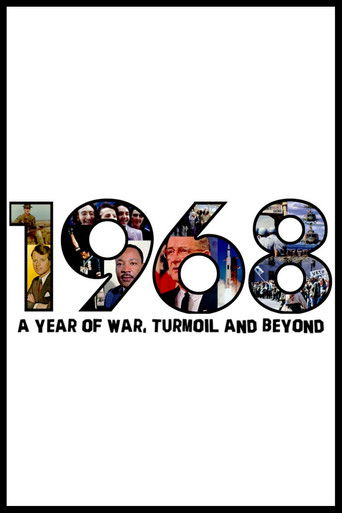
The Tet Offensive during the Vietnam War, the Civil Rights Movement, the May events in France, the assassinations of Martin Luther King and Robert F. Kennedy, the Prague Spring, the Chicago riots, the Mexico Summer Olympics, the presidential election of Richard Nixon, the Apollo 8 space mission, the hippies and the Yippies, Bullitt and the living dead. Once upon a time the year 1968.

The bleached palette and home-movie aesthetics of Super 8 footage provide the image track for this testimonial about an illegal abortion in Mexico City in the 1960s, delivered in voiceover by the filmmaker’s mother. In its account of this intimate and disorienting memory, Lesser Choices summons a time of profound uncertainty—a moment from an era without rights—and offers a warning to the present.
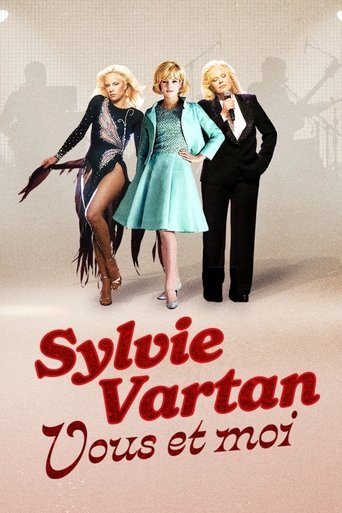
Sylvie Vartan has had an extraordinary life: a Bulgarian child forced into exile, who became the icon of a youth in the midst of revolution in France. After a career spanning 64 years, with nearly 50 albums recorded and 40 million records sold, she has decided to bow out. During her farewell tour, the singer chose to open up to Augustin Trapenard.
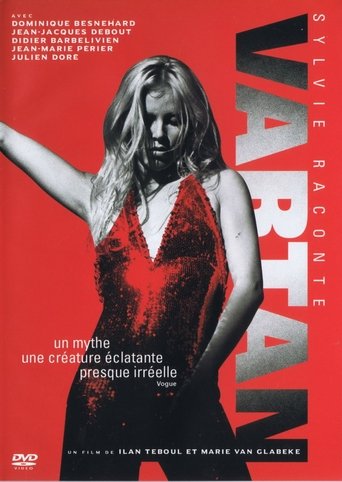
Fifty years after her first recording in Nashville, Sylvie Vartan decided to record the album she sings on to mark this anniversary there. In one of the songs, she says: I have forged my own path, without turning back. Leaving my mistakes behind me. I ventured into unknown territory, avoiding pitfalls, and I came back. It is on this "road," both public and personal, starting from her native Bulgaria to Paris, passing through a thousand places around the world, traversing fashions and overcoming the trials of an extraordinary life, that this film sets out to illuminate the trajectory of a shy young girl who became an international icon and a resolutely free woman.
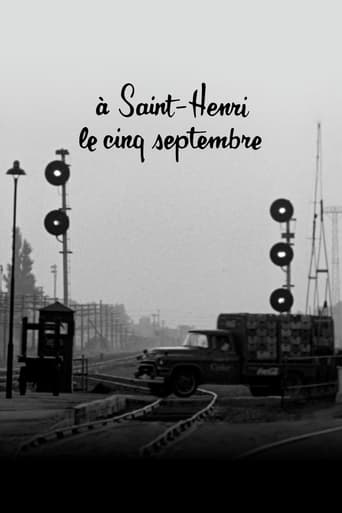
This short film is a series of vignettes of life in Saint-Henri, a Montreal working-class district, on the first day of school. From dawn to midnight, we take in the neighbourhood’s pulse: a mother fussing over children, a father's enforced idleness, teenage boys clowning, young lovers dallying - the unposed quality of daily life.