

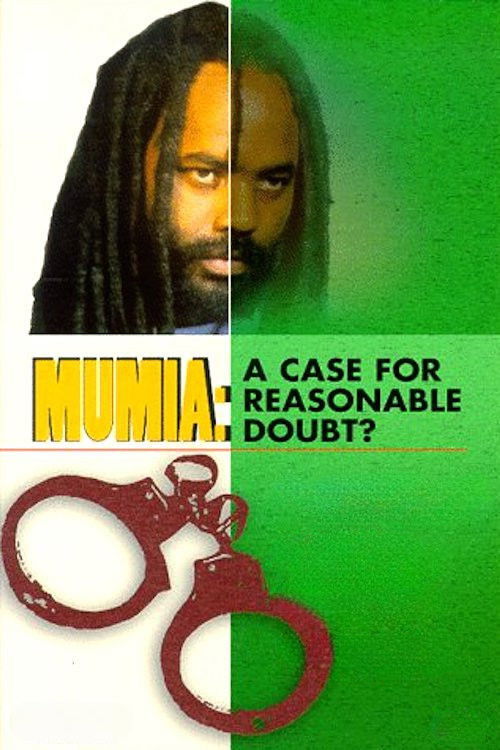
Mumia Abu-Jamal: A Case for Reasonable Doubt?
Documentary
Overview
Documentary covering the case of Mumia Abu-Jamal, a black nationalist and journalist in Philadelphia, Pennsylvania, convicted of killing a Philadelphia police officer and sentenced to death in a trial marked by controversial prosecutorial and defense tactics and charges of racism.


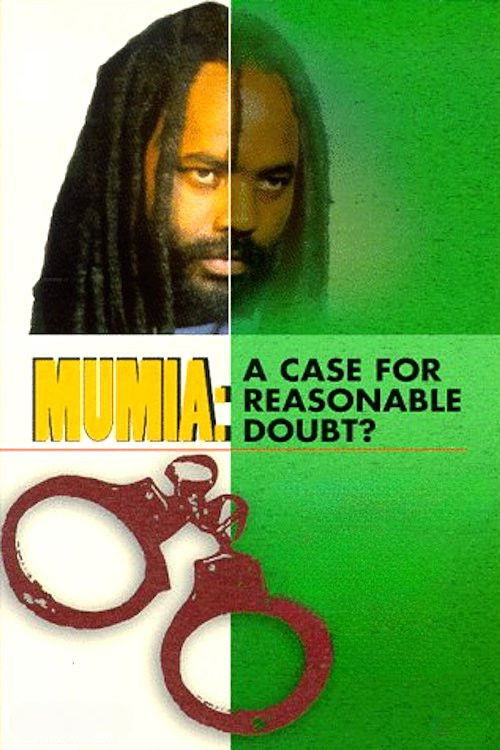
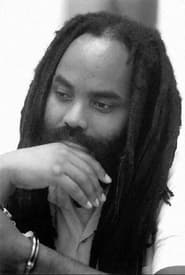
Mumia Abu-Jamal
Mumia Abu-Jamal
Himself
Mumia Abu-Jamal
Himself
Alfred Sabo
Alfred Sabo
Himself (as Judge Alfred Sabo)
Alfred Sabo
Himself (as Judge Alfred Sabo)
Veronica Jones
Veronica Jones
Self
Veronica Jones
Self
Marlene Sanders
Marlene Sanders
Narrator (voice)
Marlene Sanders
Narrator (voice)
Dr. Antony Coletta
Dr. Antony Coletta
Self / Jefferson Hospital Doctor
Dr. Antony Coletta
Self / Jefferson Hospital Doctor
Lydia Wallace
Lydia Wallace
Self / Jamal's Sister
Lydia Wallace
Self / Jamal's Sister
Similar Movies
In 1967 Canadian filmmaker Hugh O'Connor came with a crew to eastern Kentucky to make a film showing people from all walks of life in the United States. They finished the day by filming coal miners and their families in rental houses. As the filmmakers were leaving, Hobart Ison, the owner of the property, drove up and fired three shots, killing Hugh O'Connor. Elizabeth Barrett, from Kentucky herself, explores why this happened by trying to understand the people and culture of eastern Kentucky.

6 February 1998, Port Arthur, Texas: Erin is home alone. She is about to watch a film when a masked man suddenly appears in the living room. She thinks it’s a friend joking around. 12 June 2013, Huntsville, Texas: In Huntsville State Penitentiary, preparations are underway for execution #499. A little after 6pm, Elroy Chester will be executed by lethal injection for the rape of Erin and Claire DeLeon and the murder of their uncle, fireman Billy Ryman. Killing Time reconstructs an old murder, and shows the impact on the family members and victims during the day of execution. The family of the victims and the prisoner, the guards in the towers, the pastors, the journalists, the handful of demonstrators: everyone has his own way of killing the last few hours of Elroy Chester’s life. Where one yearns for the long-anticipated closure of the case, the other faces oblivion
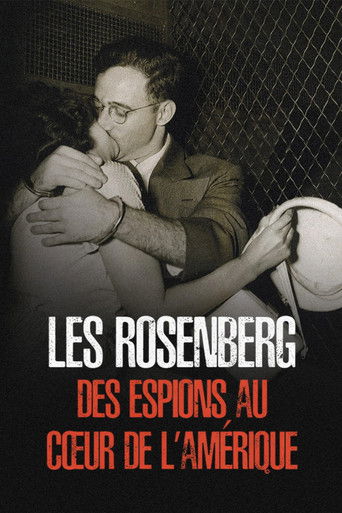
Based on testimony by Ethel’s brother, David Greenglass, the Rosenbergs are arrested by the FBI. The couple is accused of passing secret information about the atomic bomb to the USSR. Though the Rosenbergs maintain their innocence from the start, the media and public opinion seem to have condemned them from day one. The trial does nothing to change this and ends in a death sentence. On Friday June 19, 1953, Julius and Ethel Rosenberg are executed in the electric chair. Julius first, then Ethel. 30 years later, the truth finally comes out. Declassified FBI archives reveal that Ethel was not guilty of being a spy; she was merely married to one. Julius did indeed commit espionage for the Soviet Union, though primarily as a recruiter, nothing at all like the fictional James Bond. This documentary, made entirely of archival footage and animated illustrations, offers a tale of espionage as well as a complex family tragedy.
There are about 600 murders each year in the UK. So, what drives people to kill? Are some people born to kill or are they driven to it by circumstances? Michael Mosley delves into the BBC archives to chart scientists' progress as they probed the mind of the murderer to try to understand why people kill, and to find out whether by understanding murder we can prevent it.
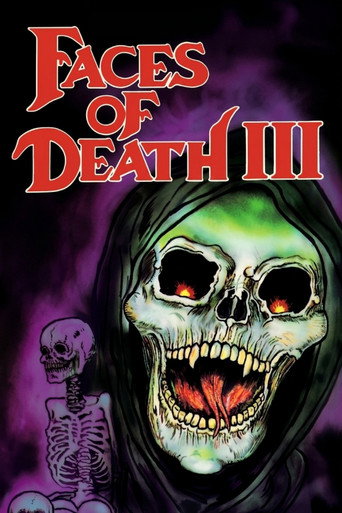
Gory real-life footage of blood and guts on the German Autobahn, drug smugglers getting blown away, a parachutist landing in a crocodile pit, torture and murder in El Salvador, a PCP addict getting stoned, a videotaped rape/murder, a car thief getting ripped apart by two junkyard dogs, and much more.

Taking its lead from French artists like Renoir and Monet, the American impressionist movement followed its own path which over a forty-year period reveals as much about America as a nation as it does about its art as a creative power-house. It’s a story closely tied to a love of gardens and a desire to preserve nature in a rapidly urbanizing nation. Travelling to studios, gardens and iconic locations throughout the United States, UK and France, this mesmerising film is a feast for the eyes. The Artist’s Garden: American Impressionism features the sell-out exhibition The Artist’s Garden: American Impressionism and the Garden Movement, 1887–1920 that began at the Pennsylvania Academy of the Fine Arts and ended at the Florence Griswold Museum, Old Lyme, Connecticut.
Documentary about the first human to donate his body to science so that it could be studied in the form of a 3D database of the entire anatomy that is available to view online. Convicted killer Joseph Paul Jernigan donated his body to science shortly before he was executed in 1993 and this documentary examines what took place after his death by lethal injection.
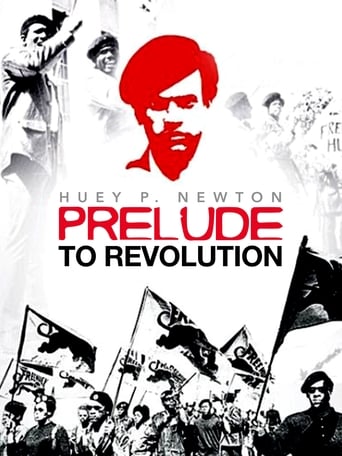
Hear the inside story of Huey Newton and the Black Panthers with this documentary that examines their efforts to promote the rights of African Americans as well as the organization's violent tactics, including the killing of a police officer. The film features a rare jailhouse interview with Newton discussing the role of revolution and civil disobedience, plus footage of several Panthers' bullet-riddled homes following police raids.