

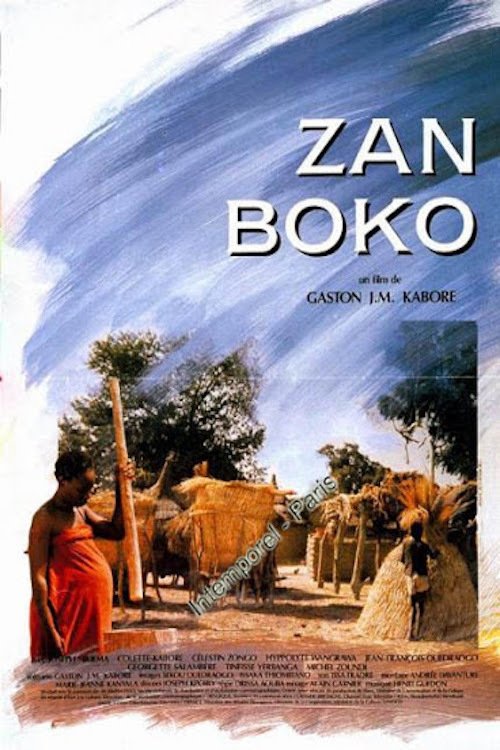
Zan Boko
Drama
Overview
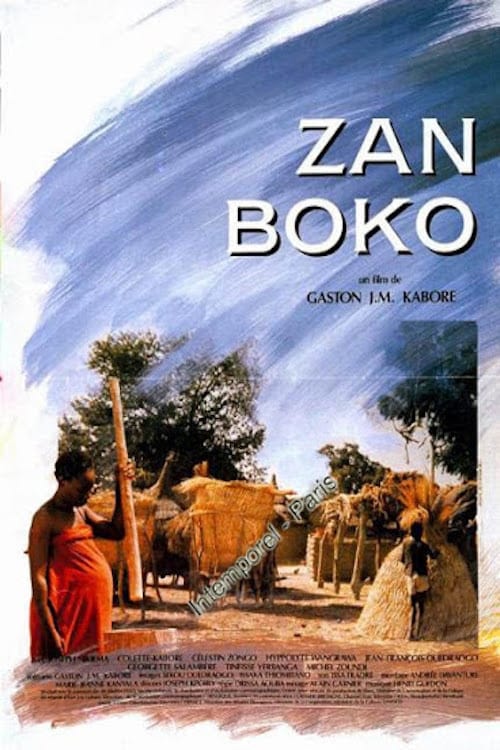
In the Mossi culture, one of the rites attending the birth of a child and its induction as a new member of the community involves the burial of the placenta. The space in which the placenta is buried is called 'Zan Boko' - a phrase which connotes the religious, cultural and affective relations that bind the child to the land and that embraces the notions of 'rootedness' and 'belonging'. Kaboré tells the story of Tinga, who resists the encroaching urbanization of his native territory. The specific rhythms and vision of the rural community, including its values, social relationship, and individual & collective destinies, are altered when a city is planted on the edge of an ancient native village.
Top Cast



Joseph Nikiema
Joseph Nikiema
Tinga
Joseph Nikiema
Tinga
Gady Pafadnam
Gady Pafadnam
Tiraogo
Gady Pafadnam
Tiraogo
Simone Tapsoba
Simone Tapsoba
Tiraogo's wife
Simone Tapsoba
Tiraogo's wife
Colette Kaboré
Colette Kaboré
Nopoko
Colette Kaboré
Nopoko
Hippolyte Wangrawa
Hippolyte Wangrawa
Gardener
Hippolyte Wangrawa
Gardener
Mathias Bayili
Mathias Bayili
Mathias Bayili
Similar Movies
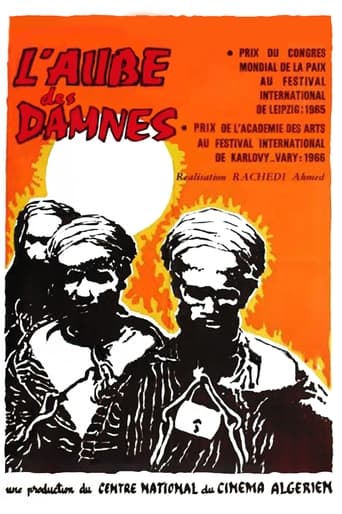
This excellent feature-length documentary - the story of the imperialist colonization of Africa - is a film about death. Its most shocking sequences derive from the captured French film archives in Algeria containing - unbelievably - masses of French-shot documentary footage of their tortures, massacres and executions of Algerians. The real death of children, passers-by, resistance fighters, one after the other, becomes unbearable. Rather than be blatant propaganda, the film convinces entirely by its visual evidence, constituting an object lesson for revolutionary cinema.
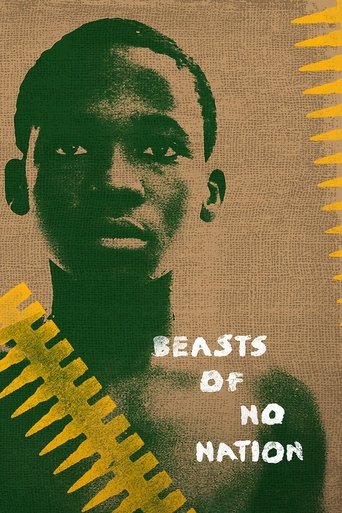
Based on the experiences of Agu, a child fighting in the civil war of a West African country. Follows Agu's journey as he's forced to join a group of soldiers. While he fears his commander and many of the men around him, his fledgling childhood has been brutally shattered by the war raging through his country, and he is at first torn between conflicting revulsion and fascination.
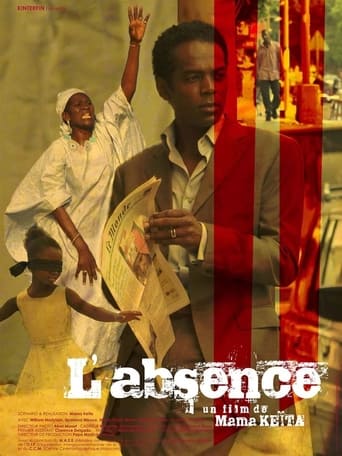
After brilliant studies in France and a 15-year absence from his homeland, Adama, a young graduate of the Ecole Polytechnique, rushes back to Senegal. He is alarmed by a message informing him of the sudden decline in his grandmother's health. Upon arriving in Dakar, Adama discovers that his grandmother is in perfect shape... Was this a deliberate ploy to get him back home, and if so, why?
PK, an English orphan terrorized for his family's political beliefs in Africa, turns to his only friend, a kindly world-wise prisoner, Geel Piet. Geel teaches him how to box with the motto “fight with your fists and lead with your heart”. As he grows to manhood, PK uses these words to take on the system and the injustices he sees around him - and finds that one person really can make a difference.

Two boys with different experiences and goals meet up in a sprawling African market. One is looking for a job, to get back what was stolen from him and return home. The other will do anything to avoid having to go back with his family. They become friends and together they reinvent the world.
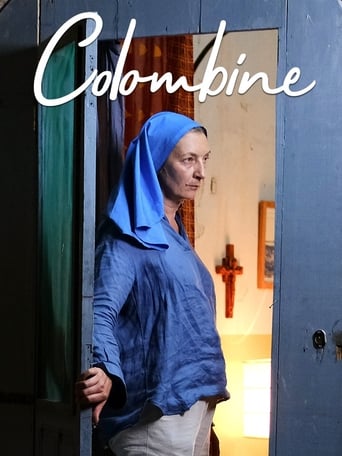
In West Africa, Colombine runs a dispensary in risky bushland. A strong-willed, whiskey-drinking religious woman armed with her rifle, she takes care of sick and orphaned children in the region. She sees Mélia arrive, a somewhat imprisoned Parisian MSF doctor, herself an African orphan, but who has never returned to her homeland since childhood. She discovers bush medicine, its difficulties and the dilemmas that caregivers must face in the face of chronic shortages of equipment and medicines. These two courageous but opposite women form an unlikely team. They will have to learn to overcome their barriers and confess their secrets to protect the dispensary and the children from the dangers of the region and a threat that surpasses them.

Ali is the image of modern Africa. He happily returns from a football match on his motorbike but a nasty surprise is waiting for him at his parents' home: he finds Haoua, his bride-to-be, waiting for him. The wedding is celebrated shortly afterwards and the two begin living together under the same roof. They are strangers but cannot stand each other. Haoua is the classic traditional woman who has just arrived from the village, God-fearing and faithful to the laws of tradition. Ali's friends advise him to look for a second wife. He meets Henriette, an uninhibited and provocative city girl, the woman of his dreams. To meet Henriette's constant requests, Ali 'borrows' some money from the coffers of commander Soleymane, but he is discovered and ends up in prison. Henriette is furious and leaves him, whilst Haoua cries for him in despair.
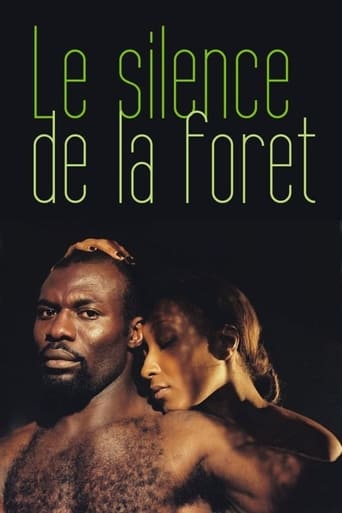
A film about the difficulty for even the most well-intentioned person to know and respect another culture. In this case, the problem is so acute that there is even heated debate over what to call that 'other.' The subtitles in the film use the familiar word 'pygmies,' a relatively pejorative European term; the Bantu or villagers' expression for the same group, Babingas, carries similar negative connotations. These highly specialized, tropical rainforest hunter-gatherers should perhaps be called by their own ethnonym, Aka, MoAka (sing.) and BaAka (pl.)