

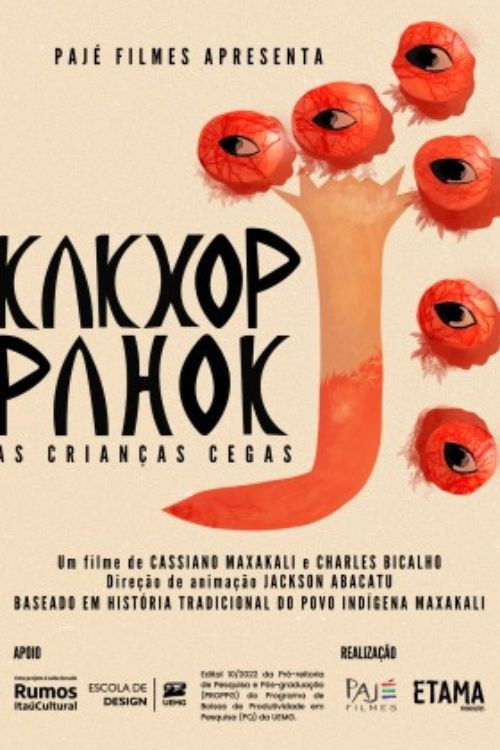
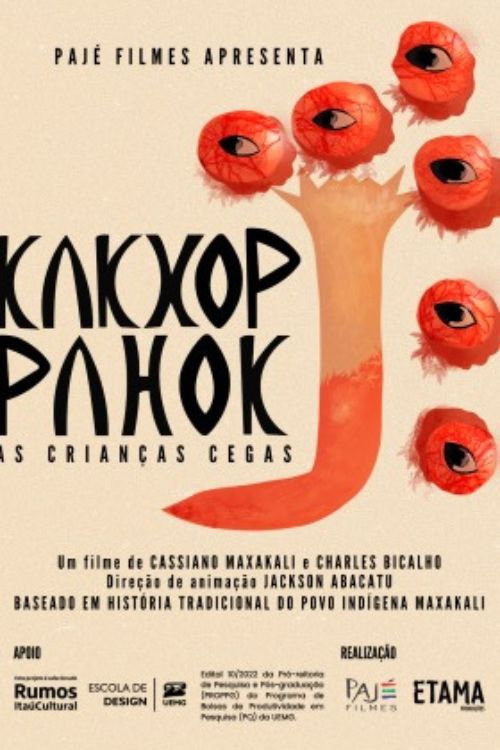
Kakxop Pahok: As Crianças Cegas
Animation
Overview
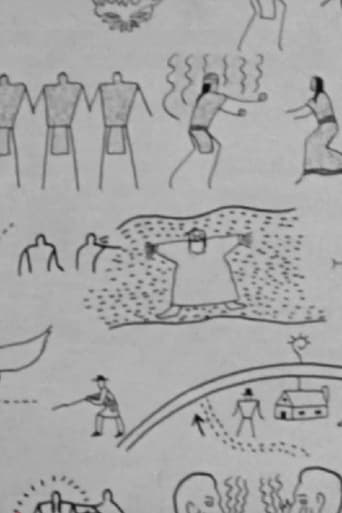
The men of the village went hunting. A long time passed… and they did not return. The women of the village exchanged their children among themselves, so as not to be without husbands, and began to live a new life. However, one day the men returned… Spoken in their language and illustrated by the Maxakali people of Minas Gerais, Kakxop pahok is based on a traditional story of the Maxakali people (Tikmû´ûn). It forms the Hãmnõgnõy Trilogy of indigenous animations with Konãgxeka: the Maxakali flood (2016) and Mãtãnãg, the enchanted one (2019).
Top Cast







Agnaldo Maxakali
Agnaldo Maxakali
Agnaldo Maxakali
Alexandre Maxakali
Alexandre Maxakali
Alexandre Maxakali
Decilda Maxakali
Decilda Maxakali
Decilda Maxakali
Dimas Maxakali
Dimas Maxakali
Dimas Maxakali
Ilton Maxakal
Ilton Maxakal
Ilton Maxakal
Isael Maxakali
Isael Maxakali
Isael Maxakali
Jurema Maxakali
Jurema Maxakali
Jurema Maxakali
Oscar Maxakali
Oscar Maxakali
Oscar Maxakali
Rolando Maxakali
Rolando Maxakali
Rolando Maxakali
Sueli Maxakali
Sueli Maxakali
Sueli Maxakali
Similar Movies

Organza, a broke artist living in deep space, must travel across the galaxy to seek revenge on her ex in order to cure her mysterious illness. As she meets strange creatures such as museum curators and cyborg pop stars, she learns that perhaps vulnerability is more important than revenge, after all.
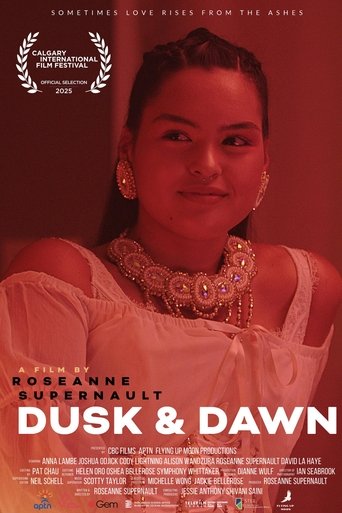
We follow Dusk & Dawn, two exes who rekindle their love on the night of their high school graduation. As they navigate the night with their friends, they get pulled into a love triangle that leaves Dawn desperate to decide: stay home and give this another shot, or move away for good and start university.

Four independent stories based on writer Francisco Rojas Gonzáles's work, depicting the reality of Mexican indian people: Las Vacas (The Cow), Nuestra Señora (Our Lady), El Tuerto (One-Eyed) and La Potranca (The Filly). In El Tuerto, a one eyed boy is relentlessly bullied by his mates. His religious mother asks God to make the boy's eyes equal. The outcome is tragic.

Elizabeth Meza Calfunao, a Mapuche teacher, introduces us to 8 teaching-learning strategies for connecting human beings with nature. Through a dialogue in the territory of Loncoche, Wallmapu, we gain an in-depth understanding of how the Mapuche people relate to their environment, especially to water.