


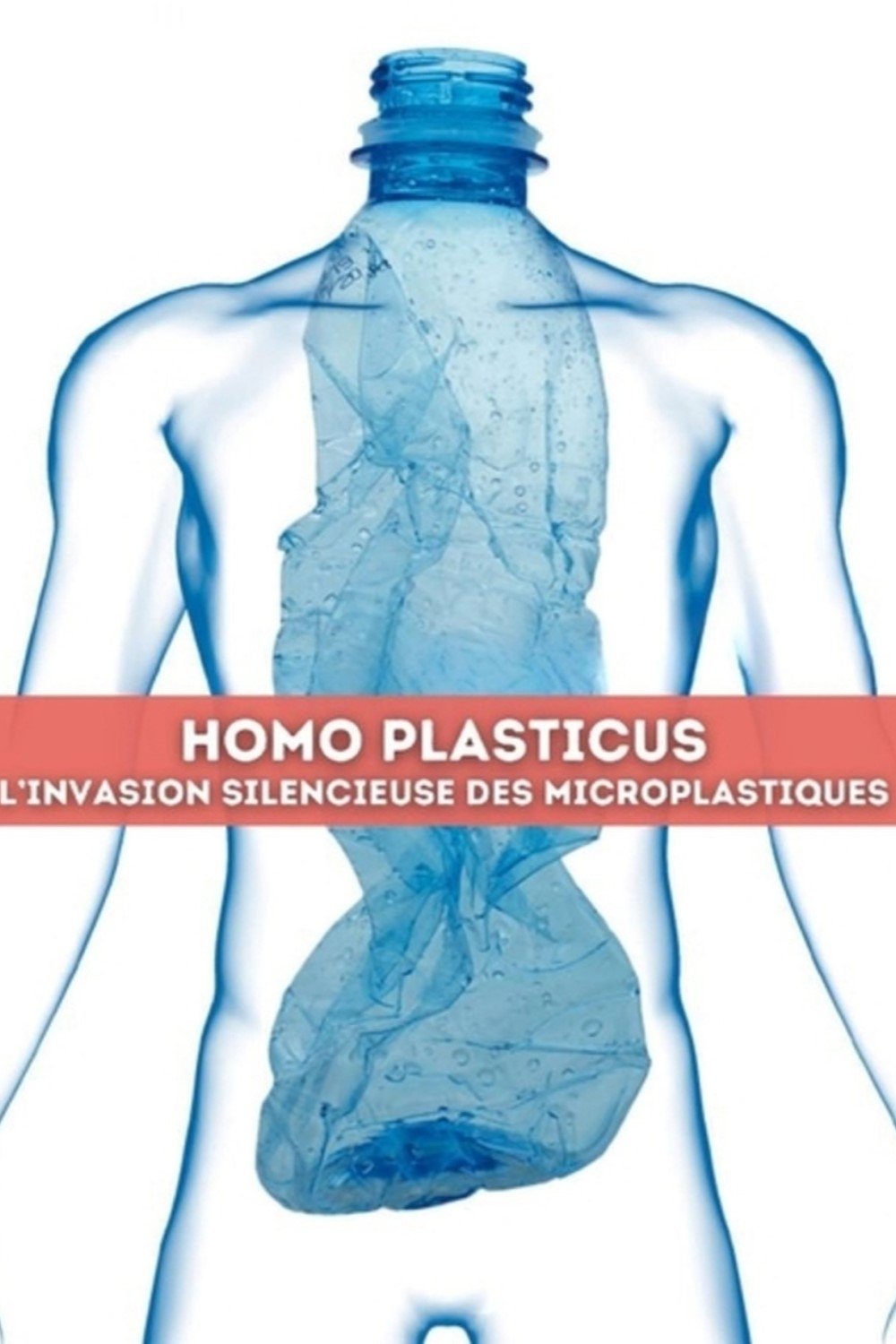
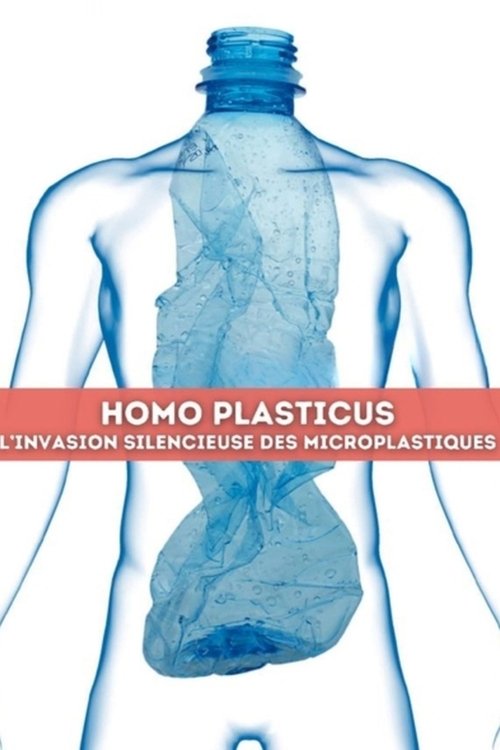
Homo Plasticus, l'invasion silencieuse des microplastiques
Documentary
Overview
Every day, we eat and breathe tiny plastic residues. What effects does this insidious contamination have on our bodies? Rigorous and lucid, this scientific investigation gathers the most recent discoveries and sounds the alarm.
Top Cast
Alexandre Dima
Narrator (voice over)
Fabrizio Rosselli
Self : Comedian

Sodadeth San
Self : Comedian
Merlin Farrugia
Self : Child comedian
Alba Hernandez
Self : Scientist
Antonio Ragusa
Self : Scientist
Carlos Baeza
Self : Scientist
Elora Fournier
Self : Scientist
Fabienne Lagarde
Self : Scientist
Margherita Ferrante
Self : Scientist
Nelly Saenen
Self : Scientist
Philipp Schwabi
Self : Scientist






Alexandre Dima
Alexandre Dima
Narrator (voice over)
Alexandre Dima
Narrator (voice over)
Fabrizio Rosselli
Fabrizio Rosselli
Self : Comedian
Fabrizio Rosselli
Self : Comedian
Sodadeth San
Sodadeth San
Self : Comedian
Sodadeth San
Self : Comedian
Merlin Farrugia
Merlin Farrugia
Self : Child comedian
Merlin Farrugia
Self : Child comedian
Alba Hernandez
Alba Hernandez
Self : Scientist
Alba Hernandez
Self : Scientist
Antonio Ragusa
Antonio Ragusa
Self : Scientist
Antonio Ragusa
Self : Scientist
Carlos Baeza
Carlos Baeza
Self : Scientist
Carlos Baeza
Self : Scientist
Elora Fournier
Elora Fournier
Self : Scientist
Elora Fournier
Self : Scientist
Fabienne Lagarde
Fabienne Lagarde
Self : Scientist
Fabienne Lagarde
Self : Scientist
Margherita Ferrante
Margherita Ferrante
Self : Scientist
Margherita Ferrante
Self : Scientist
Similar Movies
Our most mundane daily lives are full of chemicals. Embedded in plastics, detergents and toasters, nestled in food, cans, toys, shampoos, they are invisible and everywhere at once, including in our bodies. Consumer society and petrochemical magic wander into our little interiors under names that are strictly unknown and perfectly barbaric. Phthalates, brominated flame retardants, parabens, bisphenol-A have the unfortunate disadvantage of burglarizing our hormonal privacy: they are endocrine disruptors. For the renowned scientists who appear in this documentary, this chemical impregnation is not unrelated to the development of so-called modern diseases – from breast cancer to obesity. The observation, rather serious, does not prevent the film from taking the side of the second degree.
The sinking of the RMS Titanic remains one of the most enduring and mysterious tragedies of the 20th century. For decades, investigators and amateurs alike have floated theories for why it occurred and who was to blame for the extraordinary loss of life, but no one answer could fully explain what happened. Until now. To mark the 100th anniversary of the infamous disaster, Smithsonian Channel will premiere Titanic's Final Mystery. The two-hour special investigates a century of theories and uncovers astonishing new forensic evidence that proves the most likely theory for the case.
They are everywhere. At home, in the canteen, in restaurants, processed foods fill our plates. Overcome by obesity, diabetes, heart disease, taste dulled by the easy and artificial flavors of gastronomy, the population no longer has a choice. For fifty years, the agri-food industry has been at our table. And she stuffs herself. Indulgence or complacency with regard to this takeover, the authorities only exercise limited and a posteriori control over this mountain of foodstuffs that are too fatty, too sweet, too salty. Unlike the good recipes of our grandmothers, inspection in the back kitchens of these feeders.
In the summer of 1961, a group of young Italian anthropologists made a clandestine journey through Spain, in order to record popular songs that supported anti-Franco resistance. As a result of their work, they were prosecuted and their recordings were censored. Sixty years later, and guided by Emilio Jona, aged 92, the last living member of that group of travellers, we recover the unpublished recordings and reconstruct the journey, today, across an emotional and political landscape, regaining historical memories through these songs, as relevant today as they were then.
If there is one person Matthew Lancit can’t get out of his mind, it is his uncle Harvey. Dark rings around his eyes, pale, blind, his legs amputated. Like Harvey, the filmmaker also suffers from diabetes. He has the disease under control, but one question is always nagging at him: How much longer? His long-term (self-)observation reliably revolves around fears of infirmity and mutilation. He translates the feared body horror into film, stages himself as a zombie, vampire, a desolate figure. Lancit playfully anticipates his potential decline, serving up a whole arsenal of effects which – as video recordings prove – go back to his youth. It is not for nothing that the “dead” in the title is also reminiscent of “dad.” Because “Play Dead!” also negotiates his own role as a father.
From our window one can see a set of the film The Green Years, directed by Paulo Rocha in 1963. This was our starting point: guided by Rocha's gaze, we look back at the places of that film. The successive geological, urbanistic and social strata of Lisbon, besieged by the pandemic that interrupted the shooting, are drawn out in front of our camera, like a contemporary jazz impro from a score written in 1963.
Photographer and visual artist Sammy Baloji’s fascinating film essay explores the Democratic Republic of Congo’s colonial history and its ecological significance. Drawing on research from the 1930s, the film highlights the Congo Basin’s vital role in consuming carbon dioxide and shaping global environmental balance over a century.