


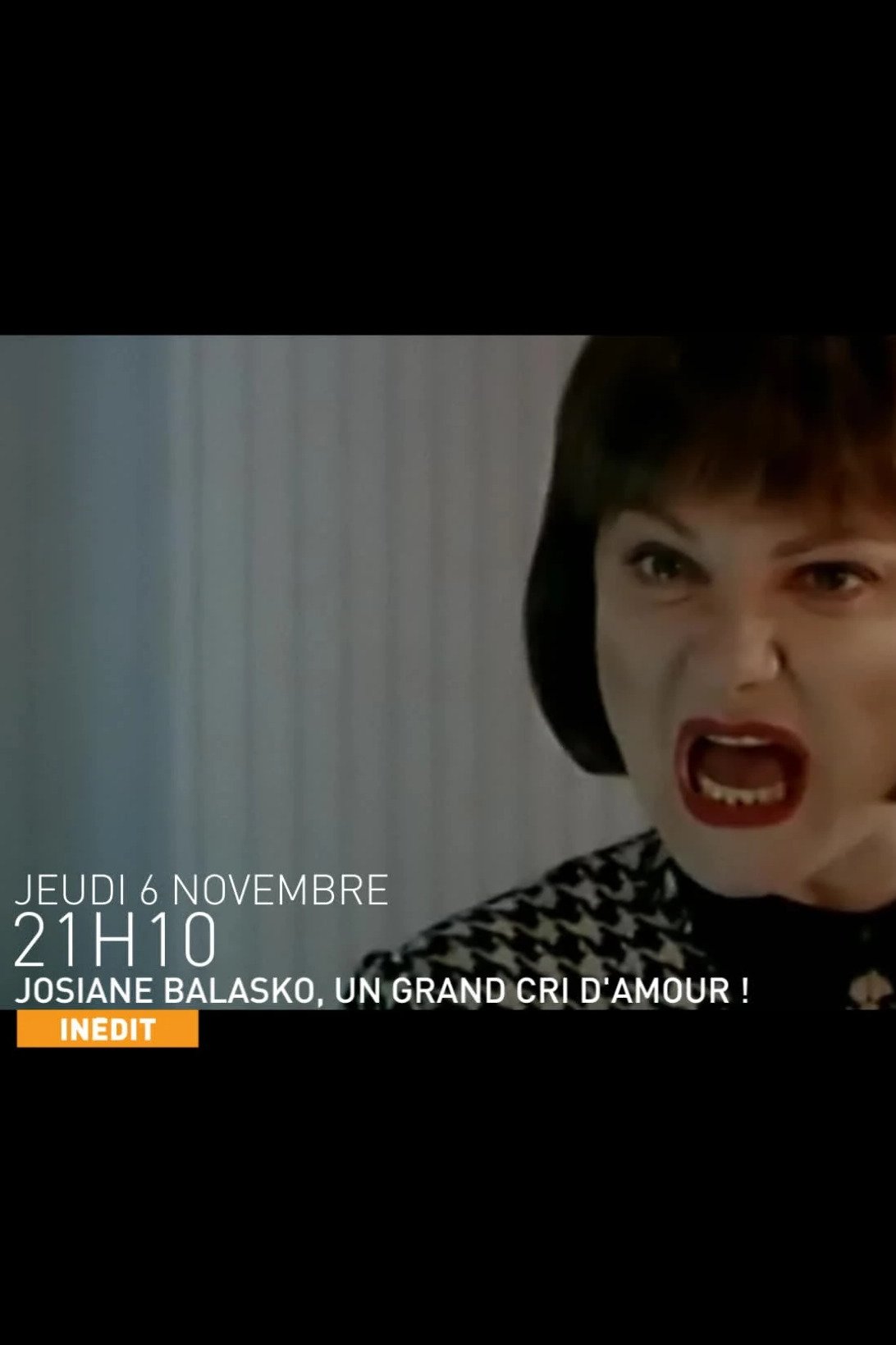
Josiane Balasko, un grand cri d'amour !
Documentary
Overview
This documentary looks back on a career of a woman who, very early on, refused to accept the roles assigned to her. In the 1980s, while others were trying to please, she wrote "Les hommes préfèrent les grosses" (Men Prefer Fat Women), a manifesto ahead of its time, funny, feminist, and blunt. Later, with "Gazon maudit" (Damned Grass), she tackled homosexuality with a freedom that is still shocking today.




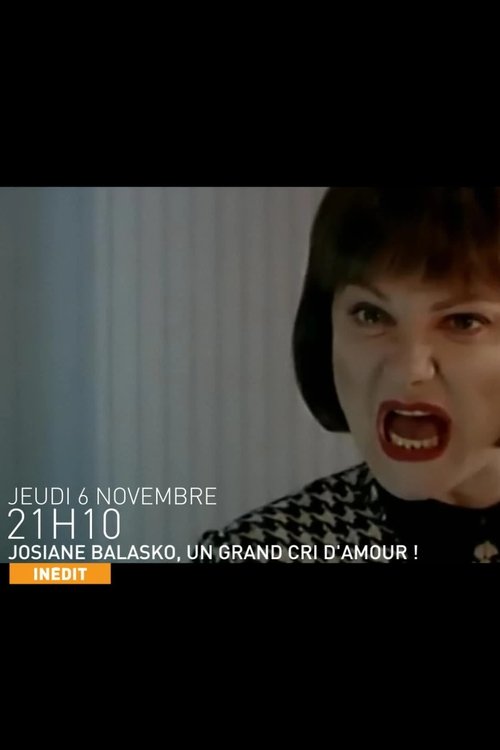

Josiane Balasko
Josiane Balasko
Self
Josiane Balasko
Self
Marie-Anne Chazel
Marie-Anne Chazel
Self
Marie-Anne Chazel
Self

Patrice Leconte
Patrice Leconte
Self
Patrice Leconte
Self

Armelle
Armelle
Self
Armelle
Self

Swann Périssé
Swann Périssé
Self
Swann Périssé
Self
Marianne Sergent
Marianne Sergent
Self
Marianne Sergent
Self
Bernard Nauer
Bernard Nauer
Self
Bernard Nauer
Self

Sotha
Sotha
Self
Sotha
Self
Gilles Botineau
Gilles Botineau
Self
Gilles Botineau
Self
Similar Movies
Homo Cinematographicus is a human species whose unit of measurement and point of reference is the cinema and its derivative, television. Filmed at the 1998 Cannes Film Festival, the film offers an unspecified number of statements, talking about memories and a thousand fragments of stories, titles and film scenes, the warp of a gigantic collective Chanson de geste.
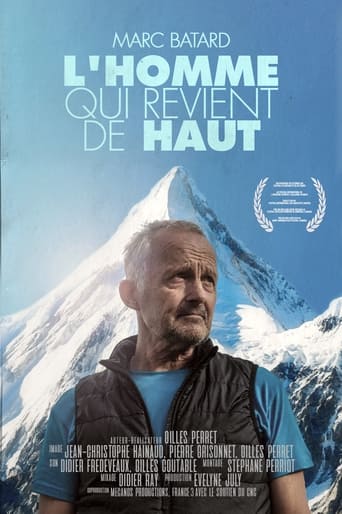
What compels a man to push the limits of what is attainable ever higher? After thirty years of relentless struggle with the highest peaks on earth, Marc Batard has finally found the answers to these questions. He had to reach the summit of Everest twice, once shattering the record for fastest time in 24 hours without oxygen, and climb the most difficult faces of the Alps to glimpse the path to inner healing. It was through physical suffering that he was able to confront the pain of his soul. He was finally able to talk about the violence of his childhood, the shock he carried like a ball and chain for decades. Having completed his summit therapy, Marc Batard tells his story in this documentary by Gilles Perret.
1981: for the first time, contemporary witnesses of the Holocaust speak on German television in the two-part documentary "Witnesses - Testimonies to the Murder of a People" - at prime time on the first channel. Only 36 years after the Second World War, Bremen filmmaker Karl Fruchtmann has created a counter-design to the US drama series "Holocaust". While there are hardly any people left today who can personally recount their experiences of the Holocaust, there were still many contemporary witnesses in the early 1980s for whom the murder of the European Jews was still very present. Karl Fruchtmann interviewed 60 survivors of the Nazi concentration camps in Israel and Poland, the tapes are in the archives of Radio Bremen, almost 80 hours of interviews, a historical legacy! Only a small part of them has been published so far.

The history of the Yakuza Eiga at the TOEI studio is roughly outlined. Real Yakuza and also their connections to the movie business are discussed, and many important actors and directors of the genres are interviewed. Former real yakuza boss turned actor Noboru Ando, Takashi Miike, Sonny Chiba and many more get a chance to speak.
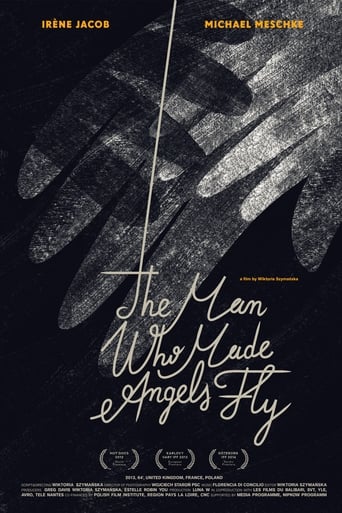
When the lights dim and the stage is revealed, Meschke channels life through the strings of his puppets, triggering the spiritual connection between the creator and his alter-egos: the charismatic Don Quixote, the loving Penelope, the inquisitive Baptiste, or the mysterious Antigone. THE MAN WHO MADE ANGELS FLY is a poetic story about a master of his craft that has inspired audiences to reflect upon common issues of suffering and the mortal coil. Visionary and un-biographic, imaginary tribute to the puppeteer.
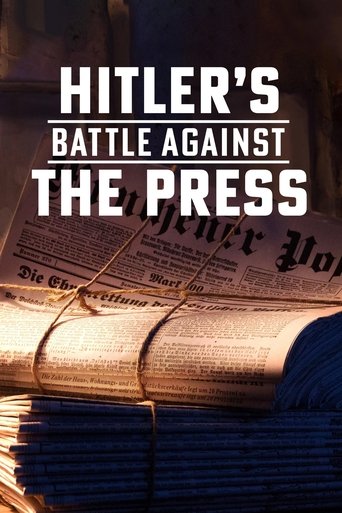
As early as 1920, the journalists of the "Münchener Post" recognized the danger posed by Adolf Hitler. Consistently and boldly they wrote about National Socialism. The brave journalists and their newspaper are almost forgotten today. A single book has been published about them - in Brazil.