

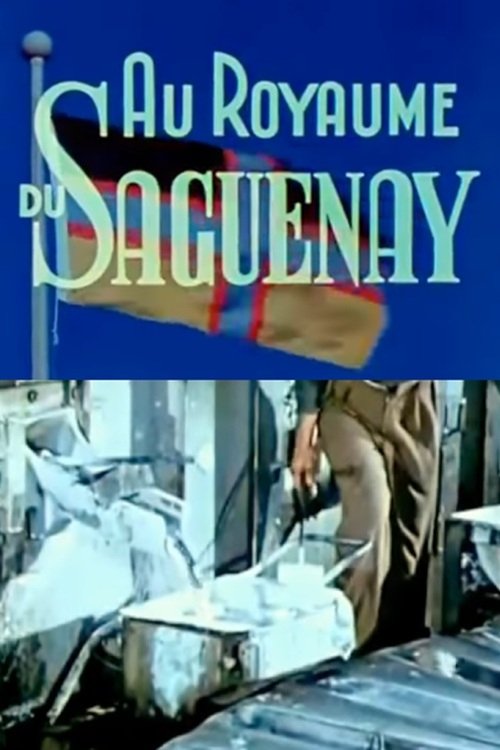
Kingdom of the Saguenay
Documentary
Overview
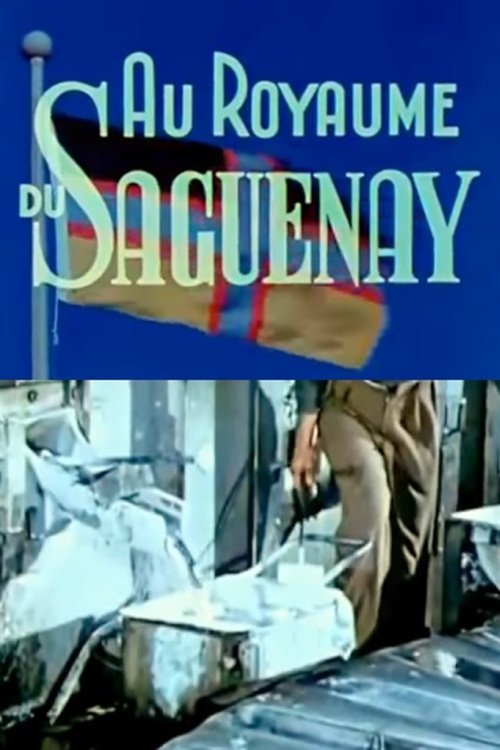
Saguenay and Lac-Saint-Jean: history, economy, tourist attractions, agriculture, wood and paper industry, and especially the gigantic aluminum industry whose products are found in all parts of the world; images of a blueberry field, the Lac Bouchette sanctuary, a religious gathering, a dam, a power plant, the Arvida plant, angling, Cap Éternité, construction canoes, etc.




No cast information.
Similar Movies
Discover the "character" of one of Missouri's oldest tie and lumber operations through this archival black-and-white film that documents one of the last railroad tie drives on the Black River made by the T.J. Moss Tie Company of St. Louis in the 1920s. Thanks to release of the film by the Kerr-McGee Chemical Corporation, the rare footage in "Stamp of Character" takes us through the entire process of making railroad ties, at a time when forests covered almost two-thirds of the state. The original silent motion picture was shown in movie theaters as an advertisement by the T.J. Moss Tie Company. Using digitally edited narration and realistic sound effects, this video makes the past live again.
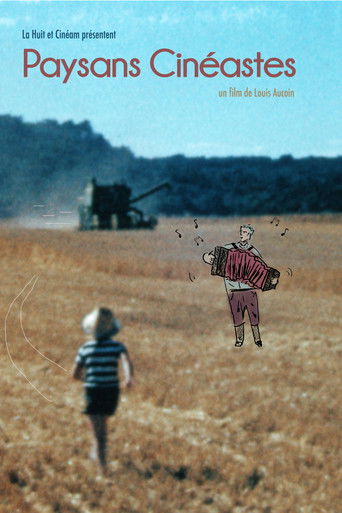
Farmers in the Île-de-France region, they filmed life on the farm, working in the fields, and family and village celebrations on 8 mm or Super 8 film. From the 1950s to the 1980s, these testimonies unfold a history of rural life: we move away from a peasant and family model to industrial agriculture for export. Through these family images, I attempt to answer my own questions about our agricultural future. In the 1950s, the land of Île-de-France fed us.
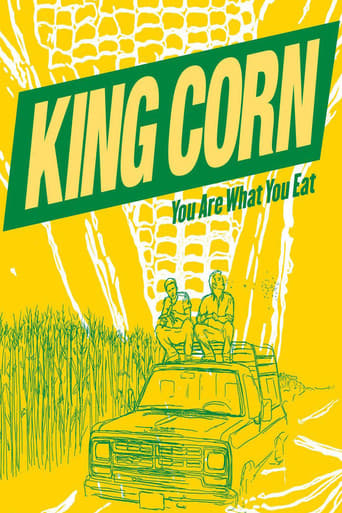
King Corn is a fun and crusading journey into the digestive tract of our fast food nation where one ultra-industrial, pesticide-laden, heavily-subsidized commodity dominates the food pyramid from top to bottom – corn. Fueled by curiosity and a dash of naiveté, two college buddies return to their ancestral home of Greene, Iowa to figure out how a modest kernel conquered America. With the help of some real farmers, oodles of fertilizer and government aide, and some genetically modified seeds, the friends manage to grow one acre of corn. Along the way, they unlock the hilarious absurdities and scary but hidden truths about America’s modern food system in this engrossing and eye-opening documentary.

Railroad of Hope consists of interviews and footage collected over three days by Ning Ying of migrant agricultural workers traveling from Sichuan in China's interior, to the Xinjiang Autonomous Region, China's northwest frontier.[1] Through informal interviews aboard the cramped rail cars, Ning Ying explores the hopes and dreams of the workers, many of whom have never left their homes before.
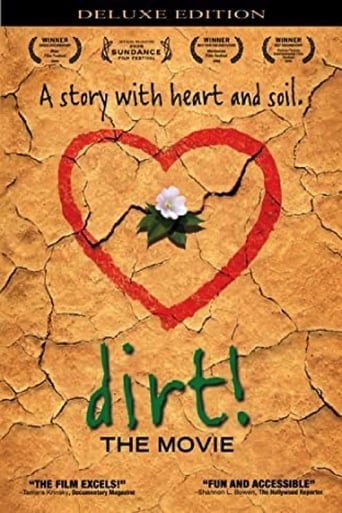
A look at man's relationship with Dirt. Dirt has given us food, shelter, fuel, medicine, ceramics, flowers, cosmetics and color --everything needed for our survival. For most of the last ten thousand years we humans understood our intimate bond with dirt and the rest of nature. We took care of the soils that took care of us. But, over time, we lost that connection. We turned dirt into something "dirty." In doing so, we transform the skin of the earth into a hellish and dangerous landscape for all life on earth. A millennial shift in consciousness about the environment offers a beacon of hope - and practical solutions.
From the Black Earth is a collaboration between Bristol based company Cables and Cameras, and a local farmer Humphrey Lloyd. Employing both lucid speakers and poetic camera work, the film poses stark questions such as; why does food poverty exist in a nation of plenty, and why are people of colour so under represented not only in our countryside and farms, but in the environmental movement more broadly? By giving a platform to people of colour who are connecting with nature and working the land, this short documentary starts to unpick these questions...