


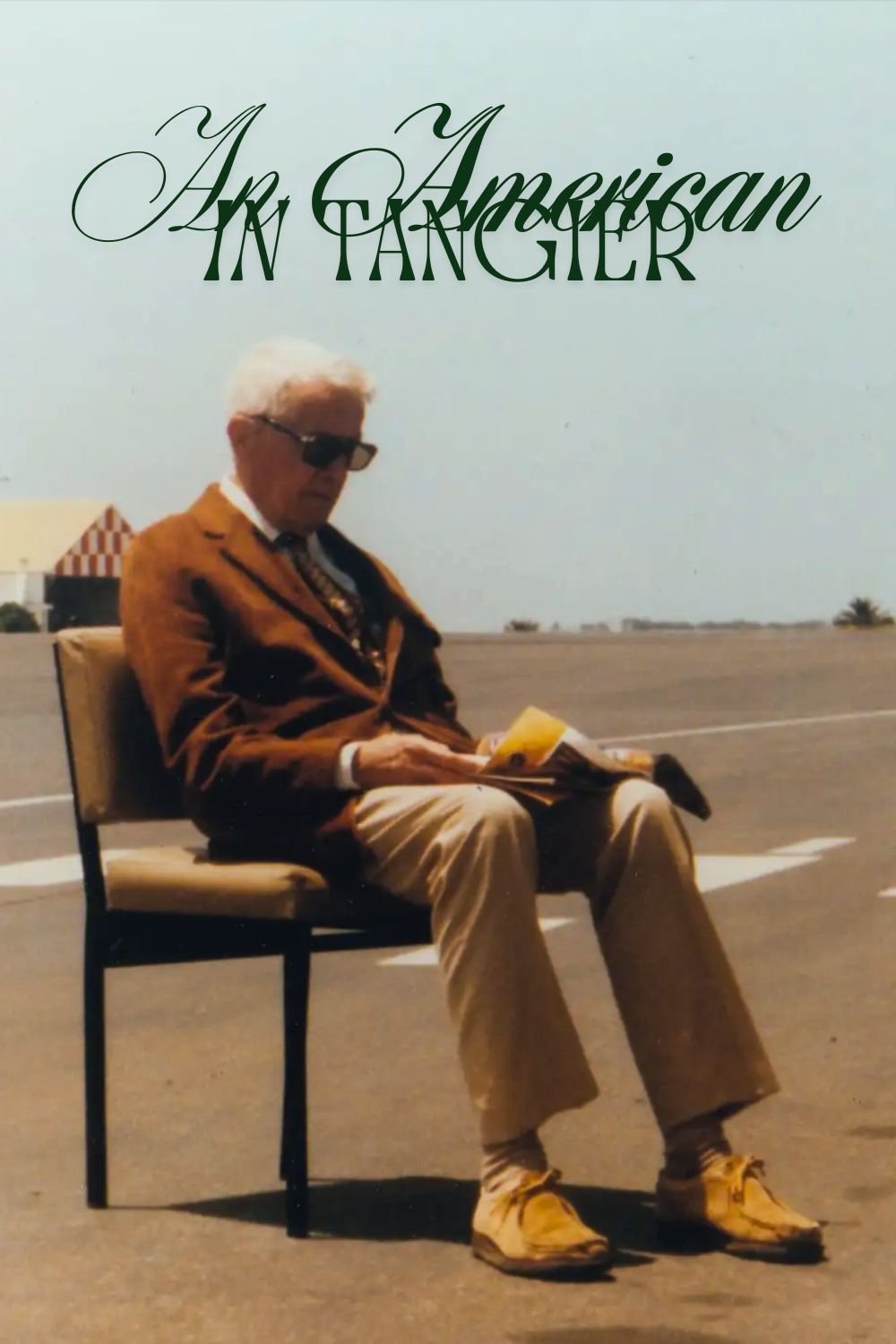
An American in Tangier
Documentary
Overview
Made in the sunset years of Paul Bowles’ life, the film sees the eccentric author and composer reminisce on how he ended up in Morocco.







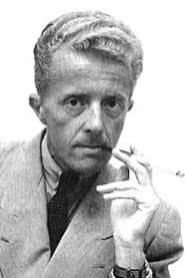
Paul Bowles
Paul Bowles
Self
Paul Bowles
Self
Mohammed Mrabet
Mohammed Mrabet
Self
Mohammed Mrabet
Self
Similar Movies
When the lights dim and the stage is revealed, Meschke channels life through the strings of his puppets, triggering the spiritual connection between the creator and his alter-egos: the charismatic Don Quixote, the loving Penelope, the inquisitive Baptiste, or the mysterious Antigone. THE MAN WHO MADE ANGELS FLY is a poetic story about a master of his craft that has inspired audiences to reflect upon common issues of suffering and the mortal coil. Visionary and un-biographic, imaginary tribute to the puppeteer.
The architectural plans for Berlin from 1938 are used as an example to illustrate the fascist claim to power and its aesthetic effect. The basis for this was the "General Building Inspection" under the direction of Albert Speer, whose enormous projects are illustrated by planning models and archive photographs.
Sylvia Kristel – Paris is a portrait of Sylvia Kristel , best known for her role in the 1970’s erotic cult classic Emmanuelle, as well as a film about the impossibility of memory in relation to biography. Between November 2000 and June 2002 Manon de Boer recorded the stories and memories of Kristel. At each recording session she asked her to speak about a city where Kristel has lived: Paris, Los Angeles, Brussels or Amsterdam; over the two years she spoke on several occasions about the same city. At first glance the collection of stories appears to make up a sort of biography, but over time it shows the impossibility of biography: the impossibility of ‘plotting’ somebody’s life as a coherent narrative.
A day in the city of Berlin, which experienced an industrial boom in the 1920s, and still provides an insight into the living and working conditions at that time. Germany had just recovered a little from the worst consequences of the First World War, the great economic crisis was still a few years away and Hitler was not yet an issue at the time.
With no choice, César faced leaving his family behind, quitting his job and joining the Army. In an unprecedented chain of events he became the first conscientious objector in Galicia (Spain) to be put in prison. Now, nearly thirty years later, Two Years, Four Months, A Day takes a look at what made him do it.
In this intimate portrait addressed directly to Hélène Hazera, filmmaker Judith Abitbol revisits a key figure of France’s countercultures from the late 1960s to the 1990s. A member of the Gazolines and the FHAR (Homosexual Front for Revolutionary Action), Hazera was a tireless LGBTQ activist who founded Act Up’s Trans and AIDS commissions—one of her proudest achievements. Her true victory, however, was becoming the first transgender journalist at a major national newspaper (Libération), and later a producer at Radio France and France TV. Through her story, Abitbol reconnects with the insurrectionary spirit and creative chaos of those decades—an era when French culture was shaken by radical imagination, humor, and defiance. The film celebrates these modern Antigones who dared to live their desires beyond the reach of any law.
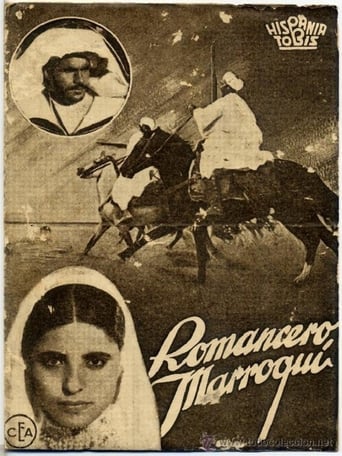
The young farmer Aalami leaves his family to find work elsewhere. He gets to know the country and its people, customs and traditions at Küste in North Africa: Market life in Tetuan, the art of craftsmanship, the life of the Moors, dances and festivities in honour of the caliph, white mosques, the call of the muezzin of the minaret and the music of the shepherd flutes. Aalami also follows Franco's call and flies from Morocco to Spain to fight at Bürgerkrieg. In the end Aalami comes back to his wife and children.