

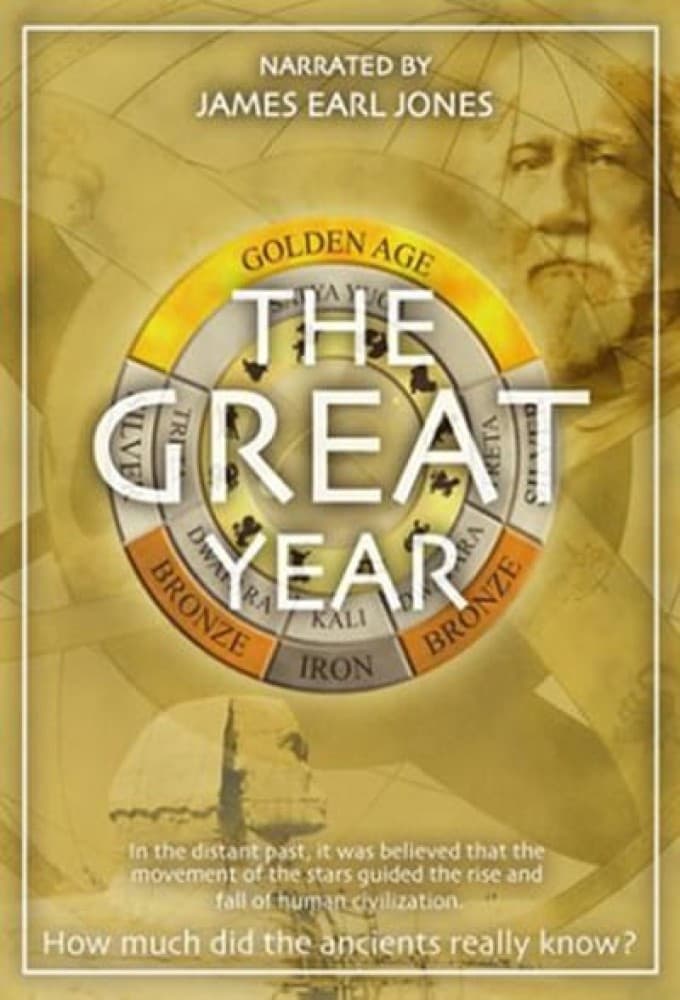
The Great Year
Documentary
Overview
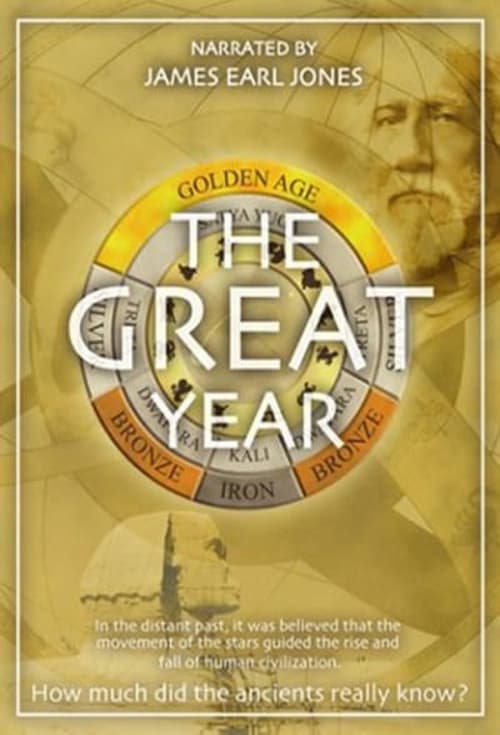
The Great Year is a compelling documentary that explores the possibility that the fall of ancient civilizations around the globe, and the rise of modern civilization, might be related to our Sun’s motion around a companion star. The film examines evidence that ancient civilizations may have known of this celestial cycle and that our Sun may indeed display the characteristics of binary motion. Just as the Earth’s spin on its axis causes day and night and our planet’s annual orbit around the Sun is responsible for the ongoing cycle of the seasons, what if there is some greater celestial cycle, lasting thousands of years, slowly influencing the rise and fall of civilization across the globe? Where is the evidence? What could be the cause?
James Earl Jones
James Earl Jones
Narrator
James Earl Jones
Narrator
Walter Cruttenden
Walter Cruttenden
Himself
Walter Cruttenden
Himself
John Anthony West
John Anthony West
Himself
John Anthony West
Himself
Uwe Homann
Uwe Homann
Himself
Uwe Homann
Himself
Werner Däppen
Werner Däppen
Himself
Werner Däppen
Himself
Brother Achalananda
Brother Achalananda
Himself
Brother Achalananda
Himself
Ronald J. Mellor
Ronald J. Mellor
Himself
Ronald J. Mellor
Himself
Similar Movies
Michael Wood travels through Syria and Iraq to uncover the story of Alexander the Great's decisive battle against the might of the Persian Empire in 331 BCE. Ancient writers agreed that it was fought somewhere near the city of Irbil in northern Iraq, but the exact location has never been discovered. Using dramatic new finds in the UK - a cuneiform clay tablet in the British Museum and a papyrus dug up in Egypt - Michael sheds new light on the course of events. Then to reconstruct the campaign, he follows Alexander's route through Damascus and Aleppo to the river Euphrates in Syria and travels into Northern Iraq with the British and US military.
In the Formative Period 4,000 years before the Incas and the arrival of the Conquistadors, Peru’s earliest civilizations - the Chavín, Caral, Ventarrón, Sechin, Cupisnique, and Cajamarca cultures - built centers of learning and technological achievements, including the largest work of hydrological engineering in the ancient Americas: the Cumbemayo canals.
Cave paintings and lunar calendars exist in the caves and remains of prehistoric hunters studied recently. What if Prehistoric Man were clever enough to develop in depth scientific knowledge? As unlikely as it may seem, new data tend to prove that Prehistoric Man actually invented Astronomy!
Chaco Canyon, located in northwest New Mexico, is perhaps the only site in the world constructed in an elaborate pattern that mirrors the yearly cycle of the sun and the 19-year cycle of the moon. How did an ancient civilization, with no known written language, arrange its buildings into a virtual celestial calendar, spanning an area roughly the size of Ireland?
This feature-length documentary is a portrait of eclipse chasers, people for whom solar eclipses - among nature's more spectacular phenomena – are a veritable obsession. The film follows 4 of them as they travel incredible distances to witness the last total eclipse of the millennium as it sweeps eastward across Europe to India. At various points along the way enthusiasts Alain Cirou in France, Paul Houde in Austria, Olivier Staiger in Germany and Debasis Sarkar in India offer their impressions of the historic event.
At Arecibo Observatory in Puerto Rico, “Near Earth Asteroids: Dr. Anne Virkki” tells the story of Research Scientist Anne Virkki and her ongoing studies on asteroids and their threat to humanity. Originally from Finland, Anne Virkki shares her experience in education as well as her studies on asteroids, including her work hunting and tracking asteroids headed for Earth.
What is true and what is false in the hideous stories spread about the controversial figure of the Roman emperor Gaius Julius Caesar Augustus Germanicus (12-41), nicknamed Caligula? Professor Mary Beard explains what is accurate and what is mythical in the historical accounts that portray him as an unbalanced despot. Was he a sadistic tyrant, as Roman historians have told, or perhaps the truth about him was manipulated because of political interests?