

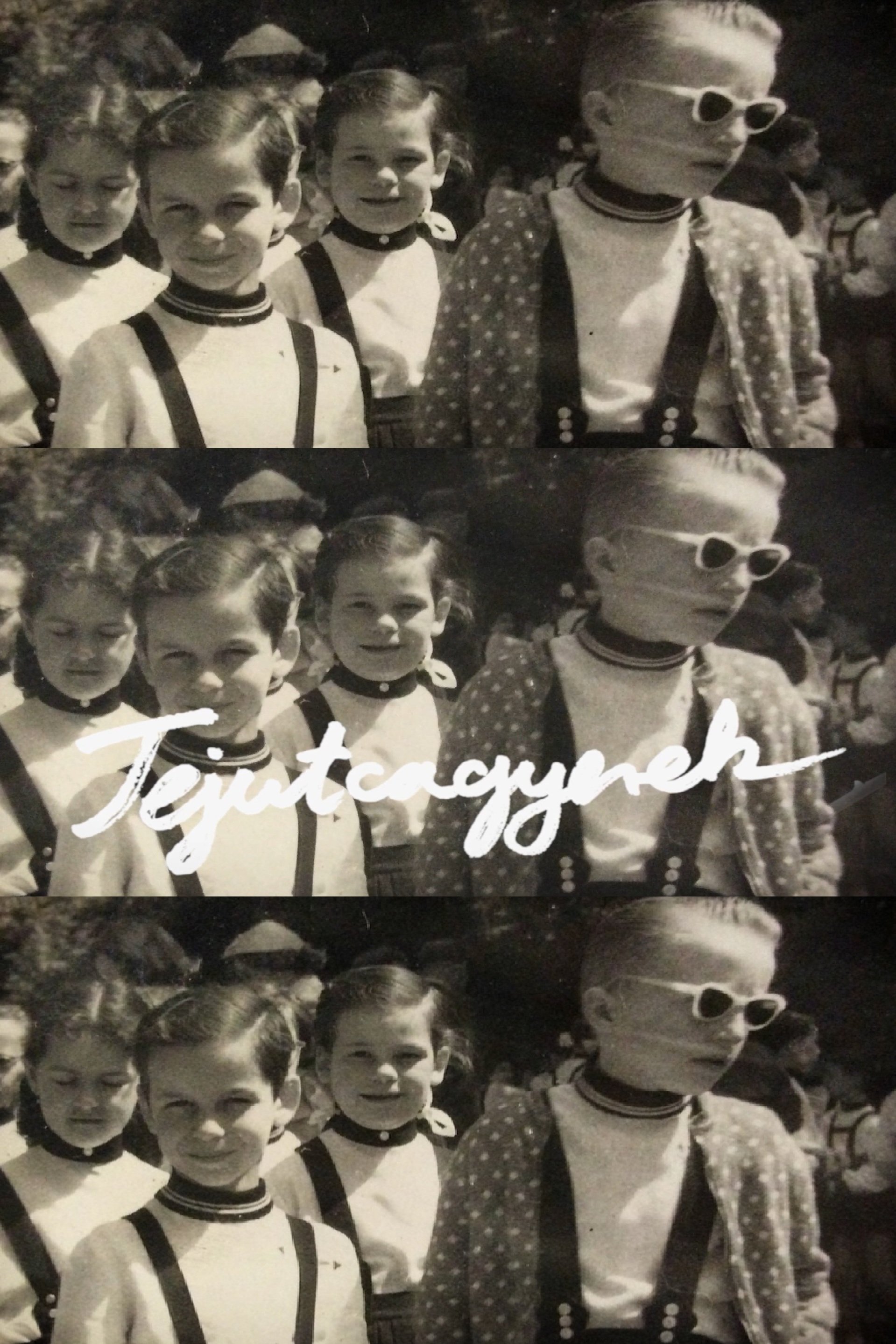
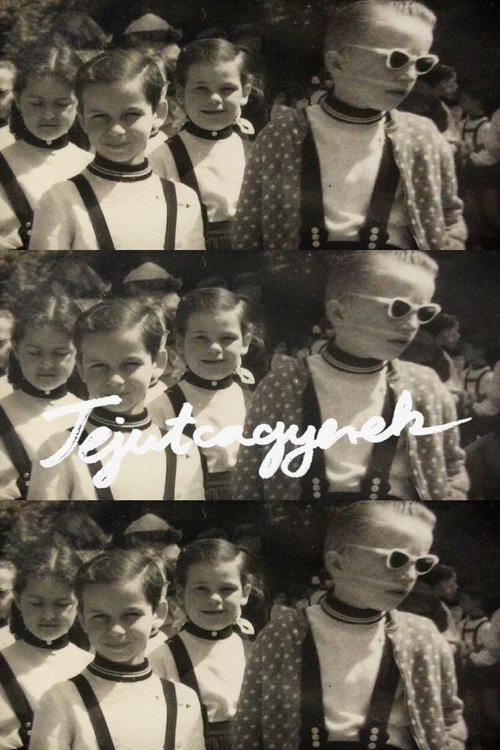
Tejutcagyerek
Documentary
Overview
János Baksa-Soós, aka Prince January. A man who influenced those who influenced us. “Sometimes you have to make time for a whole life!” he said. He did, and we explored his incredible life. Starting from Zoltán Kodály, we fly over downtown KEX concerts, dive into the deepest recesses of Berlin punk and end up who knows where. Somewhere in the cosmos.



![[Stray Kids: Festival Docuseries]](https://image.tmdb.org/t/p/w342/k0Rcry5Li1gyS5yTTJUuXG2TGbL.jpg)

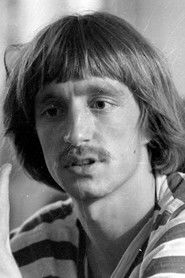
János Baksa-Soós
János Baksa-Soós
Self (archive footage)
János Baksa-Soós
Self (archive footage)
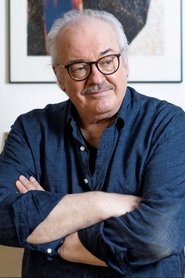
András Kisfaludy
András Kisfaludy
Self
András Kisfaludy
Self
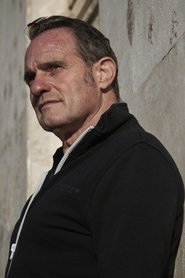
Tamás Pajor
Tamás Pajor
Self
Tamás Pajor
Self
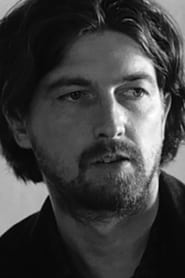
Mihály Víg
Mihály Víg
Self
Mihály Víg
Self
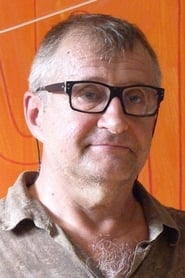
András Wahorn
András Wahorn
Self
András Wahorn
Self
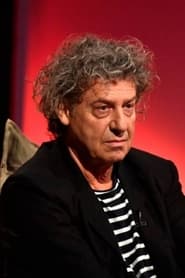
János Másik
János Másik
Self
János Másik
Self
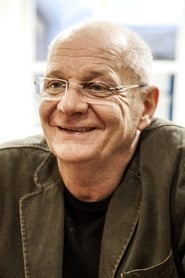
Géza Bereményi
Géza Bereményi
Self
Géza Bereményi
Self
Ferenc Nagy
Ferenc Nagy
Self
Ferenc Nagy
Self
Attila Grandpierre
Attila Grandpierre
Self
Attila Grandpierre
Self
Attila Imre
Attila Imre
Self (archive footage)
Attila Imre
Self (archive footage)
Similar Movies
Homo Cinematographicus is a human species whose unit of measurement and point of reference is the cinema and its derivative, television. Filmed at the 1998 Cannes Film Festival, the film offers an unspecified number of statements, talking about memories and a thousand fragments of stories, titles and film scenes, the warp of a gigantic collective Chanson de geste.
1981: for the first time, contemporary witnesses of the Holocaust speak on German television in the two-part documentary "Witnesses - Testimonies to the Murder of a People" - at prime time on the first channel. Only 36 years after the Second World War, Bremen filmmaker Karl Fruchtmann has created a counter-design to the US drama series "Holocaust". While there are hardly any people left today who can personally recount their experiences of the Holocaust, there were still many contemporary witnesses in the early 1980s for whom the murder of the European Jews was still very present. Karl Fruchtmann interviewed 60 survivors of the Nazi concentration camps in Israel and Poland, the tapes are in the archives of Radio Bremen, almost 80 hours of interviews, a historical legacy! Only a small part of them has been published so far.
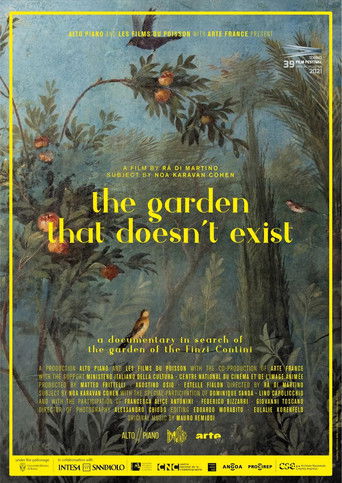
Once upon a time there was a garden, a refuge, a safe haven - 'The Garden of the Finzi Continis'. It came to life in Giorgio Bassani's 1962 semi-autobiographical novel recounting an unfulfilled love story between two young Jews in Ferrara, while fascism was raging in Italy in the late 1930's. In 1972, Vittorio De Sica's film adaptation of the book won the Oscar for Best Foreign Language Film. Since then, the fictional space of the garden became so tangible that people from all over the world come to Ferrara to look for it. Fifty years after winning the Oscar, reality and fiction come together once more, as we walk through an imaginary garden and bring to life the book, its author, its main protagonists, history, love, friendships and betrayals.
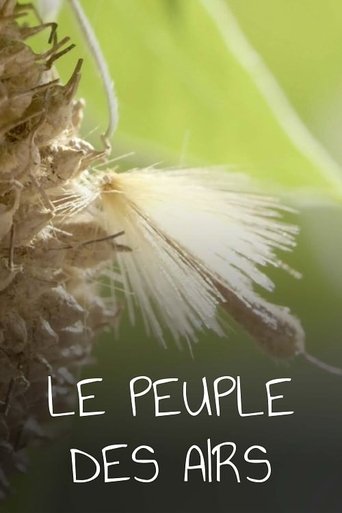
Bacteria, viruses, but also fungi, algae, pollen, and even insects: micro-organisms thrive and circulate constantly in our sky. How can so many living beings find their way into the air and circulate? How do they survive? And what influence do they have on our lives and the living world? Biodiversity, health, climate: it is only recently that scientists have begun to understand how this discreet aerial "plankton" affects our lives and our ecosystem. But despite their many virtues, some of these micro-organisms are now threatened by human activities. With the help of experts and 3D models, this scientific investigation plunges us into the heart of a still mysterious world, and reveals the diversity and fragility of the air we breathe.