

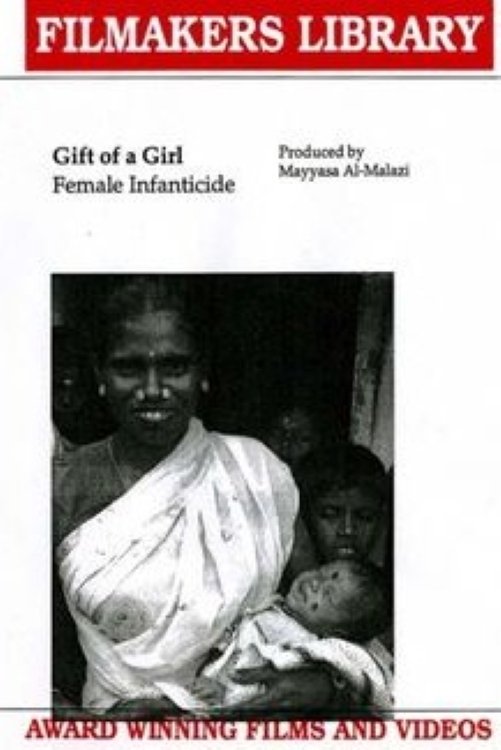
Gift of A Girl
Documentary
Overview
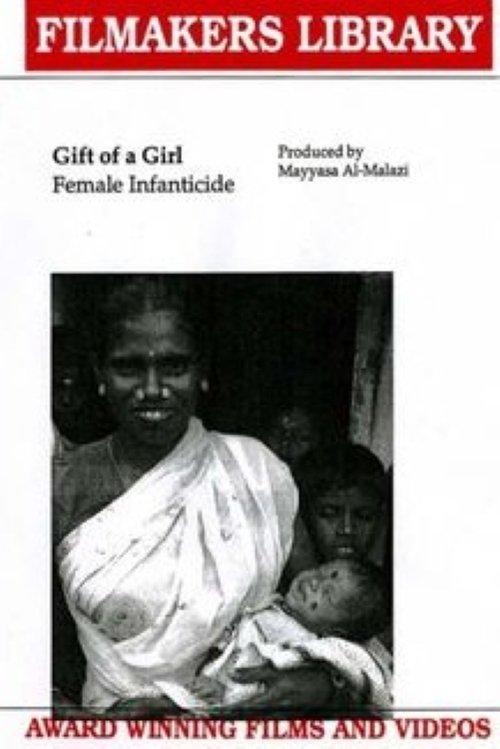
This film explores the complexity of female infanticide in southern India and shows steps that are being taken to eradicate the practice. Every year in India thousands of baby girls are killed. Partly because of the dowry system which makes a daughter a liability to a family. In a country where being a woman means living a life of hardship, the murder of female infants may be seen by the mothers as being a humane solution. URISE, a non-governmental agency, is working in the villages to promote the idea among women that female children are equal in the eyes of the law and can be an asset in the family, setting up associations called sanghams to support pregnant women and mothers in their decision to keep their daughters. When a girl is born, the sanghams celebrates her arrival with gifts, showing that a girl is something to be valued. This sensitive film does not dwell on the horrors of the practice. Rather, it allows the women to speak for themselves showing how they can be empowered.



No cast information.
Similar Movies
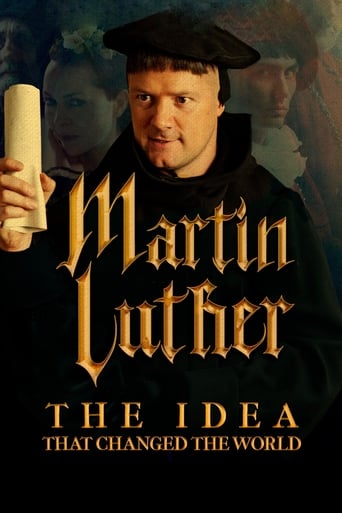
The year 2017 marks the 500th anniversary of one on the most important events in Western civilization: the birth of an idea that continues to shape the life of every American today. In 1517, power was in the hands of the few, thought was controlled by the chosen, and common people lived lives without hope. On October 31 of that year, a penniless monk named Martin Luther sparked the revolution that would change everything. He had no army. In fact, he preached nonviolence so powerfully that — 400 years later — Michael King would change his name to Martin Luther King to show solidarity with the original movement. This movement, the Protestant Reformation, changed Western culture at its core, sparking the drive toward individualism, freedom of religion, women's rights, separation of church and state, and even free public education. Without the Reformation, there would have been no pilgrims, no Puritans, and no America in the way we know it.
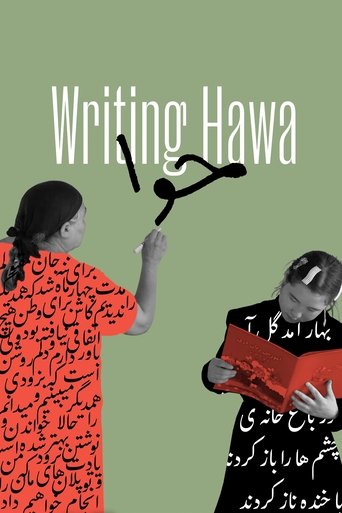
Afghan documentary maker Najiba Noori offers not only a loving and intimate portrait of her mother Hawa, but also shows in detail how the arduous improvement of the position of women is undone by geopolitical violence. The film follows the fortunes of Noori’s family, who belong to the Hazaras, an ethnic group that has suffered greatly from discrimination and persecution.
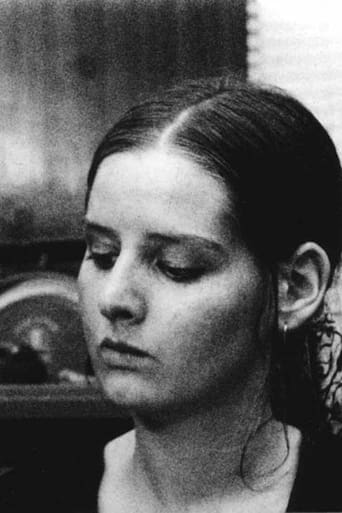
A docu-drama shot in 1970, but not completed until 1973, the film sought to encapsulate in an experimental form issues that were under discussion within the Women’s Liberation Movement at this time and to thus contribute to action for change. In its numerous community screenings, active debate was encouraged as part of the viewing experience.

Béatrice Dalle, Lio, Brigitte Fontaine, Corinne Masiero, Aïssa Maïga, Virginie Despentes, Maria Schneider, Gisèle Halimi, Juliette Gréco, and Adèle Haenel—these women lived on their own terms, defying conventions and embracing lives often deemed "scandalous." Labeled frivolous, hysterical, or simply too free and too loud, they faced criticism yet used controversy as a force for change, challenging norms and advancing women's rights. This documentary retraces seventy years of their bold and unconventional journeys, telling the story of the fearless women who shaped history and fought for a more equal world.
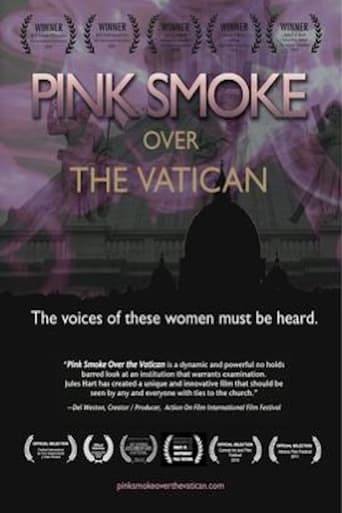
Documentary film about the controversial movement of women seeking ordination in the Roman Catholic Church. More and more women are answering a spiritual calling to take on the vestments of priesthood and seek equality in the religion they love. These daring women have risked banishment, loss of livelihood, and even excommunication to take part in what the Church calls illicit ordinations. The Vatican has vowed to end this threat to the male hierarchy, even forbidding the mere discussion of female priests. The papacy has reached a time of crisis and the controversy over women's role, and their place in the Church, must be addressed if the Vatican is to have any relevance in the 21st century.
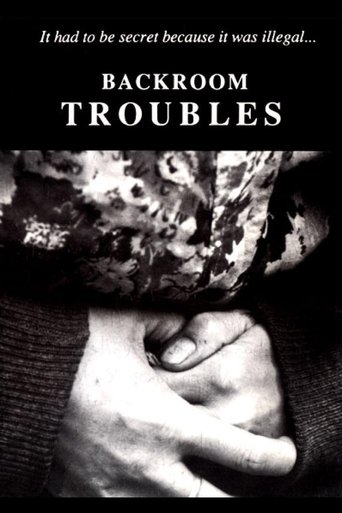
Women talk about the circumstances that drove them to seek illegal abortions and the often traumatic result. Interwoven with historical photographs and newsreel footage, the stories expose how the reality of women's lives were counterposed to what was socially and morally expected of them.
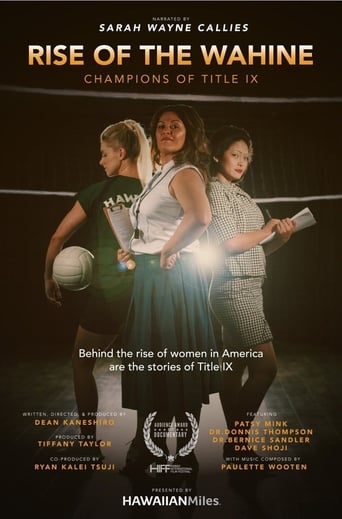
In the years following the Civil Rights movement and the passage of Title IX in 1972, Dr. Donnis Thompson (a headstrong African-American female coach), Patsy Mink (the first Asian-American U.S. congresswoman), and Beth McLachlin (the team captain of a rag-tag female volleyball team), battled discrimination from the halls of Washington D.C. to the dusty volleyball courts of the University of Hawaii, fighting for the rights of young women to play sports.
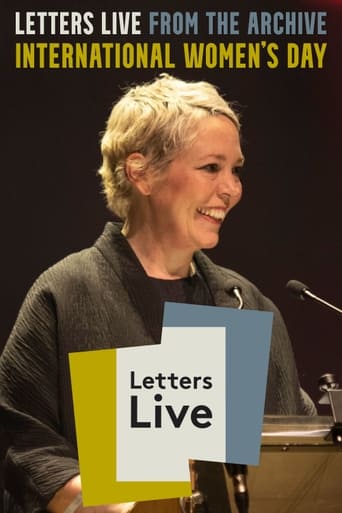
Celebrate International Women’s Day with this brand new inspiring film from LETTERS LIVE. In “LETTERS LIVE from the Archive: International Women’s Day”, remarkable letters are read by a diverse array of outstanding luminaries, including stunning performances from Olivia Colman, Gillian Anderson, Daisy Ridley, Caitlin Moran, Rose McGowan, Adwoa Aboah, Louise Brealey and more. Plus music from Roxanne Tataei.