










Linna Nascimento
Linna Nascimento
Linna Nascimento
Similar Movies

During a severe summer heatwave, three generations of spirited women—a sprightly granddaughter, her fashionable mother, and a feisty grandmother—find themselves confined to their apartment without air-conditioning due to the granddaughter's injured leg. As the city buzzes with the uproar of a hygiene union strike, their home transforms into a funny battleground of mounting plastic. Water shortages add to their misadventures, teetering them between laughter and despair.
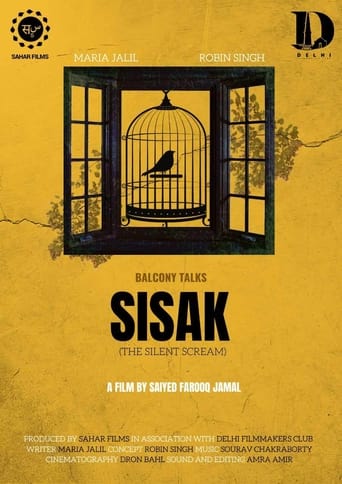
Set in grey space, the film tells us the story of a young girl named Jahnvi sitting alone in a dark, single room carrying multiple thoughts about her beloved and her relationship with him. Her chain of thought breaks when her friend Aman enters the scene who is happy and eager, differing from her low and gloomy mood and silent state. Towards the end, Jahnvi finally breaks her silence, only to reveal the shocking truth of her relationship and society.

August 29, 1979, Talavera Bruce Penal Institute, Bangu, Rio de Janeiro. After serving eight years in prison, Inês Etienne Romeu, the only survivor of the "House of Death" in Petrópolis and the first political prisoner sentenced to life in prison in Brazil, left prison benefiting from Amnesty. Norma Bengell filmed this moment: from the prison door to her home with her family, Inês was welcomed by family, friends and members of the Brazilian Amnesty Committee, in what marked the first act of the historic denunciation that Inês would carry out against her tormentors and the Military Regime.
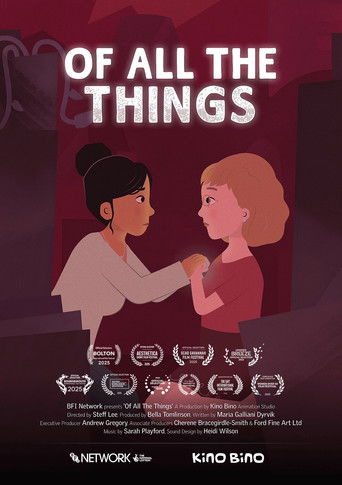
Ava remembers her childhood home as a place full of amazing things and adventures. The day she returns home from university, however, everything changes: what used to be a treasure chest has become an oppressive box, and her mother’s things and fear of letting go overwhelm their home and their relationship. By dipping into memories and sharing a moment in time, can mother and daughter reach an understanding? 'Of All The Things' is a narrative short inspired by lived experience with the aim of developing a compassionate dialogue around hoarding. This is a story about connection, not just a condition. The film was made with the support of the hoarding community to ensure authenticity, it is designed to visualise the unseen emotional impact hoarding behaviours can have on the relationship between family members. Produced by Kino Bino with funding from the BFI NETWORK and crowdfunding.

The world of pimping in early 1980s America offers a rare, unfiltered glimpse into a controversial underground lifestyle. Through exclusive interviews with the notorious figure “Harold” and his associates—Alice, Lori, and Karen—the film provides a nuanced exploration of the lives of pimps and streetwalkers and the ways their paths intertwine. With a focus on both the allure and inherent dangers of this lifestyle, the documentary reaches a sombre climax, shedding light on the tragic murder of Alice Franklin, one of Harold’s streetwalkers, later that same year.

The cinema of Pernambuco is considered one of the most complex components of Brazilian cinema, particularly for its potency and creative style. The presence of women in filmmaking seldom holds the same historical notoriety as that of men, and the Pernambuco scene is no exception. In the context of "Amor, Plástico e Barulho" (Love, Plastic, and Noise), we find a film that serves as a testament to the marginalization of women in the creative industry, intertwining themes of consumption and the production of brega music. Hence, we use "Feminino e Barulho" (Feminine and Noise) as a means to share what we've learned. Renata Pinheiro has inspired us to craft a narrative that gives voice to those who need to be heard. We are here to showcase a glimpse of them and what they represent. "Feminino e Barulho" is a short film about love, femininity, sisterhood, and empowerment.
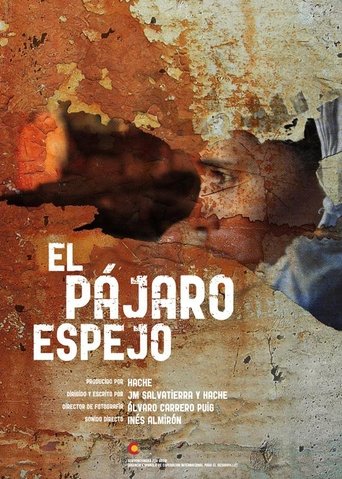
Bubisher, as well as being 'the bird of luck', is a word loaded with literary meaning in Spanish in the Sahrawi refugee camps of Tindouf. Seeing the way in which two cultures interact through small stories and tales can is striking and so is the contrast between the resilience of the young female generations and the realities of life in the desert. This documentary paints a picture of a generation of young female Sahrawis.
Three women share their experience of navigating the app-world in the metro city. The sharings reveal gendered battles as platform workers and the tiresome reality of gig-workers' identities against the absent bosses, masked behind their apps. Filmed in the streets of New Delhi, the protagonists share about their door-to-door gigs, the surveillance at their workplaces and the absence of accountability in the urban landscape.