

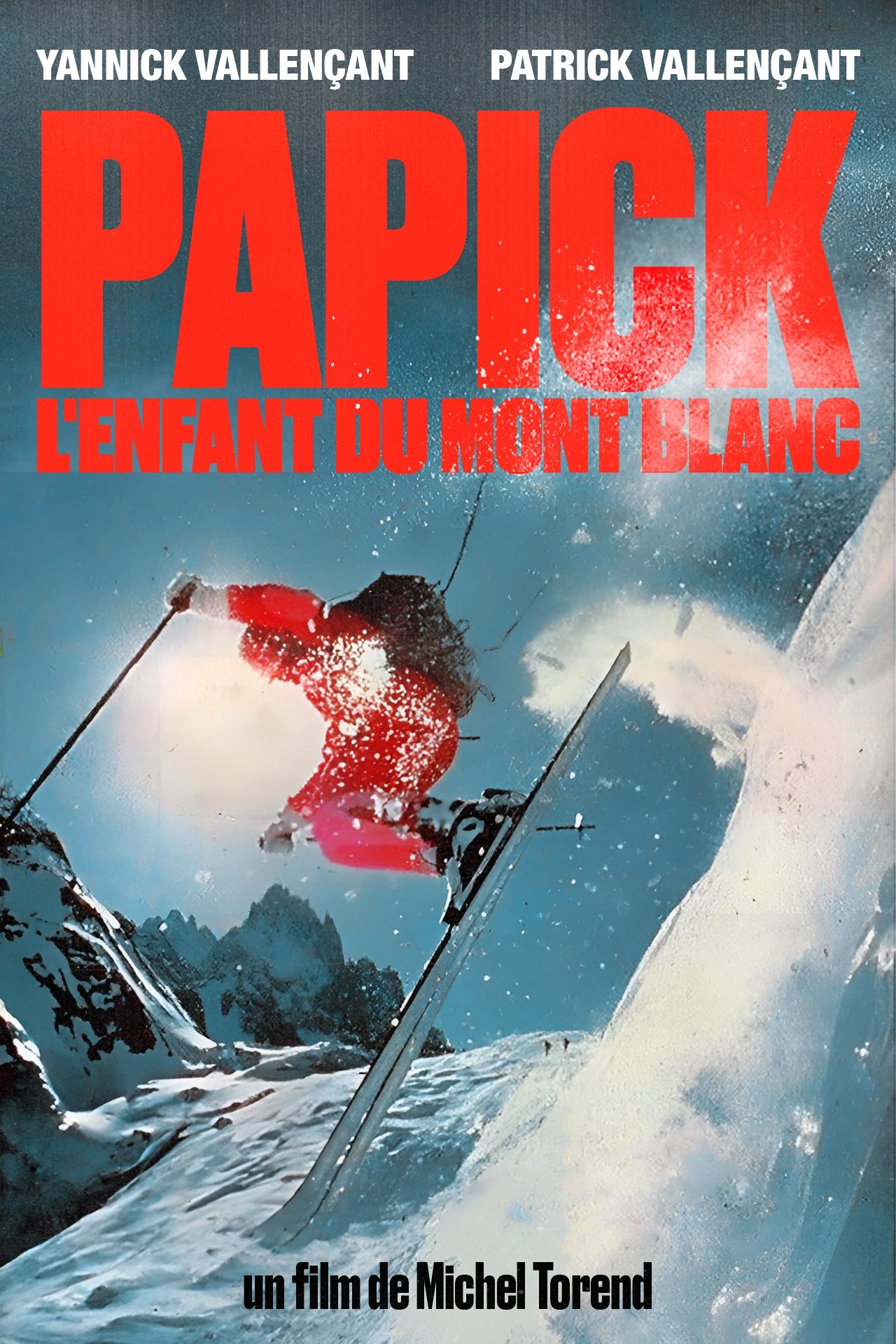
Papick, L'Enfant Du Mont Blanc
Documentary · Adventure
Overview
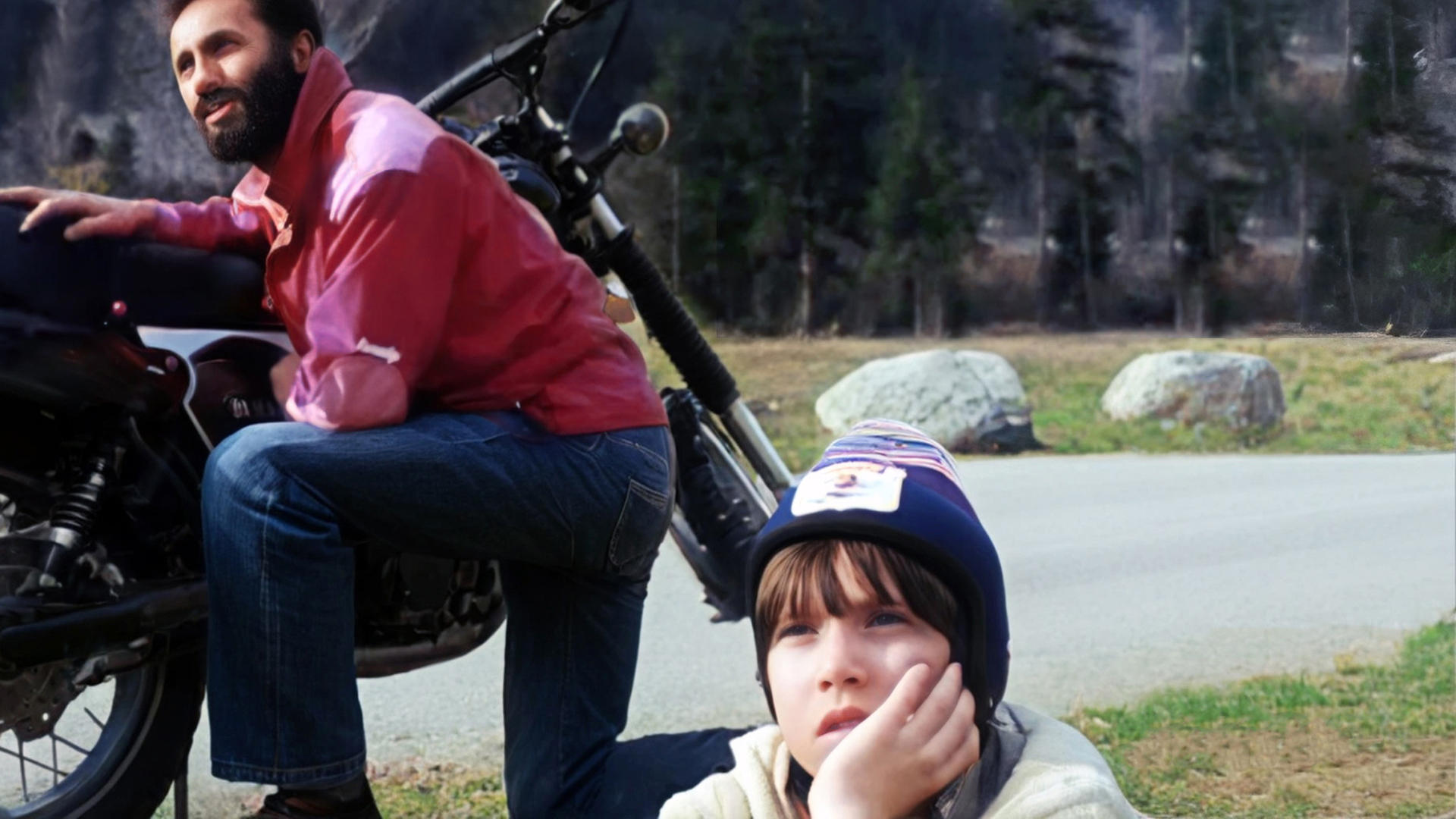
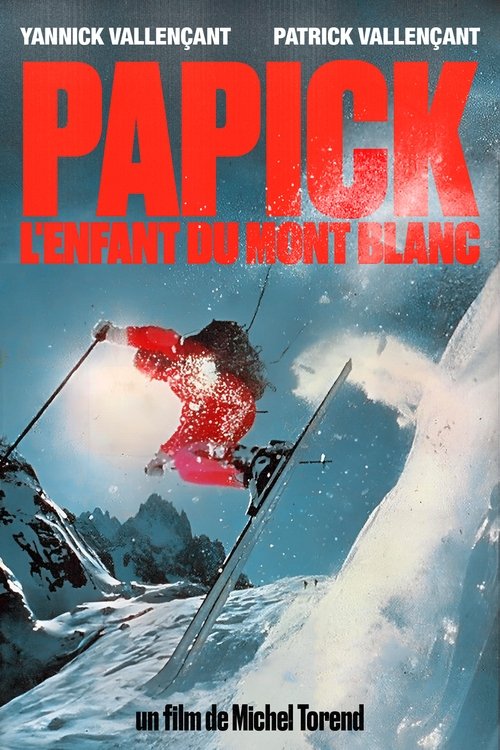
Eleven-year-old Papik (nickname for Yannick Vallençant) dreams of climbing Mont Blanc with his father, Patrick Vallençant. After serious training, the adventure begins: they set off from the summit of the Aiguille du Midi, climb the ridge of the three Mont Blancs, bivouac at the Col de la Brenva, cross the Mur de la Côte and reach the summit of Mont Blanc. No child his age had ever before achieved this feat by this route.




Yannick Vallençant
Yannick Vallençant
Self
Yannick Vallençant
Self
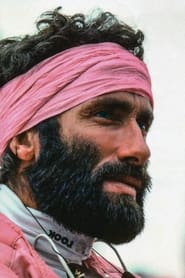
Patrick Vallençant
Patrick Vallençant
Self
Patrick Vallençant
Self
Similar Movies
What compels a man to push the limits of what is attainable ever higher? After thirty years of relentless struggle with the highest peaks on earth, Marc Batard has finally found the answers to these questions. He had to reach the summit of Everest twice, once shattering the record for fastest time in 24 hours without oxygen, and climb the most difficult faces of the Alps to glimpse the path to inner healing. It was through physical suffering that he was able to confront the pain of his soul. He was finally able to talk about the violence of his childhood, the shock he carried like a ball and chain for decades. Having completed his summit therapy, Marc Batard tells his story in this documentary by Gilles Perret.
Skier Kai Jones shattered both his legs in a fall from a cliff. The teenager experiences a brutal rescue operation, a difficult operation and life-threatening anemia. The movie shows Kai Jones' fight for survival. It is a story about adversity and how it strengthens one's own resilience.
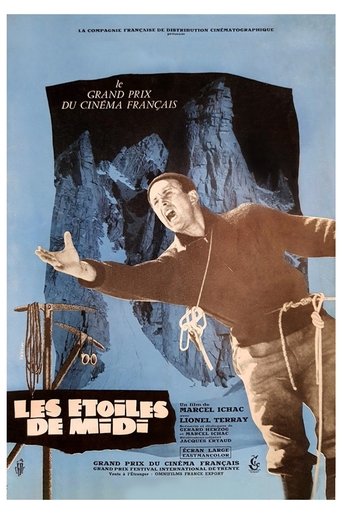
Les Etoiles de Midi is an engaging docudrama about some of the more spectacular exploits of French mountain climbers over the last several decades. In one re-enacted story, there is a wartime escape through the mountains, and in another, a daring rescue of a pair of climbers who had been missing. The actors themselves are adept at the sport of climbing, and they give the scenes an immediacy and real daring that brings the stories alive. A combination of their acrobatics and skill and the outstanding episodes in the history of French climbing creates a winning 78 minutes.
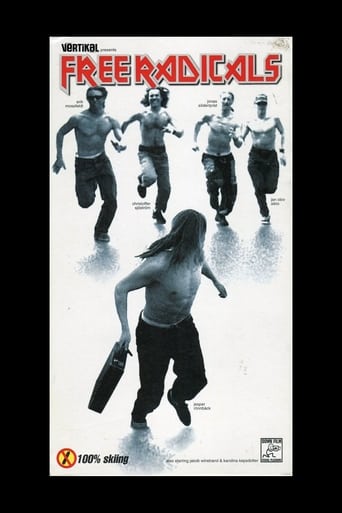
Östlund discovered his penchant for long takes making ski films, in which unbroken shots prove the authenticity of the unbelievable feats depicted. Stunning compositions and an energetic soundtrack (featuring Swedish hip-hop, electronica, ska, and thrash metal) make this a sensory delight, even for those who aren’t skiing enthusiasts.
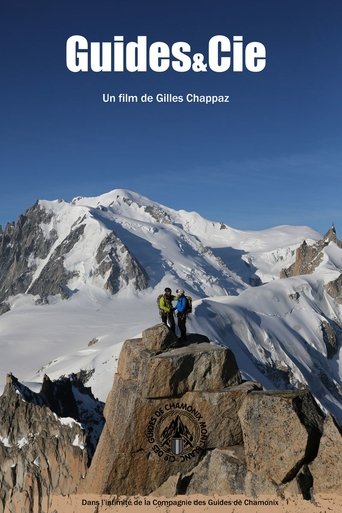
Established in 1821, the Compagnie des Guides de Chamonix is the first and largest guides' company in the world. Wiser for its historical organisation, this diverse community of self-employed professionals operates according to two rock-solid pillars: an in-turn work distribution and an emergency fund to support guides injured from work. Who are these women and men who have sworn allegiance to their passion for the mountains? How do they cope with the hazards that are inherent to their occupation? In other words, what does "being a guide" mean in 21st century, and what makes it so remarkable? Thanks to its numerous moving accounts, this films draws a warm portrait of the guides and takes the audience deep into a very unordinary group of professionals. Undoubtedly a sensitive documentary served with stunning images!
A team of international skiers embark on a two-week glacier traverse connecting two remote research stations in Kazakhstan. The Tien Shan's 4000+ meter peaks host an active scientific community, leveraging the rare environmental conditions for groundbreaking research. Established during the Soviet Union's occupation, the high-altitude research stations here are home to some of the longest-standing glacier and cosmic radiation experiments in the world - and are surrounded by deadly alpine terrain.
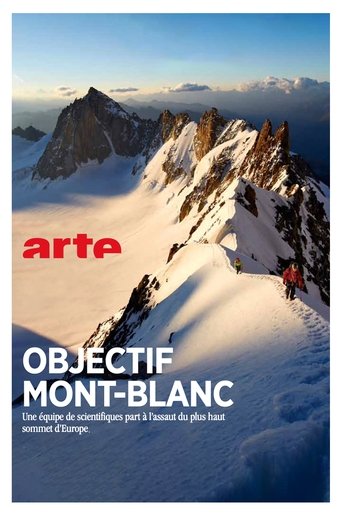
A climatologist, a physicist, and a volcanologist set out to conquer the highest peak in the Alps. Through exceptional images, the film recounts their odyssey and reveals the immense wealth of this natural laboratory. Straddling France, Italy, and Switzerland, the Mont Blanc massif was formed 240 million years ago. Four times the size of Paris, it covers 400 km2. Its summit, the highest in Western Europe, rises to 4,810 meters. Three scientists begin its ascent: Martine Rebetez, a Swiss climatologist; Étienne Klein, a philosopher and physicist at the French Atomic Energy Commission; and Jacques-Marie Bardintzeff, a geologist and volcanologist. Advancing in two roped teams, they are accompanied by Jean-Franck Charlet and François-Régis Thévenet, mountain guides, as well as physiologist Hugo Nespoulet.
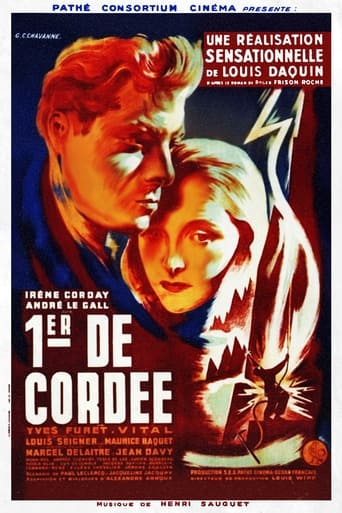
A screen adaptation of the well-known novel by Roger Frison-Roche about the harsh lives of mountain guides and their families in the French Alps, near Chamonix and the French/Swiss/Italian borders... Like his father, Zian Servettaz is a dedicated mountain man. His Italian-born wife Bianca does not adjust well to his mountain village in France, and to the ever life-threatening dangers presented by his mountain guiding and climbing. She briefly returns to Italy and to her family. However, after Zian's insistence and trip to Italy, she returns to mountain life in the French Alps. Once back there, events will unfold, changing their lives as well as those of other mountain people forever.
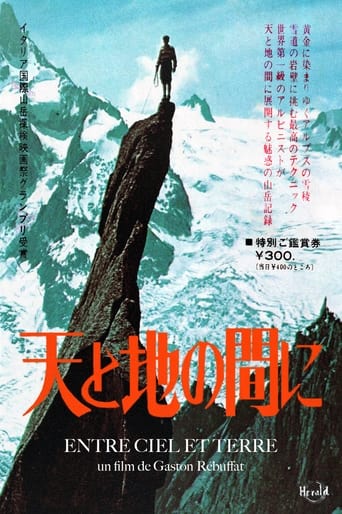
This is Gaston Rebuffat's fourth film, in which, with several close friends, he discovers the sublime landscapes of the Alps. “Mont-Blanc is beautiful. I climbed it several times depending on the time, the color of the sky and the shape of the cornices and ridges. Because of the weather and also because of this feeling of altitude, Mont-Blanc provides great pleasure. For the guide, Mont Blanc is his garden, but the garden becomes more beautiful when shown to a friend. Personally, I really like the bivouacs; only there one penetrates a little the mystery of the altitude. That's why I immediately accepted when Tazieff expressed the desire to spend the night at the top of Mont Blanc in an igloo. The film won the Grand Prix at the Trento Film Festival in 1961.