

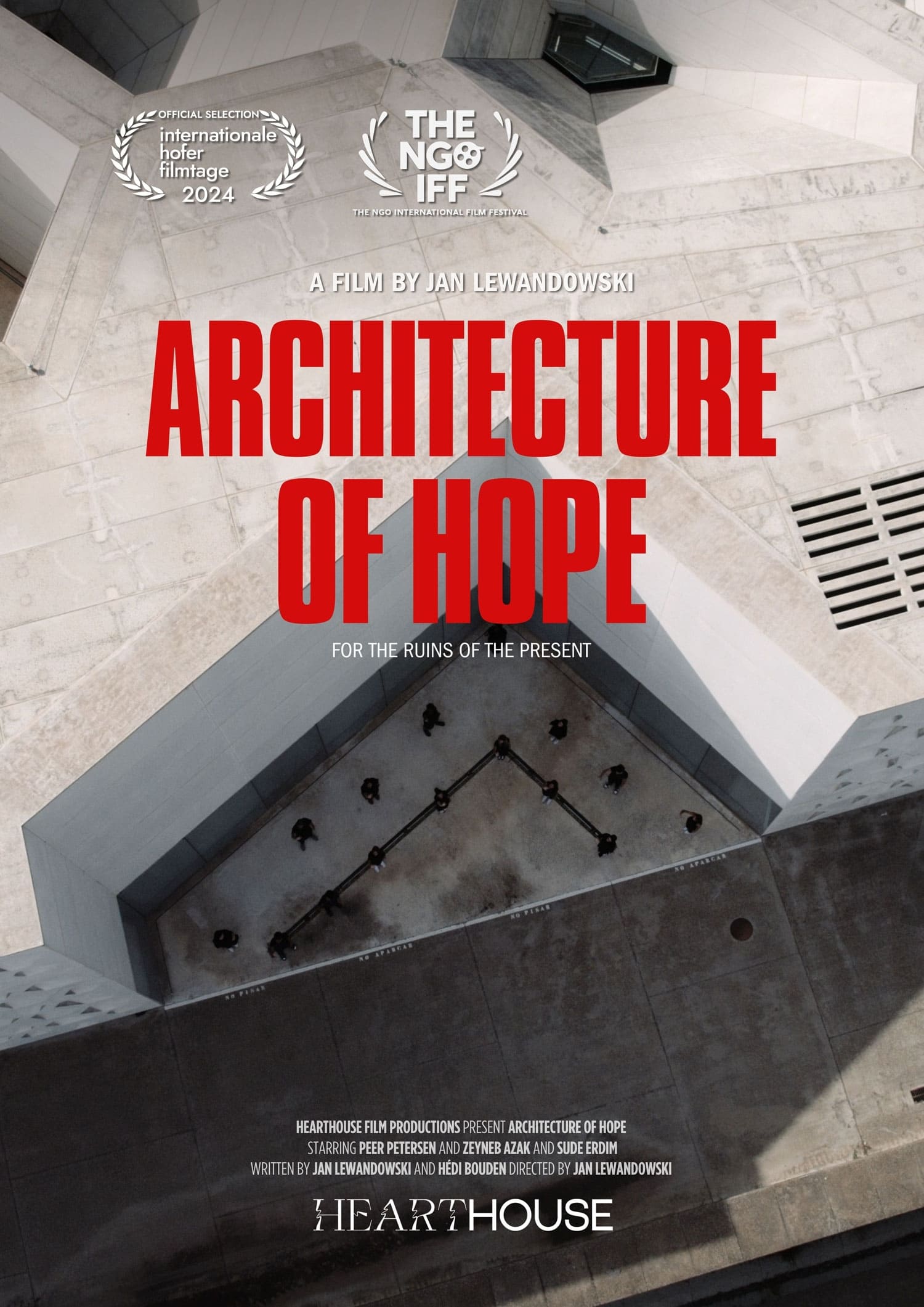
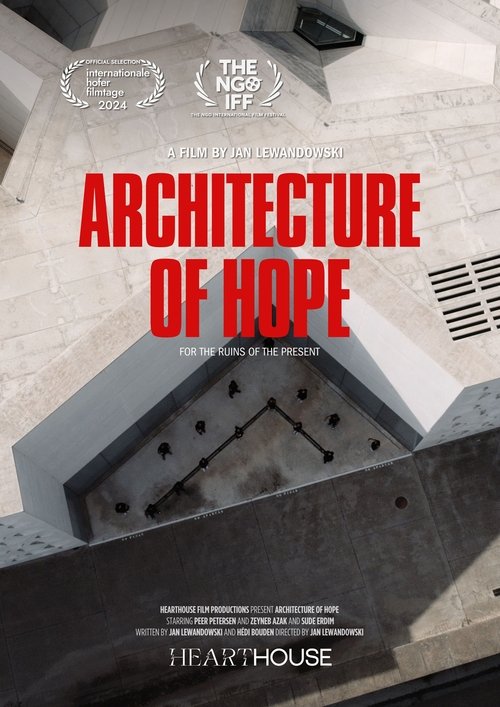
Architecture of Hope- For the Ruins of the Present
Documentary · War
Top Cast





Peer Jeremy Petersen
Peer Jeremy Petersen
Peer Jeremy Petersen
Peer Jeremy Petersen
Peer Jeremy Petersen
Zeyneb Azra Azak
Zeyneb Azra Azak
Zeyneb Azra Azak
Zeyneb Azra Azak
Zeyneb Azra Azak
Sude Erdim
Sude Erdim
Sude Erdim
Sude Erdim
Sude Erdim
Nastaran Amiry
Nastaran Amiry
Voice Over
Nastaran Amiry
Voice Over
Gal Peleg Pfennig
Gal Peleg Pfennig
Gal Peleg Pfennig
Gal Peleg Pfennig
Gal Peleg Pfennig
Hédi Bouden
Hédi Bouden
Hédi Bouden
Hédi Bouden
Hédi Bouden
Similar Movies
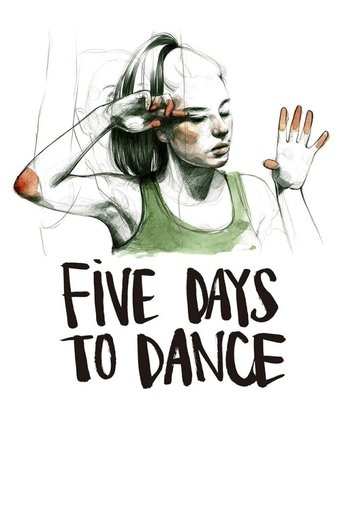
A couple of dancers appear one morning in a High School. It's Monday and they announce to a group of youngsters that they have five days to get up on stage and dance. A short time but a big challenge. The dance compels these youngsters to break through their roles exactly at the time of their lives when the social roles are being forged. The handsome boy is no longer the most admired, the timid one takes a step forward. Wilfried van Popple and Amaya Lubeigt are the choreographers. Professional dancers who have decided now to work with people who have never danced before. This is the challenge: five days, a class of teenagers, a microcosm in which occurs a little big bang.
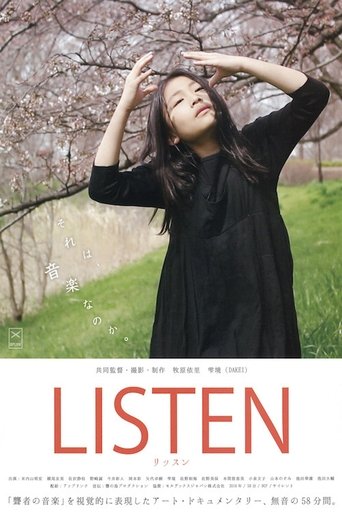
Documentary without audio produced by deaf people. Music is depicted visually with the complete absence of musical instruments or voices. Directed by Makihara Eri and choreographer Dakei. With a diverse lineup including ordinary deaf people with zero acting experience and a choreographer who performs in Japan and abroad, this film pulls out all the tops to give visual expression to music through the physical body. An aging man uses multiple sign language poems to convey the four seasons, and a girl expresses the wind amidst the rustling trees.

The theatre play is set in the late Heian (794–1185) and early Kamakura period (1185–1333) in Japan. The main character is young adult Minamoto no Yoshitsune, from the Minamoto clan. Like previous chapters, it is a historical fiction, a world with supernatural powers and spirits (Mononokes). The idea was to create a story where the Oni (Japanese demons) were the origin of vampires, and eventually of the central character.[19] In the Heian period existed those called as Mononoke (spirits), and Mononofu, who were born between humans and Mononoke, and with special powers dominated both Mononoke and humans. The story from Mysteries of Yoshitsune spreads out when the member with inherited blood crossed over to Europe, and became the progenitor of the later vampires.
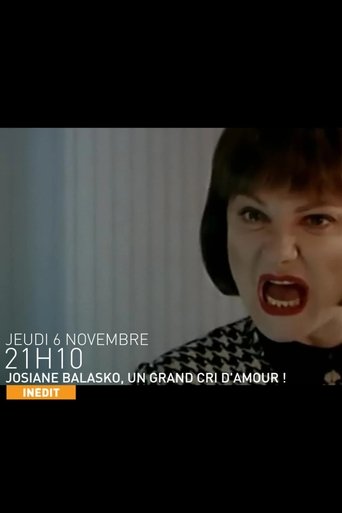
This documentary looks back on a career of a woman who, very early on, refused to accept the roles assigned to her. In the 1980s, while others were trying to please, she wrote "Les hommes préfèrent les grosses" (Men Prefer Fat Women), a manifesto ahead of its time, funny, feminist, and blunt. Later, with "Gazon maudit" (Damned Grass), she tackled homosexuality with a freedom that is still shocking today.
An English-speaking film produced on behalf of the Israeli Center of the International Theater Institute, providing international audience with an overview of modern Israeli theater, including scenes of renowned Israeli theater productions from the theater season of 1967. The film opens with excerpts from “The Dybbuk” at Habima Theater, and includes scenes from the successful musicals of the Cameri Theater “Utz Li Gutz Li” (Rumpelstiltskin) and “King Solomon and Shalmai The Shoemaker”. Other excerpts include scenes from the plays “The American Princess” by Nissim Aloni at the Seasons Theater, “He Walked Through the Fields” by Moshe Shamir at the Haifa Theater, Ibsen’s “Hedda Gabler”, “Who’s Afraid of Virginia Wolf”, and more.