

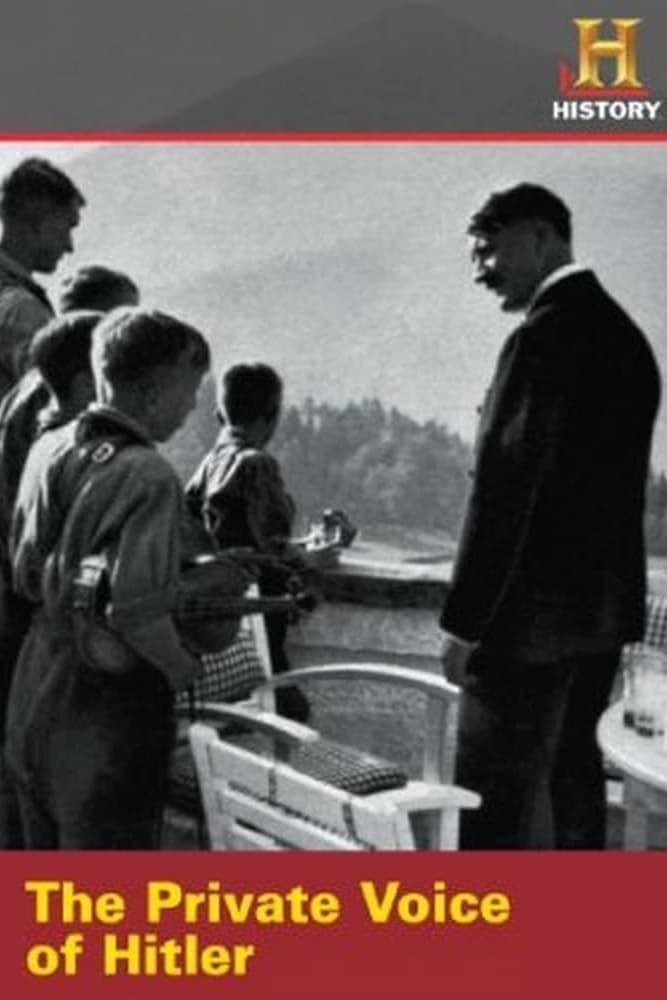
The Private Voice of Hitler
Documentary
Overview
Everyone knows the public archive footage of Hitler. But most of it is silent. What was he saying? Special computer technology enables us for the first time to lip-read the silent film.
Top Cast
Gerrard McArthur
Narrator
Raye Farr
Self - Archive Director - Holocaust Museum Washington
W. David Lewis
Self - Author - 'The Man Who Invented Hitler'
Epping Jaeger
Self - Vocal Expert
Richard John Evans
Self - Professor of Modern History - Cambridge University
Timothy Ryback
Self - Harvard University
Peter York
Self - Author - Dictators' Homes
Michael Brooke
Self - Speech Recognition Expert
Frank Hubner
Self - Speech Recognition Expert
Adolf Hitler
Self (archive footage)
Eva Braun
Self (archive footage)
Joseph Goebbels
Self (archive footage)




Gerrard McArthur
Gerrard McArthur
Narrator
Gerrard McArthur
Narrator
Raye Farr
Raye Farr
Self - Archive Director - Holocaust Museum Washington
Raye Farr
Self - Archive Director - Holocaust Museum Washington
W. David Lewis
W. David Lewis
Self - Author - 'The Man Who Invented Hitler'
W. David Lewis
Self - Author - 'The Man Who Invented Hitler'
Epping Jaeger
Epping Jaeger
Self - Vocal Expert
Epping Jaeger
Self - Vocal Expert
Richard John Evans
Richard John Evans
Self - Professor of Modern History - Cambridge University
Richard John Evans
Self - Professor of Modern History - Cambridge University
Timothy Ryback
Timothy Ryback
Self - Harvard University
Timothy Ryback
Self - Harvard University
Peter York
Peter York
Self - Author - Dictators' Homes
Peter York
Self - Author - Dictators' Homes
Michael Brooke
Michael Brooke
Self - Speech Recognition Expert
Michael Brooke
Self - Speech Recognition Expert
Frank Hubner
Frank Hubner
Self - Speech Recognition Expert
Frank Hubner
Self - Speech Recognition Expert
Adolf Hitler
Adolf Hitler
Self (archive footage)
Adolf Hitler
Self (archive footage)
Similar Movies
Homo Cinematographicus is a human species whose unit of measurement and point of reference is the cinema and its derivative, television. Filmed at the 1998 Cannes Film Festival, the film offers an unspecified number of statements, talking about memories and a thousand fragments of stories, titles and film scenes, the warp of a gigantic collective Chanson de geste.
1981: for the first time, contemporary witnesses of the Holocaust speak on German television in the two-part documentary "Witnesses - Testimonies to the Murder of a People" - at prime time on the first channel. Only 36 years after the Second World War, Bremen filmmaker Karl Fruchtmann has created a counter-design to the US drama series "Holocaust". While there are hardly any people left today who can personally recount their experiences of the Holocaust, there were still many contemporary witnesses in the early 1980s for whom the murder of the European Jews was still very present. Karl Fruchtmann interviewed 60 survivors of the Nazi concentration camps in Israel and Poland, the tapes are in the archives of Radio Bremen, almost 80 hours of interviews, a historical legacy! Only a small part of them has been published so far.
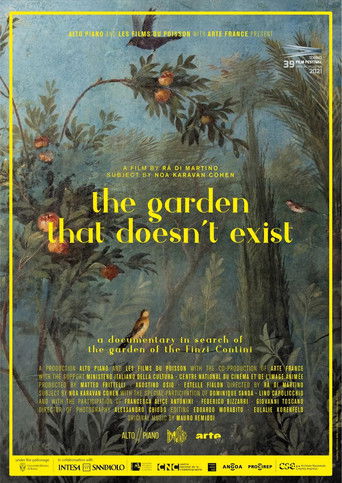
Once upon a time there was a garden, a refuge, a safe haven - 'The Garden of the Finzi Continis'. It came to life in Giorgio Bassani's 1962 semi-autobiographical novel recounting an unfulfilled love story between two young Jews in Ferrara, while fascism was raging in Italy in the late 1930's. In 1972, Vittorio De Sica's film adaptation of the book won the Oscar for Best Foreign Language Film. Since then, the fictional space of the garden became so tangible that people from all over the world come to Ferrara to look for it. Fifty years after winning the Oscar, reality and fiction come together once more, as we walk through an imaginary garden and bring to life the book, its author, its main protagonists, history, love, friendships and betrayals.
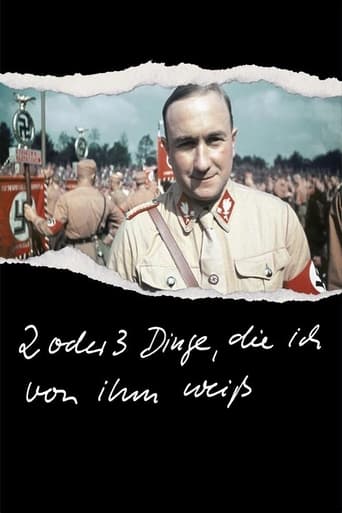
What would your family reminiscences about dad sound like if he had been an early supporter of Hitler’s, a leader of the notorious SA and the Third Reich’s minister in charge of Slovakia, including its Final Solution? Executed as a war criminal in 1947, Hanns Ludin left behind a grieving widow and six young children, the youngest of whom became a filmmaker. It's a fascinating, maddening, sometimes even humorous look at what the director calls "a typical German story." (Film Forum)
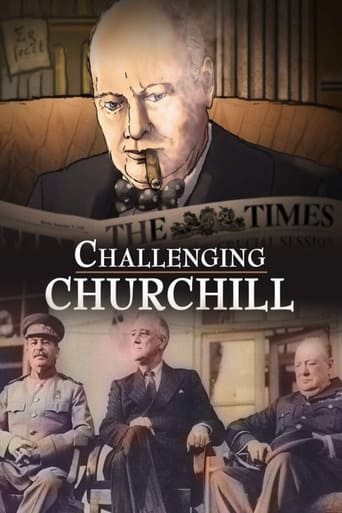
Churchill, a name typically associated with braveness and altruism. Recently found evidence from Soviet and British sources however brings up questions about Churchill's doings in the conferences of Tehran, Yalta and Potsdam. Why did he agree to give Stalin large parts of Poland? The story of two world leaders in times of war - it is also the story of Poland.

Bacteria, viruses, but also fungi, algae, pollen, and even insects: micro-organisms thrive and circulate constantly in our sky. How can so many living beings find their way into the air and circulate? How do they survive? And what influence do they have on our lives and the living world? Biodiversity, health, climate: it is only recently that scientists have begun to understand how this discreet aerial "plankton" affects our lives and our ecosystem. But despite their many virtues, some of these micro-organisms are now threatened by human activities. With the help of experts and 3D models, this scientific investigation plunges us into the heart of a still mysterious world, and reveals the diversity and fragility of the air we breathe.
Part of the Canada Carries On series, this short film portrays the First Division of the Canadian Active Service Force in Aldershot, England. Using an intimate letter home as a narrative device, this film reveals how the troops were received, what their living conditions were like, how they would get along with their English allies and how they spent their leisure time.