

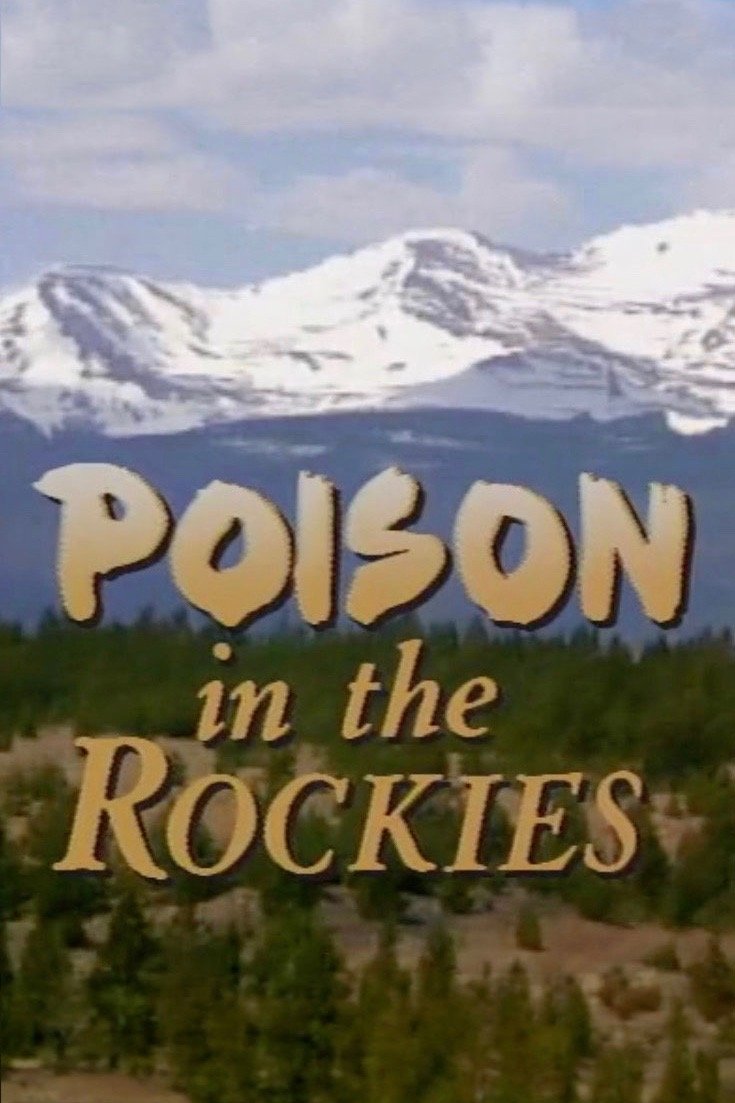
Poison in the Rockies
Documentary
Overview
Acid rain, economic development, and a century of mining pollute Rocky Mountain waters.
Top Cast
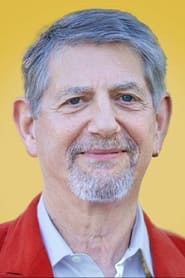
Peter Coyote
Narrator (voice)
Richard Lamm
Self - Governor of Colorado (1975-1987)

Charles Wilkinson
Self - Professor of Law, University of Colorado
Stuart Mace
Self - Naturalist
Gus Seppi
Self - Former Miner; Leadville, CO
David Holm
Self - Colorado Health Department
Patrick Davies
Self - Colorado Division of Wildlife
Stanley Dempsey
Self - Chairman & CEO, Royal Gold Inc.
Erik Edeen
Self - Eagle County Environmental Health Officer
Pat Wadsworth
Self - Community Relations Director, AMAX
David Delcour
Self - Vice President, AMAX
Max Dodson
Self - Environmental Protection Agency





Peter Coyote
Peter Coyote
Narrator (voice)
Peter Coyote
Narrator (voice)
Richard Lamm
Richard Lamm
Self - Governor of Colorado (1975-1987)
Richard Lamm
Self - Governor of Colorado (1975-1987)
Charles Wilkinson
Charles Wilkinson
Self - Professor of Law, University of Colorado
Charles Wilkinson
Self - Professor of Law, University of Colorado
Stuart Mace
Stuart Mace
Self - Naturalist
Stuart Mace
Self - Naturalist
Gus Seppi
Gus Seppi
Self - Former Miner; Leadville, CO
Gus Seppi
Self - Former Miner; Leadville, CO
David Holm
David Holm
Self - Colorado Health Department
David Holm
Self - Colorado Health Department
Patrick Davies
Patrick Davies
Self - Colorado Division of Wildlife
Patrick Davies
Self - Colorado Division of Wildlife
Stanley Dempsey
Stanley Dempsey
Self - Chairman & CEO, Royal Gold Inc.
Stanley Dempsey
Self - Chairman & CEO, Royal Gold Inc.
Erik Edeen
Erik Edeen
Self - Eagle County Environmental Health Officer
Erik Edeen
Self - Eagle County Environmental Health Officer
Pat Wadsworth
Pat Wadsworth
Self - Community Relations Director, AMAX
Pat Wadsworth
Self - Community Relations Director, AMAX
Similar Movies

The one-off documentary tells the story of two women travelling by bike across the United States, from Canada to Mexico along the Great Divide. A unique adventure through the most remote areas of the Rocky Mountains, between pristine nature and wild animals. An epic journey that led them to travel 4,000 km and climb 60,000 meters and that, day after day, forced them to face their own limits, their strength and fragilities, and tested their relationship. Because every journey is always a love story.
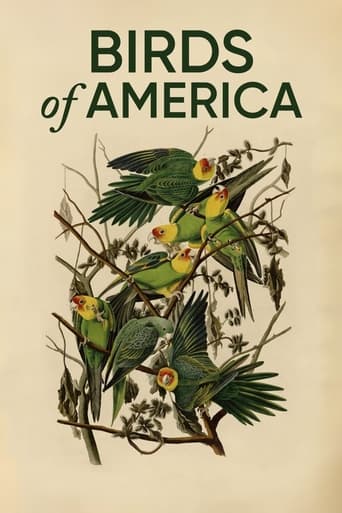
In the first half of the 19th century, the French ornithologist Jean-Jacques Audubon travelled to America to depict birdlife along the Mississippi River. Audubon was also a gifted painter. His life’s work in the form of the classic book ‘Birds of America’ is an invaluable documentation of both extinct species and an entire world of imagination. During the same period, early industrialisation and the expulsion of indigenous peoples was in full swing. The gorgeous film traces Audubon’s path around the South today. The displaced people’s descendants welcome us and retell history, while the deserted vistas of heavy industry stretch across the horizon. The magnificent, broad images in Jacques Loeuille’s atmospheric, modern adventure reminds us at the same time how little - and yet how much - is left of the nature that Audubon travelled around in. His paintings of the colourful birdlife of the South still belong to the most beautiful things you can imagine.

On April 10, 2014, the environmental activist and president of the Junín community, Javier Ramírez, was arrested and sentenced to ten months in prison for the crimes of “rebellion, sabotage and terrorism”. A few days later, the National Mining Company entered the area accompanied by a squad of at least 200 policemen to carry out studies related to the Llurimagua mining project, in the Íntag cloud forest. Javier with I, Íntag collects Javier Ramírez's reflections after his release, his feeling of condemned innocence, the pain of living in a divided, busy and frightened community, with its social fabric destroyed.

This film documents the coal miners' strike against the Brookside Mine of the Eastover Mining Company in Harlan County, Kentucky in June, 1973. Eastover's refusal to sign a contract (when the miners joined with the United Mine Workers of America) led to the strike, which lasted more than a year and included violent battles between gun-toting company thugs/scabs and the picketing miners and their supportive women-folk. Director Barbara Kopple puts the strike into perspective by giving us some background on the historical plight of the miners and some history of the UMWA. Preserved by the Academy Film Archive in partnership with New York Women in Film & Television in 2004.

Immersion in a world of contemporary design in search of more virtuous practices. In Helsinki, German designer Julia Lohmann uses seaweed to create dyed garments; in Amsterdam, Marjan van Aubel creates objects powered by organic photovoltaic cells; in London, the Superflux duo develops futuristic installations to alleviate potential food shortages.
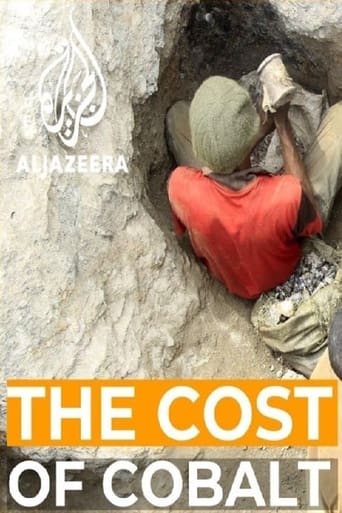
In the cobalt mining areas of Katanga in the Democratic Republic of the Congo (DRC), babies are being born with horrific birth defects. Scientists and doctors are finding increasing evidence of environmental pollution from industrial mining which, they believe, may be the cause of a range of malformations from cleft palate to some so serious the baby is stillborn. More than 60% of the world’s reserves of cobalt are in the DRC and this mineral is essential for the production of electric car batteries, which may be the key to reducing carbon emissions and to slowing climate change. In The Cost of Cobalt we meet the doctors treating the children affected and the scientists who are measuring the pollution. Cobalt may be part of the global solution to climate change, but is it right that Congo’s next generation pay the price with their health? Many are hoping that the more the world understands their plight, the more pressure will be put on the industry here to clean up its act.
Earth's environmental crisis--brought about by uncontrolled technological progress--is endangering life on a global scale. At the core of the threats to the planet - wars, overpopulation, pollution, and the depletion of natural resources - is the inadequacy of the nation state to come to terms with the surmounting problems of twentieth century living. What is urgently needed is the kind of international cooperation where nation states relinquish part of their sovereignty to a world body entrusted with the management of mankind's future.