


Adagio
Documentary · Family · Music
Overview
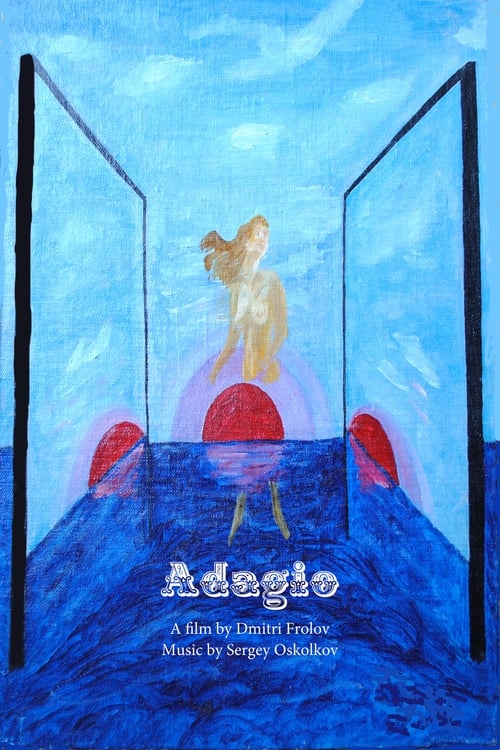
«I often have dreams. Careless dreams. When the sun was shining. It was calm and quiet. And a peaceful sky overhead.» An experimental musical film on the theme of love. Memories of the past excite the imagination and make you evaluate what is happening in the present in a new way.





Lyudmila Konyaeva
Lyudmila Konyaeva
Девушка
Lyudmila Konyaeva
Девушка
Lisa Frolova
Lisa Frolova
Девочка
Lisa Frolova
Девочка
Similar Movies
In one of those wonderful coincidences of history, lumière, the French word for “light,” was also the last name of brothers Auguste and Louis, whose brilliant invention, the cinematograph, helped to inaugurate the most beloved art form of the last 130 years. Institute Lumière director Thierry Frémaux uses Lumière, Le Cinema! to guide the viewer through over a hundred shorts—some famous, some forgotten, some never before seen—directed by Lumière and company. In the process, Frémaux illuminates how the brothers employed the camera as a creative instrument as they (and their operators) mastered framing, staging, and subject selection for quotidian and exotic microdocumentaries as well as the first ever fictional motion pictures. The result is not only a glorious re(telling) of the genesis of cinema but a profound meditation on the beautiful world captured—and the mysterious world imagined—by the Lumières.
The conventions of documentary, musical theater, and magical realism are combined and subverted to address issues of personal, national, and artistic identity through the eyes of a composer desperate to pull off one final backer’s audition whilst hounded by a disdainful documentarian named Charon.
The horses in Denys Colomb Daunant’s dream poem are the white beasts of the marshlands of the Camargue in South West France. Daunant was haunted by these creatures. His obsession was first visualized when he wrote the autobiographical script for Albert Lamorisse’s award-winning 1953 film White Mane. In this short the beauty of the horses is captured with a variety of film techniques and by Jacques Lasry’s beautiful electronic score.
Starting with a long and lyrical overture, evoking the origins of the Olympic Games in ancient Greece, Riefenstahl covers twenty-one athletic events in the first half of this two-part love letter to the human body and spirit, culminating with the marathon, where Jesse Owens became the first track and field athlete to win four gold medals in a single Olympics.
A day in the city of Berlin, which experienced an industrial boom in the 1920s, and still provides an insight into the living and working conditions at that time. Germany had just recovered a little from the worst consequences of the First World War, the great economic crisis was still a few years away and Hitler was not yet an issue at the time.
July, 1941. After the beginning of the German invasion, an Italian soldier, a veteran of the colonial wars, is sent to the Soviet front. As he remembers the fairy tales his Russian mother used to tell him, the train he is travelling in crosses Europe on its way to the vast Ukrainian plains, where the enemy and a cruel winter await him… (Based on the experiences of several Italian soldiers.)