

Hunger for Freedom
Drama · War · History
Overview
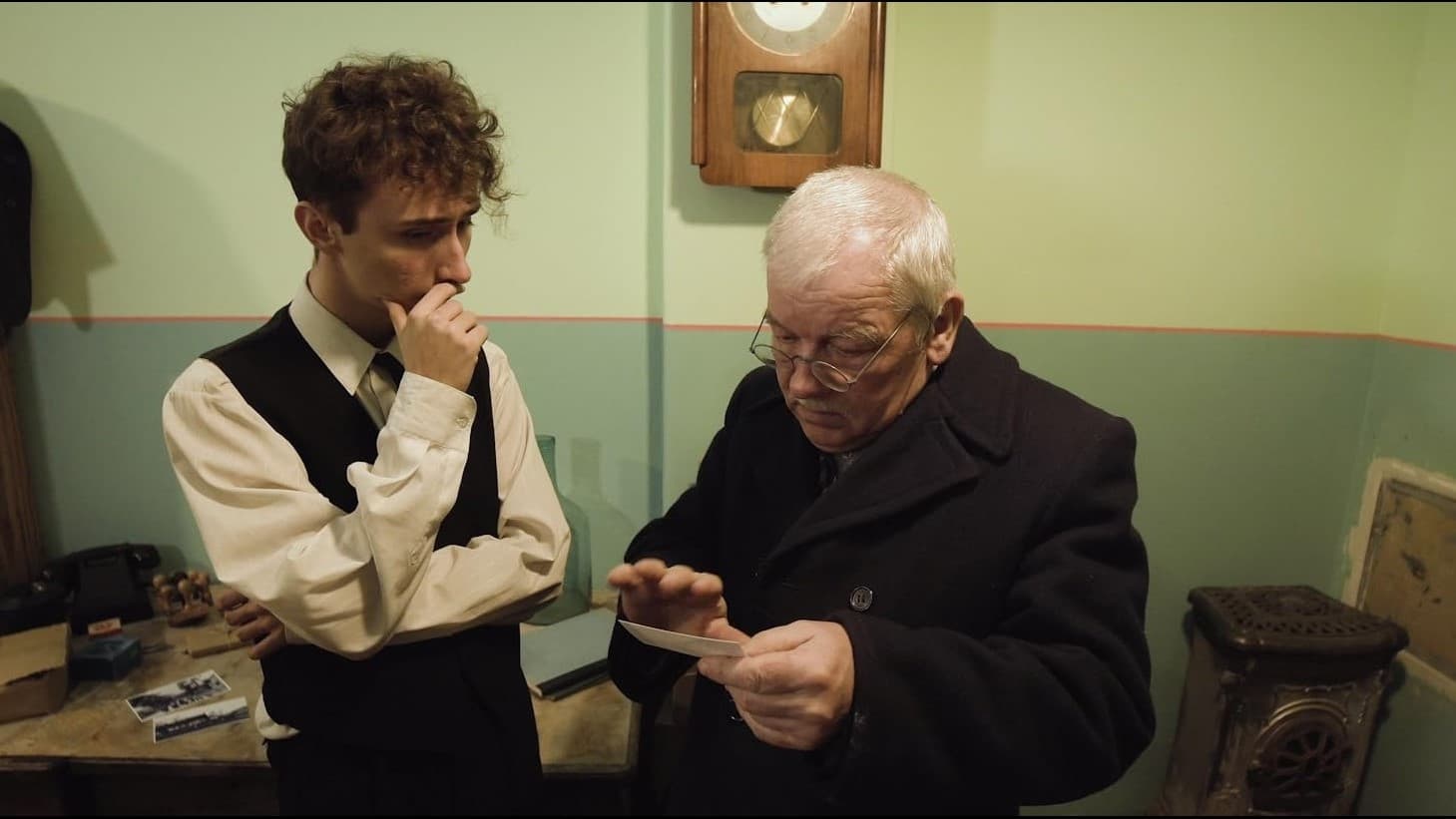
The Second World War. A group of Royal Air Force officers led by William Ash (Jakub Reizer) is staying in Oflag XXI B, located in Szubin (Poland). The prisoners decide to organize a diversionary action, which is to be a daring escape through a tunnel, named after the main originator - the Asselin tunnel. They are helped in their activities by the Polish resistance movement, which includes a young photographer, Henryk Szalczyński (Michał Matela), who develops photos for forged documents.
Top Cast



Jakub Reizer
Jakub Reizer
William Ash
Jakub Reizer
William Ash
Mateusz Jabczanik
Mateusz Jabczanik
Eddy Asselin
Mateusz Jabczanik
Eddy Asselin
Michał Dybowski
Michał Dybowski
Robert Kee
Michał Dybowski
Robert Kee
Hubert Jaśtak
Hubert Jaśtak
Tommy Calnan
Hubert Jaśtak
Tommy Calnan
Patryk Czerwiński
Patryk Czerwiński
Paddy Barthropp
Patryk Czerwiński
Paddy Barthropp
Hubert Czajka
Hubert Czajka
Wilfred Wise
Hubert Czajka
Wilfred Wise
Similar Movies
Depicts Romania during World War II, focusing on the Royal Coup that toppled Ion Antonescu, the Axis-allied Conducător and authoritarian Prime Minister. Focused around the August 23rd 1944 coup against Marshal Antonescu, the movie also tackles other topics from the same era such as the Iron Guard rebellion and the execution of political leaders by communists.

In 1945, Adele Shimanoff joins the U.S. Marine Corps amid a larger plan to bring women into the military in order to “free a marine to fight.” Adele moves away from the traditional Women’s Reserves and into active duty for a year, where she forms lifelong friendships and meets her future husband. He remains in active duty for 28 years after she leaves, giving her a full experience of life with the Marines. More than 70 years later, Adele is forced to confront the idea that she is still needed, even when her friends have passed on before her.

Black Panther, the Avengers, Hulk, Fantastic Four, The X-Men, Thor, Iron Man - to name only some of the best known super-heroes created in the 1960s by comic book artist Jack Kirby, the super heroes which today, dominate the world wide blockbuster box office cinema. This documentary mixed with CGI form his work examines Jack Kirby’s comics through his experience as a young American soldier in WWII France. How did this terrifying experience inspire him to create Captain America, and so many others characters as the war came to a close?
In 1942 Wellington, Daisy Edwards, 16 and pregnant, relies totally on her just-wed husband, Ed, who is little older than she. Ed is suddenly drafted into the army and is to be sent overseas to battle while Daisy is sent to her father in Auckland. When Ed's leave is cancelled at the last minute he takes the dangerous decision to go absent without leave to be with Daisy on her journey home. As a deserter, Ed is hunted, captured and imprisoned. Life inside is bad enought without the worry of what is going on outside. The film is based upon a true story.
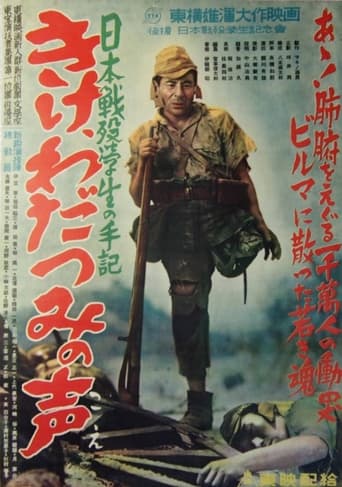
This film is strongly anti-war film. The film is based on the collection of writings by Japanese student soldiers who died during World War II. The film is located to Burma. It shows the everyday problems of soldiers in contrast of their ideas and the cynicism of their commanders. Soldiers are also victims of military bullying by their commanders.

Hawaii, Pacific Ocean. In this heavenly place, one of the most memorable battles of the Second World War took place 80 years ago. On December 7, 1941, at 7:53 am, a Japanese air squadron struck the American fleet which anchored in the waters of Pearl Harbor. The United States were struck at the heart of their defensive system and entered the conflict the very next day. How Pearl Harbor changed the face of World War II and therefore the face of the world? What are the diplomatic undersides of Pearl Harbor? Was the attack really a surprise attack? Is it really a Japanese victory?
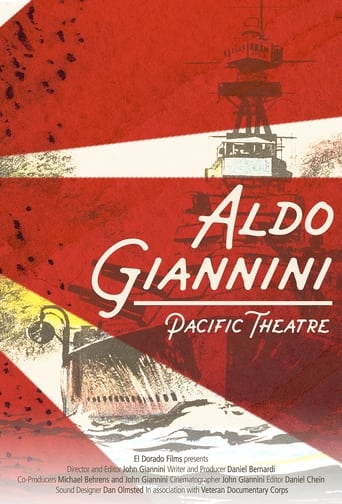
Like many other young men of his generation, after Pearl Harbor was attacked, Aldo Giannini joined the Marines with little idea of what lay ahead. After training, he was quickly deployed overseas and fought in the bloody Battle of Tarawa, surviving with a shrapnel injury and the haunting memory of witnessing the loss of 3,250 U.S. lives. He went on to fight in other battles and returned home after 3 intense years of service. Nearly eight decades later, he still questions if winning the island was worth the price.
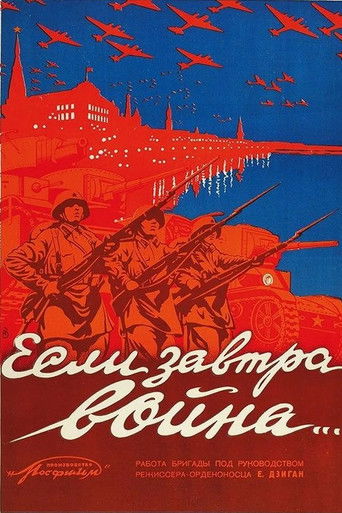
The propaganda documentary about the readiness of the Red Army to repulse any enemy is based on documentary shots taken during the real maneuvers of the Red Army. Armadas of tanks, immense columns of infantry, dozens of fighters and bombers, thousands of cavalry, legendary divisions of the Civil War. The film glorifies Soviet military power and shows the Soviet people what the war will be like when the imperialists attack the USSR — quick, victorious, almost bloodless.

Paris, 1940. German occupation forces create a new film production company, Continental, and put Alfred Greven – producer, cinephile, and opportunistic businessman – in charge. During the occupation, under Joseph Goebbels’s orders, Greven hires the best artists and technicians of French cinema to produce successful, highly entertaining films, which are also strategically devoid of propaganda. Simultaneously, he takes advantage of the confiscation of Jewish property to purchase film theaters, studios and laboratories, in order to control the whole production line. His goal: to create a European Hollywood. Among the thirty feature films thus produced under the auspices of Continental, several are, to this day, considered classics of French cinema.