

Geheimsache Katyn. Der Massenmord und die Propagandalüge
Documentary · History
Overview
Part 1: The forest at Katyn. Mass graves of more than 20,000 Polish officers and government officials. They were discovered by the Germans in the spring of 1943. Goebels' propaganda immediately gave the matter publicity, blaming the Russians for the crime. Part 2: When the Russians occupied the Smolensk region in September 1943, they came across the graves erected by the Germans at the site of the Katyn massacre. Now they, like the Germans before them, made a propaganda film blaming the Third Reich for the murder of Polish officers.








No cast information.
Similar Movies
The story of the International Military Tribunal for the Far East, known as the Tokyo Trial, which, just after the Second World War, was established in Japan as a special jurisdiction in 1946 (it was closed in 1948) to judge the war crimes of the Japanese leaders; and how and why officials in Washington prevented Emperor Hirohito to be seen sat on the bench.
Set between the two World Wars and based on true historical events, Bitter Harvest conveys the untold story of the Holodomor, the genocidal famine engineered by the tyrant Joseph Stalin. The film displays a powerful tale of love, honour, rebellion and survival at a time when Ukraine was forced to adjust to the horrifying territorial ambitions of the burgeoning Soviet Union.
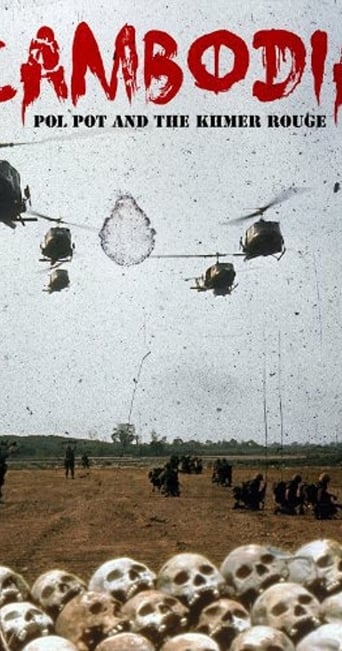
Between April, 1975 and January, 1979, Pol Pot and the Khmer Rouge were responsible for the deaths of 1.7 million people in Cambodia. A quarter of the population were wiped out in one of the most brutal and virulent genocides of the twentieth century. This new film explores the life of Pol Pot, the ever-smiling, obsessively secretive leader of the Khmer Rouge. What drove him to inflict such a radical experiment on his own people? How did the Khmer Rouge turn from a band of nationalist revolutionaries into a ruthless killing machine? And why did the West stand by and let it happen? As an international tribunal in Cambodia finally brings the surviving leaders of the Khmer Rouge to justice, it's time to re-examine the gruesome legacy of Pol Pot.
Amá is a feature length documentary which tells an important and untold story: the abuses committed against Native American women by the United States Government during the 1960’s and 70’s: removed from their families and sent to boarding schools, forced relocation away from their traditional lands and involuntary sterilization. The result of nine years painstaking and sensitive work by filmmaker Lorna Tucker, the film features the testimony of many Native Americans, including three remarkable women who tell their stories - Jean Whitehorse, Yvonne Swan and Charon Aseytoyer - as well as a revealing and rare interview with Dr. Reimart Ravenholt whose population control ideas were the framework for some of the government policies directed at Native American women.
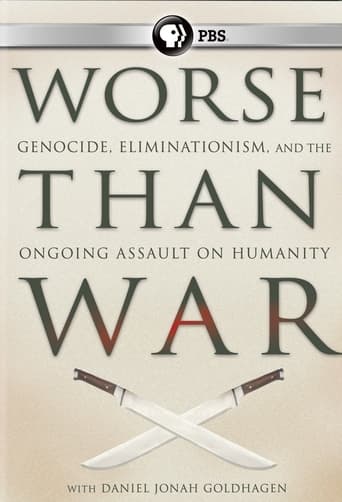
Six decades after the Nazis systematically exterminated millions of Jews, Holocaust scholar Daniel Goldhagen returns to Europe to examine the roots of genocide and the reasons behind its continuing occurrence. Along the way, he gathers stories from survivors, eyewitnesses, participants and political figures who shed light on genocide's disastrous effects and offer insights for preventing its repetition.
Filmed immediately after the end of the civil war in Angola, Há Sempre Alguém Que Te Ama records the return of Pocas Pascoal to the country where she was born, in an attempt to reconstruct the episode that, in 1975, led to the capture of the director along with her mother and sisters. An intimate documentary about memory and self-(re)construction.
1999: While NATO was bombing Yugoslavia, a truck containing 53 dead bodies plunged into the Danube near the border with Romania. No enquiries were carried out. Previously, in Suva Reka, Kosovo: Serbian police herd villagers together. A woman experiences terrible things, bodies disappear into remote mass graves. People as little more than mere matter.