


Sunny Lane
Documentary
Overview
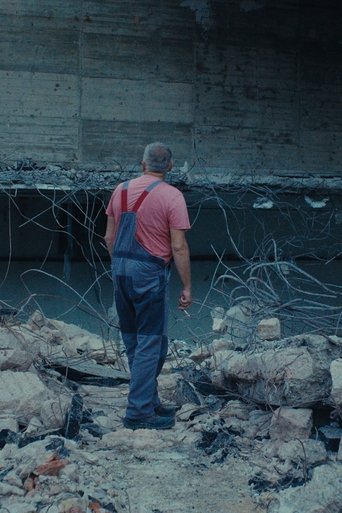
Berlin‘s past and future through the eye of an outsider - nothing but the naked truth by someone being torn apart by life and longing.











No cast information.
Similar Movies
The architectural plans for Berlin from 1938 are used as an example to illustrate the fascist claim to power and its aesthetic effect. The basis for this was the "General Building Inspection" under the direction of Albert Speer, whose enormous projects are illustrated by planning models and archive photographs.

A day in the city of Berlin, which experienced an industrial boom in the 1920s, and still provides an insight into the living and working conditions at that time. Germany had just recovered a little from the worst consequences of the First World War, the great economic crisis was still a few years away and Hitler was not yet an issue at the time.
In June 2010, French actress Marion Cotillard spent a week in the heart of the tropical forests of the Democratic Republic of Congo with members of Greenpeace France and Greenpeace Africa. She delivers in video a strong testimony on the looting of Congolese forests which benefits a few industrial groups, often European.

Kang Aries and Kang Oca are two cultural observers of Kujang who try to provide a justification perspective on the Kujang Philosophy made by one of the blacksmiths named Abah Jajang, where the general public often considers that Kujang is a sharp weapon. The two of them "Kang Aris & Kang Oca" entered the realm of the trial to defend the essence of Kujang, so as not to be considered misunderstood by the general public.

On November 4th, 2008, three states - California, Florida and Arizona - voted to amend their constitutions, denying and revoking the rights of same-sex couples to marry. On May 26, 2009, with Canadian allies, gay American families rally at a Vancouver demonstration to protest these amendments that persecute the LGBTQ community. Demonstration organizer Roger Chin relays the California Supreme Court's infamous decision on Prop 8. Subsequent speakers talk about couples living in exile. Weaving elements of public protest and intimate interviews, four families share their stories of how they met, their decision to escape to freedom in Canada, their Canadian experience and their dreams of returning to their home country, family and friends. In the end, the organizer celebrates the freedoms to marry that exists in Canada.
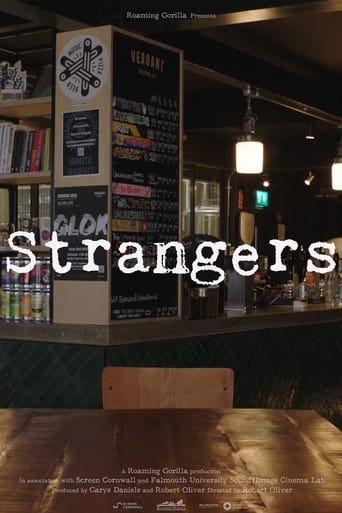
When does someone stop being a Stranger? In a world emerging from social lockdown, this documentary explores the way communication is changing. Seven participants give us their views on social interactions, before having a conversation with a Stranger. Will this change their perceptions?
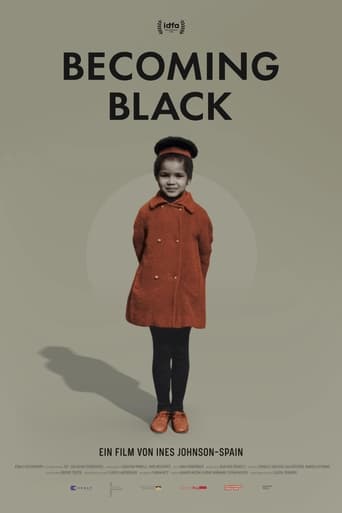
In the 1960s, a white couple living in East Germany tells their dark-skinned child that her skin color is merely a coincidence. As a teenager, she accidentally discovers the truth. Years before, a group of African men came to study in a village nearby. Sigrid, an East German woman, fell in love with Lucien from Togo and became pregnant. But she was already married to Armin. The child is Togolese-East German filmmaker Ines Johnson-Spain. In interviews with Armin and others from her childhood years, she tracks the astonishing strategies of denial her parents, striving for normality, developed following her birth. What sounds like fieldwork about social dislocation becomes an autobiographical essay film and a reflection on themes such as identity, social norms and family ties, viewed from a very personal perspective.

Stanley Kubrick’s first color film, commissioned by the Seafarers International Union to promote the benefits of union membership. Shot inside the union’s Atlantic and Gulf Coast District facilities, it features scenes of ships, machinery, cafeteria life, and meetings, highlighting the daily routines and camaraderie of seafarers. Thought lost for decades, the film was rediscovered in 1973 and preserved by the Library of Congress.