

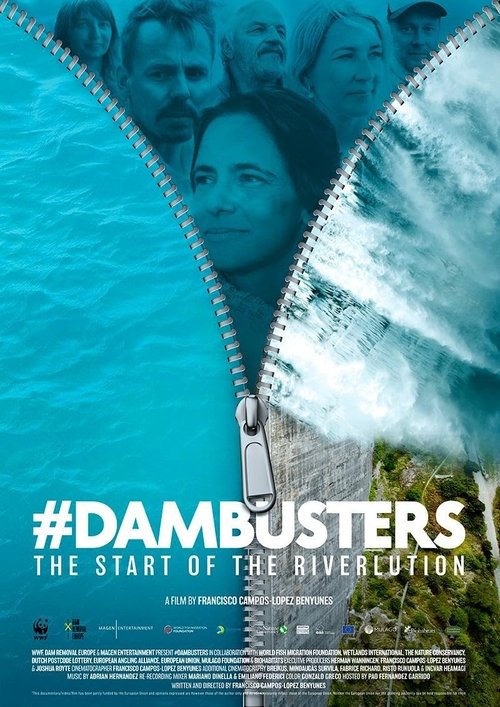
#Dambusters: The Start of the Riverlution
Documentary
Overview
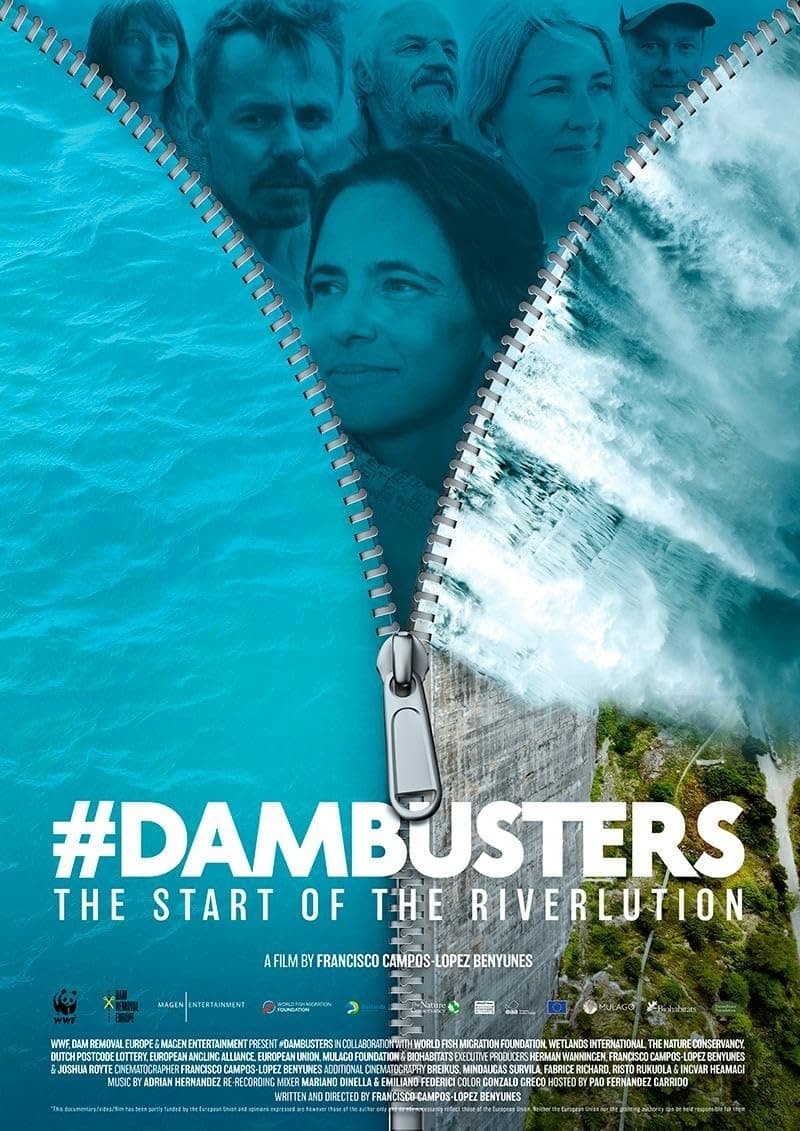
Who are the most inspiring individuals working tirelessly to restore rivers in Europe? We call them the “DamBusters”. Pao Fernández Garrido from the Dam Removal Europe coalition is on a mission: to see their work at their local rivers and share these exciting stories to inspire more river restorations. The film #DamBusters follows Pao’s journey through native Spain, France -the European cradle of river barrier removals-, Lithuania, Estonia and Finland. The most iconic river freeing cases so far, ready to impress you.


No cast information.
Similar Movies
Yaku: water; aya: essence, blood. Yakuaya is a non-verbal documentary about the descent of water and life that follows the journey of a drop of water from its birth on a glacier until its arrival at the sea. Along the way, water influences the life of a peasant, locks himself in the rhythm of a bottling factory, brings people together in the city, transforms the life of a woman, leads a river navigator, awakens hope in a desert and welcomes the innocence of two children in the sea.
In Tacony Creek Park, home to one of Philadelphia's lesser-known watersheds, Julie Slavet and Malcolm Bundy reflect on their involvement with and love for the park, made bittersweet by the continuous and increasing amount of pollution that flows into its river. Combined wastewater and stormwater sewage outfalls have affected Philadelphia's rivers for years, but as one innovative program mitigates this for the Schuylkill and Delaware, Tacony gets left behind. Scientist Laura Toran educates the audience on green infrastructure and its potential positive impacts, while Slavet and Bundy discuss how they're still waiting—not without hope—for those impacts to reach their community.
When an alien visitor discovers it can communicate with Earth’s oceans, it becomes the only intermediary between humanity and a vast marine intelligence whose patience with the human race is running out. Part survey, part discovery, the film explores a stretch of the wilderness that has largely slipped through the cracks of human attention, and in some places, bears the marks of human failure. The alien encounters a force both beautiful and terrifying, a voice as old as the planet itself, carrying memories, warnings and a power beyond human control. The film is a parable about nature on Earth by establishing an unidentified alien as interacting with the planet. By way of subtle messages the sea warns the alien that the existence of the planet is at stake. The alien discovers a controlling city but does not interfere with it and hopes that the sea will find a way to survive.
This short documentary addresses the global issue of climate change, highlighting its unequal impacts on rural communities in deltaic regions of both the Global South and North. While the Global North is a major contributor to climate change, its devastating effects are most felt in the Global South, particularly in regions like Trarza, Mauritania, where agriculture is severely impacted. Similarly, the Terres de l’Ebre in Catalonia faces rising sea levels and land erosion, threatening local livelihoods. These shared challenges provide a rich opportunity for youth from both regions to engage in dialogue and storytelling.
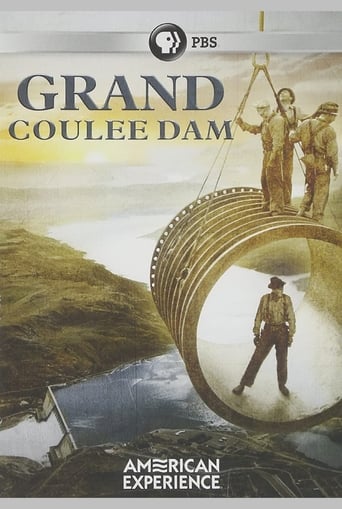
During the darkest days of the Depression when construction was started on Grand Coulee Dam, everything about it was described in superlatives. It would be the "Biggest Thing on Earth," the salvation of the common man, a dam and irrigation project that would make the desert bloom, a source of cheap power that would boost an entire region of the country. Of the many public works projects of the New Deal, Grand Coulee Dam loomed largest in America's imagination, promising to fulfill President Franklin Roosevelt's vision for a "planned promised land" where hard-working farm families would finally be free from the drought and dislocation caused by the elements.