


Angoulême : 50 ans de bulles
Documentary · History
Overview
In 1974, a group of friends, inspired by what they had seen in Italy and driven by their common passion, organized a comic book fair in their Charente town of Angoulême. Half a century later, the event has become an internationally renowned festival, which is about to celebrate its 50th edition. This documentary tells the story of the creation of the Angoulême International Comics Festival in the context of the 1970s, and the evolution of the event since then, which has made the city a world reference in an exponentially growing bubble market.


No cast information.
Similar Movies
Cap D'Agde is a popular summer resort town in France. A large section of the town is clothing-optional, and thousands of tourists flock there every year for the opportunity to spend their days naked - not only on the beach or in the pool, but in the shopping area also. Our tour guides, Alison Brown and Wendy Cooper, show off the town's attractions and interview a number of visitors and locals to find out what they most enjoy about vacationing in the nude.
In 1415 a small English Army consisting mainly of Yeoman English and Welsh archers defeated and destroyed a much larger French army consisting mainly of the nobility of France at Agincourt. This film follows Henry Vth's campaign from his landing near Harfleur, his costly successful siege and his desperate attempts to cross the River Somme and escape to Calais culminating in the Battle of Agincourt on 25th Oct 1415. The BHTV team of military historians take you through the battle separating myth from fact to tell the true story of one of the most epic episodes of English history. The story is brought to life with re-enactment footage, maps and is shot on location in France.
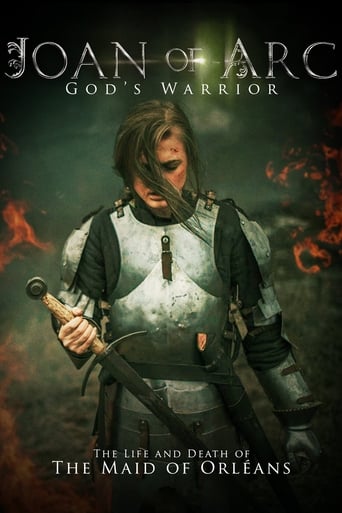
Writer and historian Dr Helen Castor explores the life - and death - of Joan of Arc. Joan was an extraordinary figure - a female warrior in an age that believed women couldn't fight, let alone lead an army. But Joan was driven by faith and today, more than ever, we are acutely aware of the power of faith to drive actions for good or ill. Since her death, Joan has become an icon for almost everyone: the left and the right, Catholics and Protestants, traditionalists and feminists. But where, in all of this, is the real Joan - the experiences of a teenage peasant girl who achieved the seemingly impossible? Through an astonishing manuscript, we can hear Joan's own words at her trial and, as Helen unpicks Joan's story and places her back in the world that she inhabited, the real human Joan emerges.
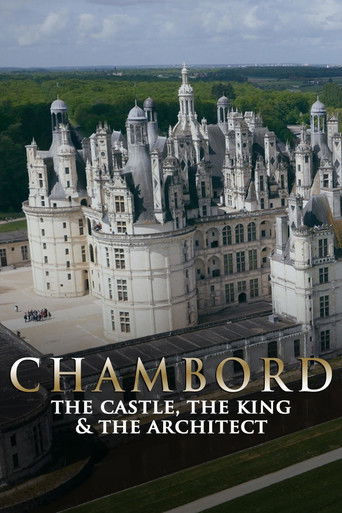
Chambord, the most impressive castle in the Loire Valley, in France, a truly Renaissance treasure, has always been an enigma to generations of historians. Why did King Francis I (1494-1547), who commissioned it, embark on this epic project in the heart of the marshlands in 1519? What significance did he want the castle to have? What role did his friend, Italian genius Leonardo Da Vinci (1452-1519) play? Was he the architect or who was?
In 17th century France, young d'Artagnan wants to join the King's Musketeers, but instead befriends three legendary musketeers — Athos, Porthos, and Aramis — and together, they become embroiled in the political intrigue surrounding King Louis XIII and his adversaries, particularly the powerful Cardinal Richelieu.

Constructing freestone buildings on the cheap, Pouillon made a name for himself at the end of the 1940s in Aix-en-Provence and Marseille, shaking up his peers who only dreamed of towers and concrete bars. In Algiers, until Independence, he built in record time thousands of homes for the poorest, real urban projects inspired by traditional forms. In the Paris region, to build comfortable buildings quickly and well, nestled in the greenery, he becomes a promoter: this too adventurous bet leads him to prison and retains his reputation. Not very explicit about this complex affair, but seduced by a contemporary architecture that combines technical inventiveness and ancient references, Christian Meunier films by multiplying the angles of view. Today's lively atmospheres are interspersed with archive footage, while Pouillon's writings are read off. Moved, his collaborators evoke a demanding and generous man, with an infectious passion.
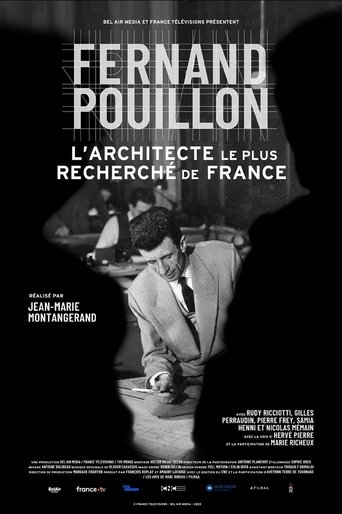
The work of Fernand Pouillon, "France's most wanted" architect after being imprisoned and mysteriously escaping in the 1960s, now seems to have faded into the background. However, in 50 years he has built more than 5 million square meters, mainly between France and Algeria, at a frantic pace, traveling tens of thousands of kilometers per week, by propeller plane, to go to construction sites. at night or at dawn between Marseille, Paris, Algiers or in the middle of the desert, until you burn your wings. Among others, Fernand Pouillon decided to build houses for the most modest.