

Empire
Documentary
Overview
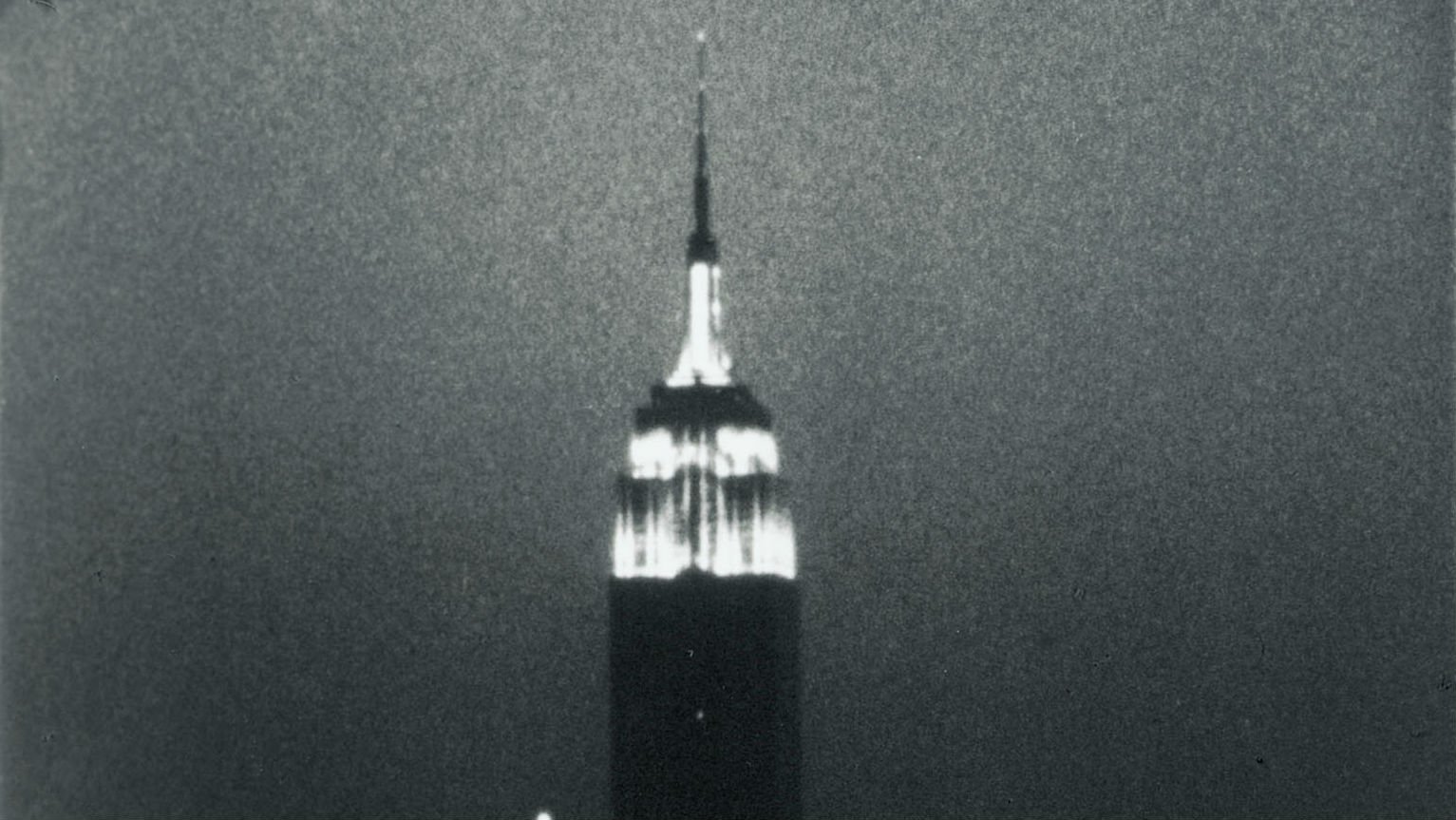
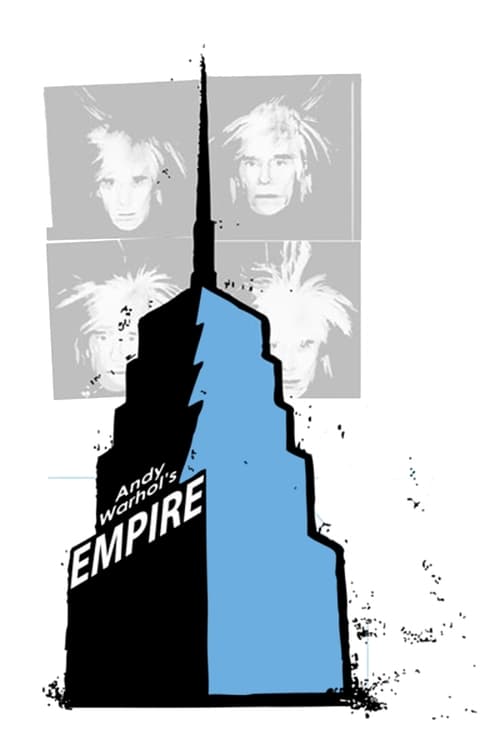
Filmed by Jonas Mekas from the 44th floor of the Time-Life Building, “Empire” explores the passage of time without the use of characters or a traditional narrative. The film, that consists of one stationary shot of the Empire State Building, was made from standard 1,200-foot rolls of 16mm film with a more than eight-hour runtime.


Jonas Mekas
Jonas Mekas
Self (uncredited)
Jonas Mekas
Self (uncredited)
Andy Warhol
Andy Warhol
Self (uncredited)
Andy Warhol
Self (uncredited)
Similar Movies
A day in the city of Berlin, which experienced an industrial boom in the 1920s, and still provides an insight into the living and working conditions at that time. Germany had just recovered a little from the worst consequences of the First World War, the great economic crisis was still a few years away and Hitler was not yet an issue at the time.
A film in which the one 60-story skyscraper that soars in the spaces between roofs spins with incredible speed. I centered the circumference with its 400 or 500 meter radius on the skyscraper and divided it into 48 sections, then took photographs from those spots and shot the photographs frame by frame.
Rua de Santa Catarina, a street that was formerly home to dozens of local businesses and hundreds of Porto residents, now sees a crowd of tourists attracted by the cheap, disposable amenities that are popping up everywhere at once. Gentrification has decontextualized Portuguese culture, rendering the landscape uncanny. The Basin Woman, a symbol of the female workers of the historic Bolhão Market, is chased down by seagulls in the midst of this transcendent chaos.
The inner world of the great painter Max Ernst is the subject of this film. One of the principal founders of Surrealism, Max Ernst explores the nature of materials and the emotional significance of shapes to combine with his collages and netherworld canvases. The director and Ernst together use the film creatively as a medium to explain the artist's own development.
Luis Bunuel, the father of cinematic Surrealism, made his film debut with 'Un Chien Andalou' in 1929 working closely with Salvador Dali. Considered one of the finest and controversial filmmakers with, 'L’Age d’Or' (1930), attacking the church and the middle classes. He won many awards including Best Director at Cannes for 'Los Olvidados' (1950), and the coveted Palme d’Or for 'Viridiana' (1961), which had been banned in his native Spain. His career moved to France with 'The Diary of a Chambermaid' with major stars such as Jeanne Moreau and Catherine Deneuve.
After concluding the now-legendary public access TV series, The Pain Factory, Michael Nine embarked on a new and more subversive public access endeavor: a collaboration with Scott Arford called Fuck TV. Whereas The Pain Factory predominantly revolved around experimental music performances, Fuck TV was a comprehensive and experiential audio-visual presentation. Aired to a passive and unsuspecting audience on San Francisco’s public access channel from 1997 to 1998, each episode of Fuck TV was dedicated to a specific topic, combining video collage and cut-up techniques set to a harsh electronic soundtrack. The resultant overload of processed imagery and visceral sound was unlike anything presented on television before or since. EPISODES: Yule Bible, Cults, Riots, Animals, Executions, Static, Media, Haterella (edited version), Self Annihilation Live, Electricity.