


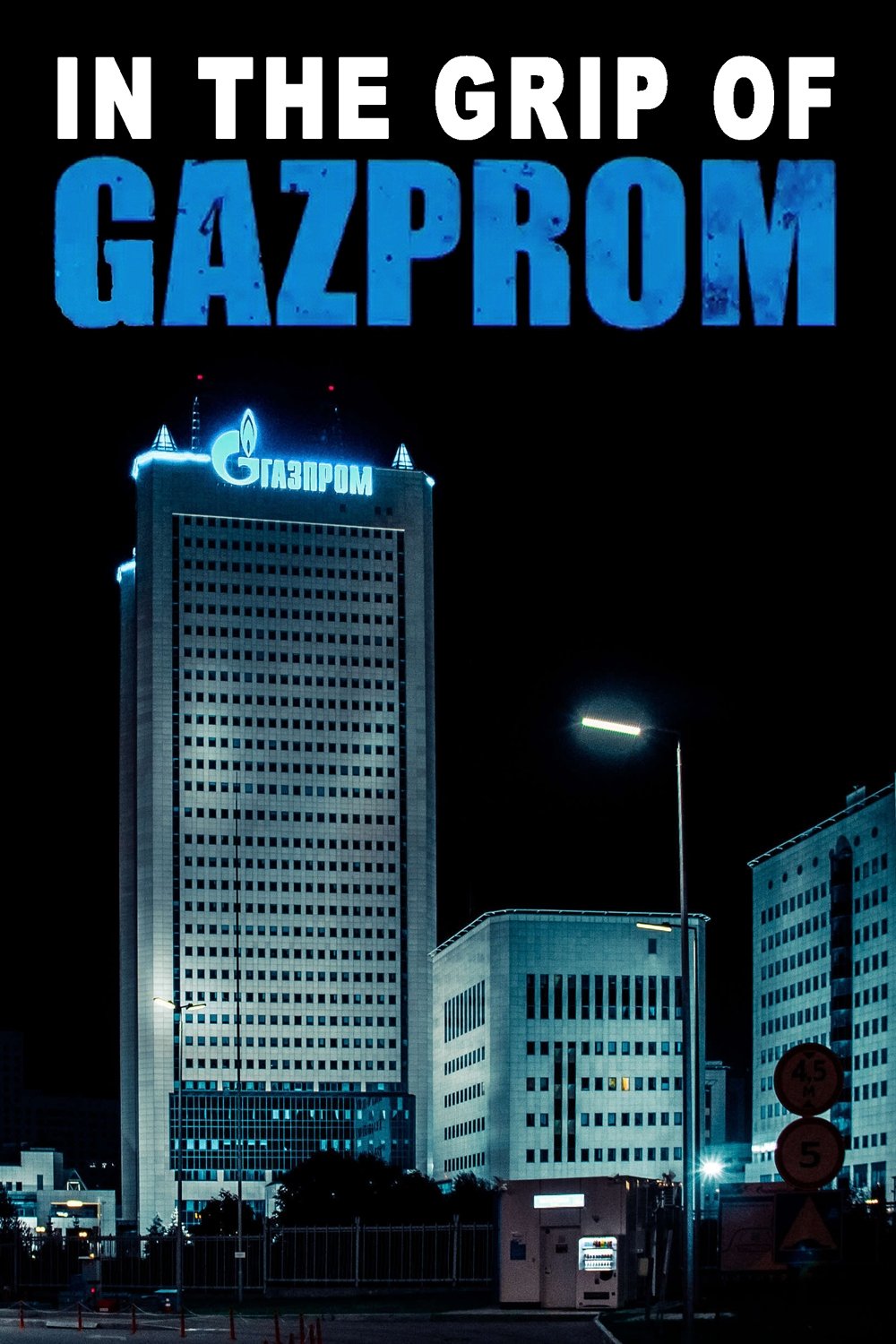
In the Grip of Gazprom
Documentary · History
Overview
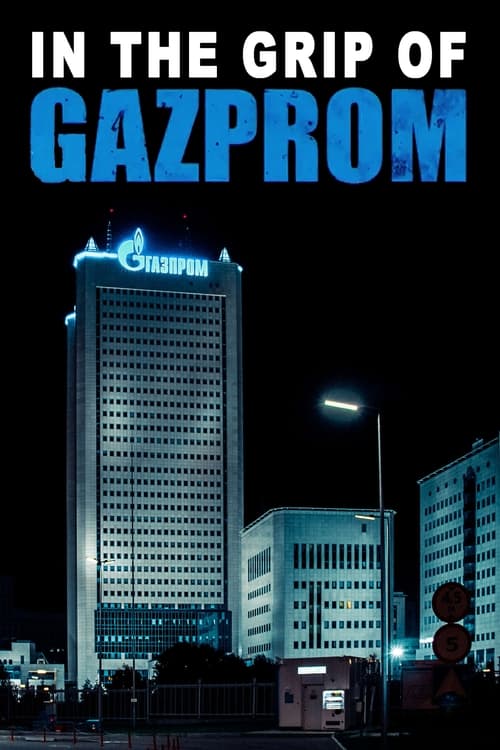
The war in the Ukraine has changed the way many European countries view Russian politics. Suddenly it became clear how dependent countries had become on Russian gas imports for decades and what Vladimir Putin was up to. However, no country needs more gas than Germany. It was only after Russia's invasion of the Ukraine that the German government realized that Russia had long used gas as a weapon to impose its will on states. The instrument created for this purpose is the natural gas production company GAZPROM. So how did Germany become so dependent on Russian gas? The documentary shows how, over several decades and several changes of government, a broad alliance of politicians and business representatives did everything possible to secure Germany's energy supply with cheap Russian gas, while the Kremlin's foreign policy became increasingly aggressive and the warnings of experts went unheeded.
Top Cast
Alexander Scheer
Self - Narrator (voice)
Jürgen Hambrecht
Self - Interviewee
Wolfgang Ischinger
Self - Interviewee
Radoslaw Sikorski
Self - Interviewee
Andriy Kobolyev
Self - Interviewee
Angela Stent
Self - Interviewee

Martin Schulz
Self - Interviewee
David L. Goldwin
Self - Interviewee
Matthias Warnig
Self - Interviewee
Margarita M. Balmaceda
Self - Interviewee
Frank Umbach
Self - Interviewee
Jonathan Stern
Self - Interviewee









Alexander Scheer
Alexander Scheer
Self - Narrator (voice)
Alexander Scheer
Self - Narrator (voice)
Jürgen Hambrecht
Jürgen Hambrecht
Self - Interviewee
Jürgen Hambrecht
Self - Interviewee
Wolfgang Ischinger
Wolfgang Ischinger
Self - Interviewee
Wolfgang Ischinger
Self - Interviewee
Radoslaw Sikorski
Radoslaw Sikorski
Self - Interviewee
Radoslaw Sikorski
Self - Interviewee
Andriy Kobolyev
Andriy Kobolyev
Self - Interviewee
Andriy Kobolyev
Self - Interviewee
Angela Stent
Angela Stent
Self - Interviewee
Angela Stent
Self - Interviewee
Martin Schulz
Martin Schulz
Self - Interviewee
Martin Schulz
Self - Interviewee
David L. Goldwin
David L. Goldwin
Self - Interviewee
David L. Goldwin
Self - Interviewee
Matthias Warnig
Matthias Warnig
Self - Interviewee
Matthias Warnig
Self - Interviewee
Margarita M. Balmaceda
Margarita M. Balmaceda
Self - Interviewee
Margarita M. Balmaceda
Self - Interviewee
Similar Movies

A green lawn like an unused carpet, encircled by a neat forest edge, in the background the steaming cooling towers of a coal power station – impressionistic camera images from Lusatia. They summarise in one pan how a used-up utilitarian landscape is trying to recultivate itself. Can ancient identity and language be re-discovered amid this strange artificiality? The director travelled through this region in search of her origins. She was born here, in Lusatia. This is her home and that of the smallest of all Slavic peoples: the Sorbs.

Jan Smuts is a foremost political figure in South African 20th Century History, and is recognised today by two of the world's leading historians as being at the very centre of the vision for a new world order that emerges from the League of Nations and the United Nations.. Yet, he is virtually persona non grata in his own country.... and largely ignored in school history books. This one hour drama-documentary, with its dramatised cameo scenes in which his look-alike grandson takes on the role of Jan Smuts, battle re-enactments, historical archival footage, comments from historians, political analysts, and South African political struggle heroes, looks back on his life and the circumstances that shaped it in search of some answers.
THE PERFUMED GARDEN is an exploration of the myths and realities of sensuality and sexuality in Arab society, a world of taboos and of erotic literature. Through interviews with men and women of all ages, classes, and sexual orientation, the film lifts a corner of the veil that usually shrouds discussion of this subject in the Arab world. Made by an Algerian-French woman director, the film begins by looking at the record of a more permissive history, and ends with the experiences of contemporary lovers from mixed backgrounds. It examines the personal issues raised by the desire for pleasure, amidst societal pressures for chastity and virginity. The film discusses pre-marital sex, courtship and marriage, familial pressures, private vs. public spaces, social taboos (and the desire to break them), and issues of language.
On May 1st, unions all over Japan celebrate May Day, the international day for workers. Workers gather together at parks and hold demonstrations and parades. May Day has its origins in a strike that occurred in the United States on May 1, 1886, a strike that called for an eight-hour workday. Prokino recorded the May Day every year from 1927 to 1932. Among these films, this work is the only one that has survived. However, only its first part has survived. The original film depicts the march to the Ueno Park where the rally was dismissed. Iwasaki Akira coordinated the entire Tokyo Prokino organization as it photographed the 1931 May Day celebrations. They shot in both 16mm and 35mm (other 35mm productions were planned, but this is the only one that achieved completion). A 16mm print was circulated around the countryside by mobile projection units, and a 35mm print was shown at Soviet film nights in Tokyo and Osaka.