

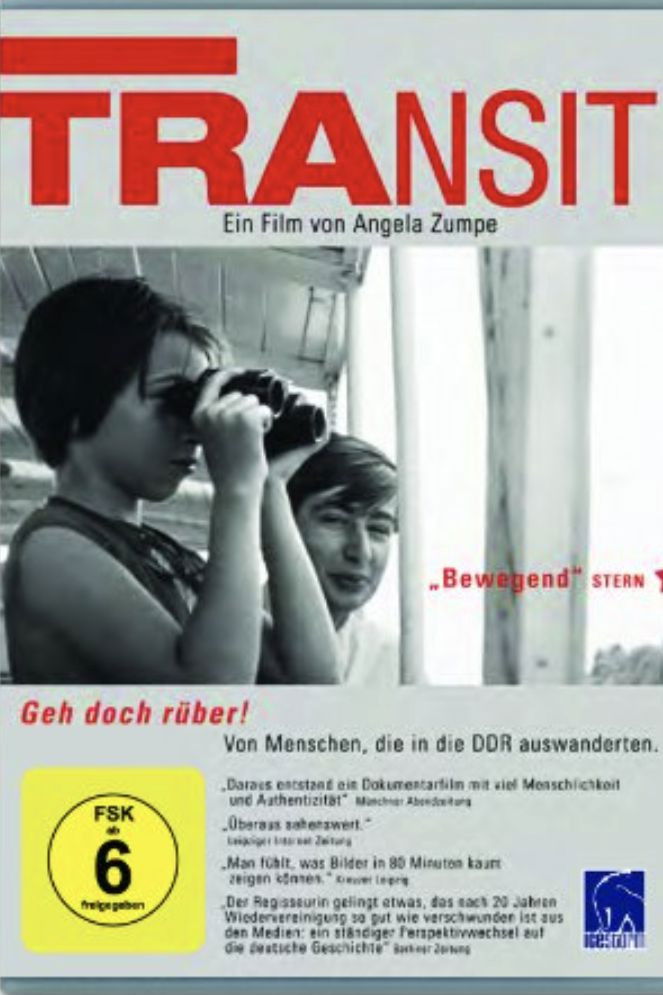
TRANSIT
Documentary
Overview
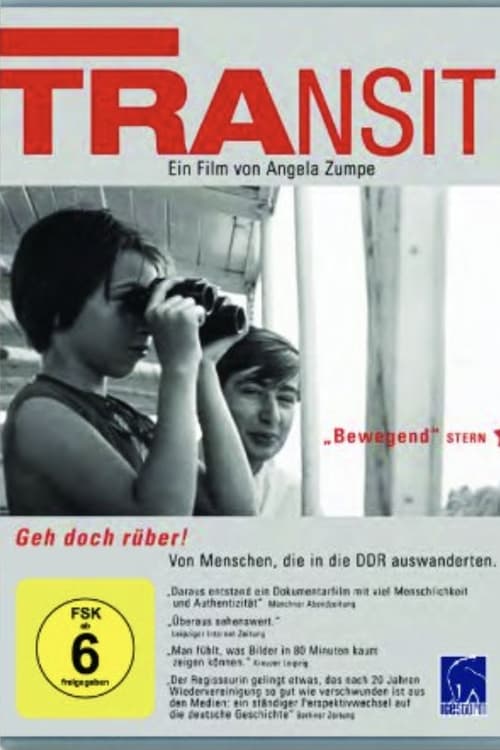
In this documentary Angela Zumpe searches for traces of her brother, who moved from west to east Germany in 1968 to live in the DDR but killed himself eight months after.





No cast information.
Similar Movies
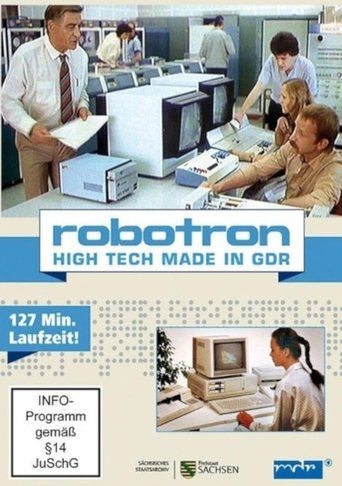
In a world divided by the Iron Curtain, East Germany sought to carve its niche in the technological race. Enter "Robotron" - a name that seamlessly blended "robot" and "electronics." This wasn't just a brand; it was an ambitious answer to the West's technological advancements, a testament to the GDR’s drive to match, if not surpass, Western innovation. Drawing inspiration from the corporate giants of the West, the GDR‘s government merged various businesses to form this tech behemoth. With 16 major hubs in Central Germany alone, it was clear: "Robotron" was to be the DDR's technological crown jewel. But what was the Socialist Unity Party (SED), the GDR's ruling party, envisioning with this grand venture? How did "Robotron" navigate the challenges of operating within a socialist planned economy, while striving for global excellence? And as it grew to dominate East Germany's tech landscape, why did it always seem to be one step behind the leading global tech powers?
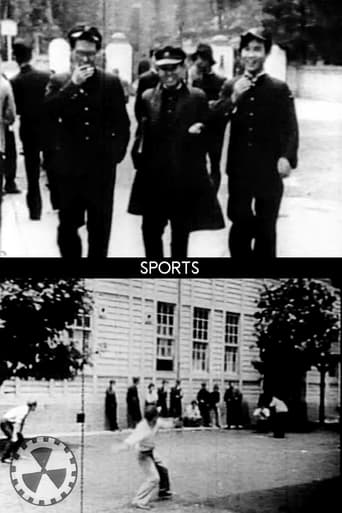
The film is about a protest provoked when the university decided to restrict access to sports facilities to athletes, cutting out all other students. This is, strictly speaking, not a Prokino film. It was produced by the Waseda University Film Circle, which was organized by Kawazoe Shiro. Feature film directors Yamamoto Satsuo and Taniguchi Senkichi were apparently students at Waseda at the time and participated in the production.
This film undertakes a journey into the amazing parallel universe of East Berlin’s fashion designers and experts in the art of survival. For, in the midst of the constraints of life in the GDR, there existed a fantasy world where it was possible to dance to another tune, be individual and even provocative. The most important characteristic of this bohemian scene was one’s per- sonal style. But this certainly wasn’t something that could be bought off the peg in the GDR. In this parallel universe it was up to you to create your own individual image – with your own hands. This film tells the story of the desires, the passion and the dreams that were tried and tested, lived and performed in the shadow of the Berlin Wall.
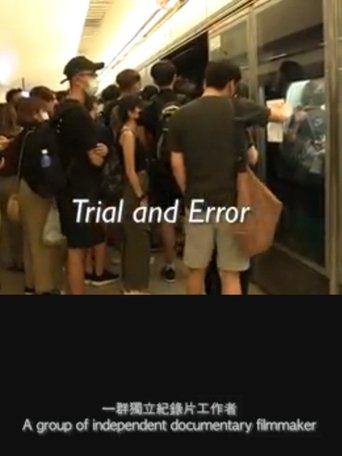
This Anti-ELAB (Anti-Extradition Law Amendment Bill) Movement documentary short takes us back to the airport occupation on 12 August 2019. Although this new form of protest soon turned into a crisis, it became an important lesson for the protesters. Compared to the tension inside the airport terminal, the long walk home at sunset on the Lantau highway, which connects the Hong Kong International Airport to the residential areas, felt like a reminiscence of a school field trip.
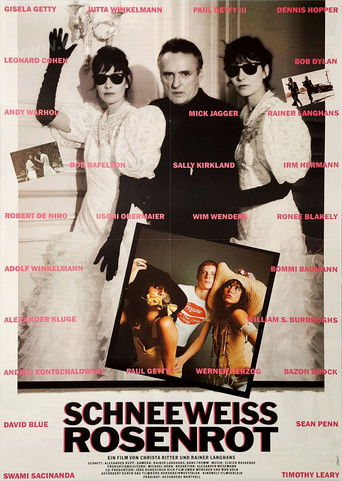
Documentary about the twin sister Jutta and Gisela Schmidt. In the late sixties the two women rebelled against middle class society as if they gave vent to a new kind of art. They became active in the underground communist party KPD and showed a heart-felt interest in the colour red, the aesthetics of the revolution. Soon, though, the twins quit their experiments in Germany. They left their husbands and went to Rome, where they met the fabulously wealthy Paul Getty III, and soon things got really out of hand.