

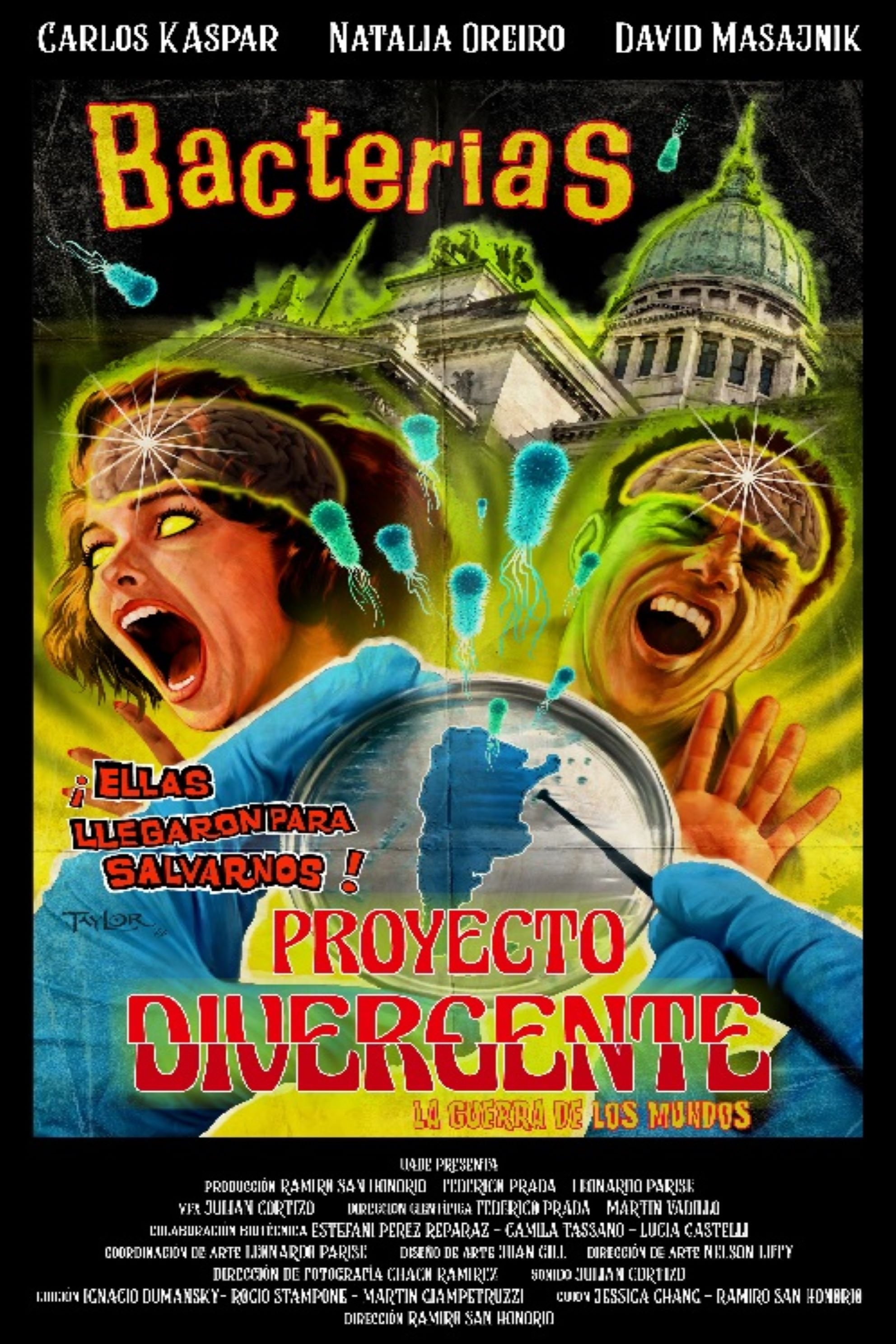
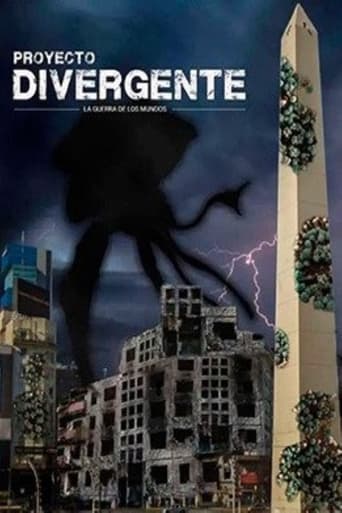
Proyecto divergente
Science Fiction
Overview
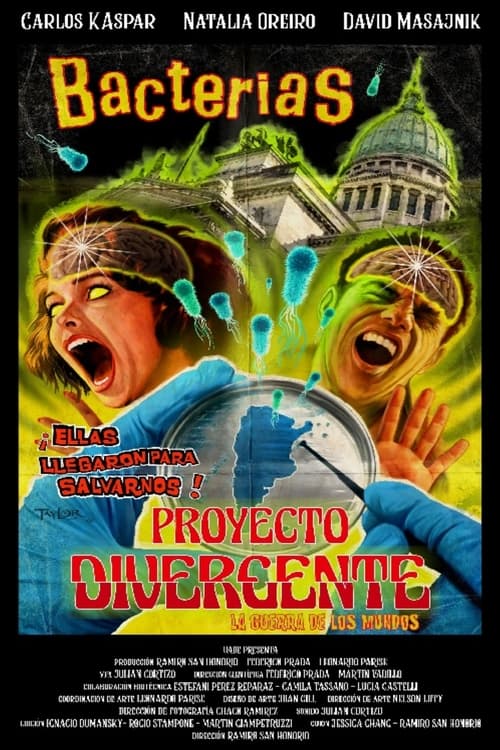
The first bioart narrative film. A transposition of War of the worlds in which the visuals are achieved by cultivating bacteria to follow certain patterns on petri dishes in a chemical oven. The narration evokes radio plays.




Natalia Oreiro
Natalia Oreiro
Natalia Oreiro
Carlos Kaspar
Carlos Kaspar
Carlos Kaspar

David Masajnik
David Masajnik
David Masajnik
Similar Movies

While working in a greenhouse, a man receives an insect bite after touching an exotic plant. Immediately, he falls ill and is taken to an emergency room where the doctors diagnose him as suffering from an unknown bacteria, and a strange parasite which emerges from his mouth as a large slimy wormlike creature. Soon, there are more cases of bacterial infection, but the more immediate problem for the hospital is the wormlike creature which after accidental exposure to a genetic growth stimulant grows to monstrous proportions and starts a reign of terror and bloodshed in the hospitals abandoned wing.
Dr George McGavin and Dr Zoe Laughlin set up base camp at one of the UK's biggest sewage works to investigate the revolutionary science finding vital renewable resources and undiscovered life in human waste. Teaming up with world-class scientists, they search for biological entities in sewage with potentially lifesaving medical properties, find out how pee can generate electricity, how gas from poo can fuel a car and how nutrients in waste can help solve the soil crisis. They follow each stage of the sewage treatment process, revealing what the stuff we flush can tell us about how we live today, and the mindboggling biotechnology being harnessed to clean it, making the wastewater safe enough to return to the environment.
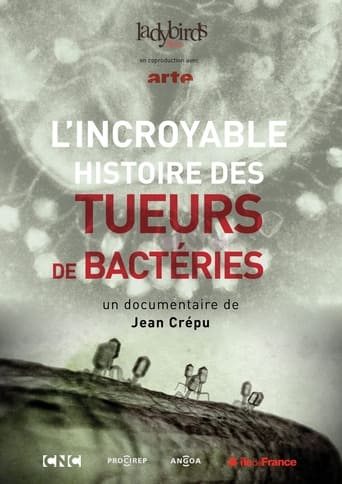
More and more bacteria are becoming insensitive to antibiotics, not least due to excessive drug consumption. According to the EU, this problem could soon become as explosive as the environmental issue - and antibiotic resistance threatens to become one of the main causes of death worldwide. Research must therefore find alternatives - not miracle cures, but permanently effective drugs. There has already been one in the past: One hundred years ago, the French biologist Félix d'Hérelle discovered mysterious "bacteria-eating" viruses, known as bacteriophages or phages for short. He used these to successfully treat bacterial infections before the development of antibiotics, but his method was forgotten again. Is bacteriophage therapy the miracle medicine of the future?
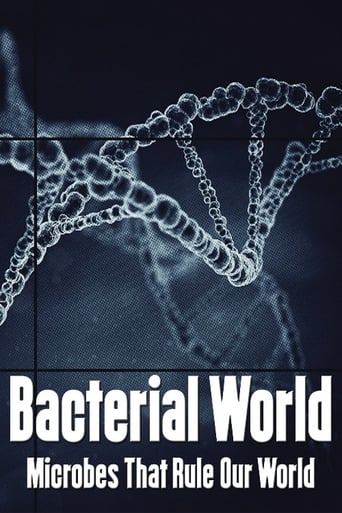
Coming in all shapes and sizes, bacteria are present in every corner of the Earth. Their purposes and types are even more diverse, with only 1% being truly harmful. Dive into the world of Bacteria to experience the latest discoveries and scientific knowledge surrounding these plentiful and necessary microbes.