

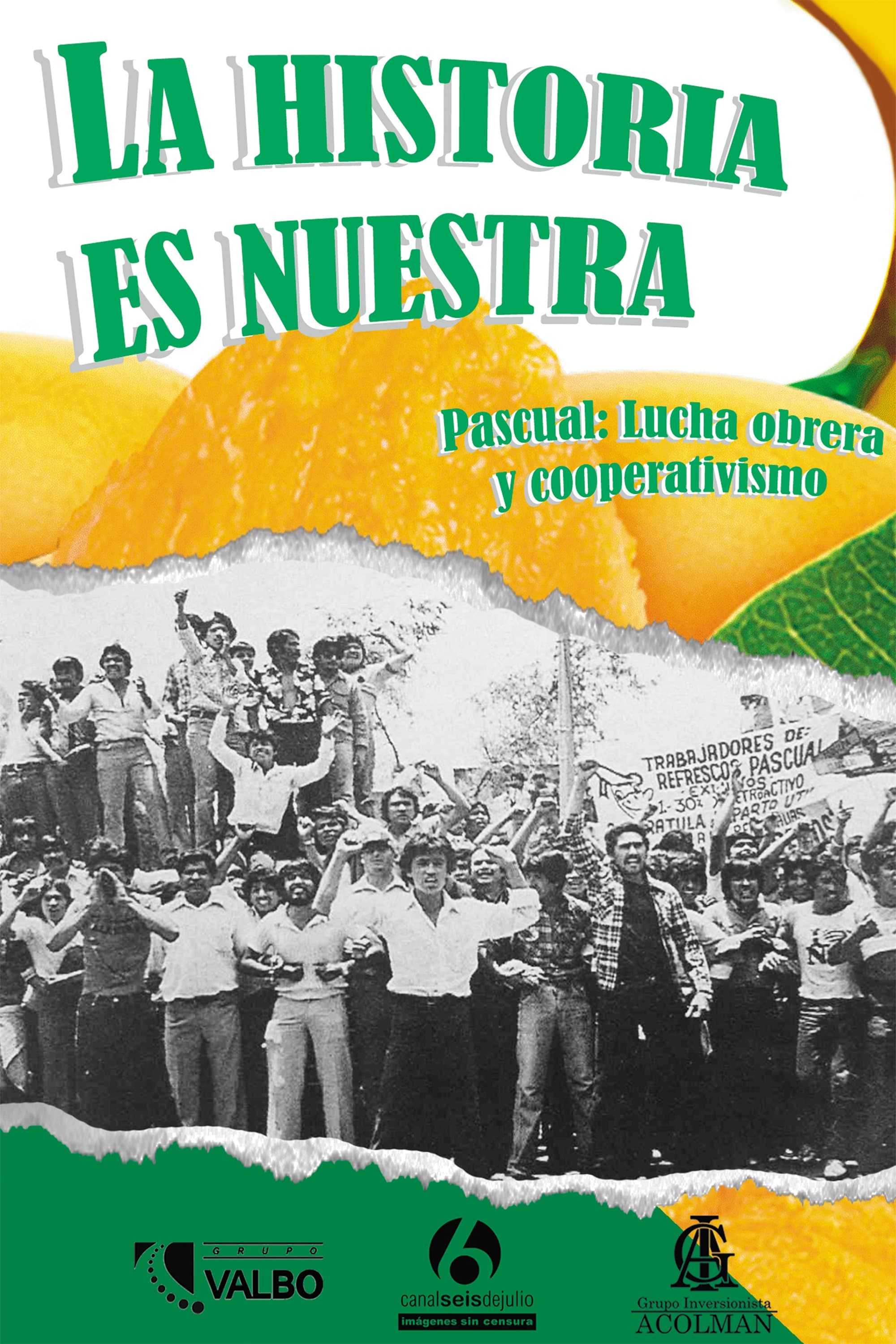
La historia es nuestra: Pascual, lucha obrera y cooperativismo
Documentary
Overview
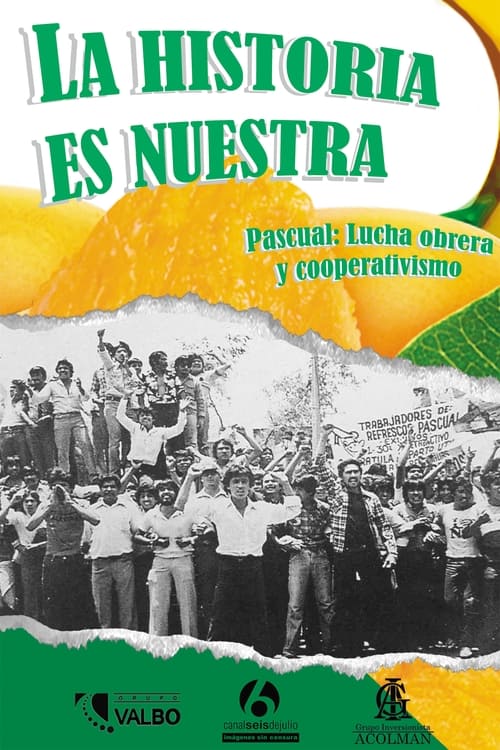
History is Ours narrates the struggle of the workers of the Refrescos Pascual soft-drink company against its owner, Rafael Jiménez, the official trade unionism of the CTM and the labor authorities of the governments of José López Portillo and Miguel de la Madrid, between 1982 and 1985. It documents the workers' difficult struggle to take over the company, when justice, which had been elusive, finally proved them right, and opened the possibility that these brave, tenacious workers would become collective owners of the company. Today, these soft-drink fighters resist a system that hits Mexican companies in favor of the monopolistic transnationals. The film is an account of one of the most brilliant episodes of the contemporary Mexican labor movement, an example of unity and class consciousness, embodied by men and women who make their struggle a tribute to comrades Concepción Jacobo García and Alvaro Hernández García, tragically fallen at the beginning of this historic event.


No cast information.
Similar Movies
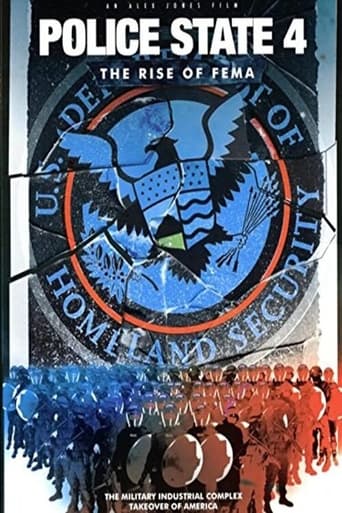
POLICE STATE 4 chronicles the sickening depths to which our republic has fallen. Veteran documentary filmmaker Alex Jones conclusively proves the existence of a secret network of FEMA camps, now being expanded nationwide. The military industrial complex is transforming our once free nation into a giant prison camp. A cashless society control grid, constructed in the name of fighting terrorism, was actually built to enslave the American people. Body scanners, sound cannons, citizen spies, staged terror and cameras on every street corner -- it's only the beginning of the New World Order's hellish plan. This film exposes how the "Continuity of Government" program has established an all powerful shadow state. Prepare to enter the secretive world of emergency dictatorship, FEMA camps, and a shredded Constitution.
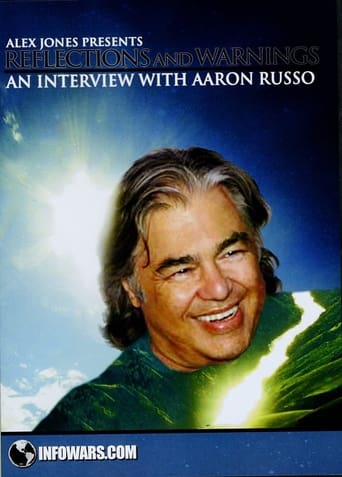
In an historic final interview, filmmaker and music promoter Aaron Russo goes in depth on the insider-knowledge given to him by a member of the Rockefeller family. Russo was told– prior to 9/11– of plans to stage terror attacks, invade foreign nations, and kickstart a high-tech police state control grid that would track the populations’ every move with implantable RFID microchips. This information-packed presentation is filled with never-before seen footage. Throughout the film, Alex Jones breaks down the latest activities of the New World Order and how it ties into what Russo predicted.

"I often say sociology is a martial art, a means of self-defence. Basically, you use it to defend yourself, without having the right to use it for unfair attacks." (Pierre Bourdieu) The world has witnesses who speak out loud what others keep to themselves. They are neither gurus, nor masters, but those who consider that the city and the world can be thought out. The sociologist, Pierre Bourdieu is one such witness." Over a three- year period, Pierre Carles' camera followed him through different situations: a short conversation with Günter Grass, a lively conference with the inhabitants of a working-class suburb, his relations with his students and colleagues and his plea that sociology be part of the life of the city. His thinking has a sort of familiarity, which means it is always within our reach. It is the thinking of a French intellectual who has chosen to think his times.
A colorful and provocative survey of anarchism in America, the film attempts to dispel popular misconceptions and trace the historical development of the movement. The film explores the movement both as a native American philosophy stemming from 19th century American traditions of individualism, and as a foreign ideology brought to America by immigrants. The film features rare archival footage and interviews with significant personalities in anarchist history including Murray Boochkin and Karl Hess, and also live performance footage of the Dead Kennedys.
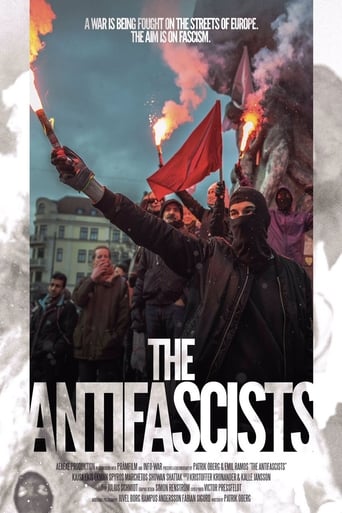
A low-intensity war is being fought on the streets of Europe and the aim is on fascism. This critically acclaimed documentary takes us behind the masks of the militants called antifascists. In 2013 a group of armed nazis attacks a peaceful demonstration in Stockholm where several people are injured. In Greece the neo-nazi party Golden Dawn becomes the third largest in the election and in Malmö the activist Showan Shattak and his friends are attacked by a group of nazis with knives and he ends up in a coma. In this portrait of the antifascists in Greece and Sweden we get to meet key figures that explain their view on their radical politics but also to question the level their own violence and militancy.
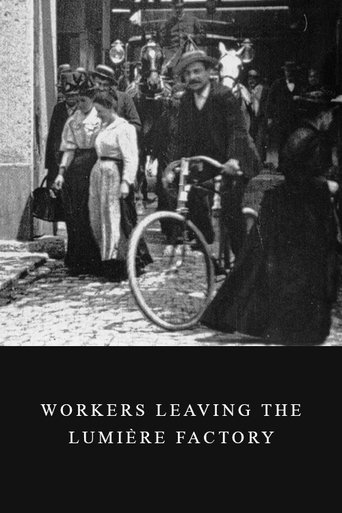
Working men and women leave through the main gate of the Lumière factory in Lyon, France. Filmed on 22 March 1895, it is often referred to as the first real motion picture ever made, although Louis Le Prince's 1888 Roundhay Garden Scene pre-dated it by seven years. Three separate versions of this film exist, which differ from one another in numerous ways. The first version features a carriage drawn by one horse, while in the second version the carriage is drawn by two horses, and there is no carriage at all in the third version. The clothing style is also different between the three versions, demonstrating the different seasons in which each was filmed. This film was made in the 35 mm format with an aspect ratio of 1.33:1, and at a speed of 16 frames per second. At that rate, the 17 meters of film length provided a duration of 46 seconds, holding a total of 800 frames.