


Are We Going Backward?
Documentary
Overview
An experimental documentary covering the British Columbia Social Credit Party's passage of Bill 34, a piece of legislation that legalized the quarantine and internment of people with HIV/AIDS. A comparison is made to the internment of Japanese Canadians in British Columbia during World War II. Based on David Tuff's video installation at Emily Carr in 1988.





No cast information.
Similar Movies
Produced by the activist video collective ACT UP/NY called DIVA TV (Damned Interfering Activist Television), this tape analyzes the collaborative demonstration "Stop the Church" by WHAM! (Women's Health Action and Mobilization) and ACT UP/NY on December 10, 1990, against Cardinal John O'Connor and the Roman Catholic Church's murderous stand on abortion rights, safer sex, and homosexuality.
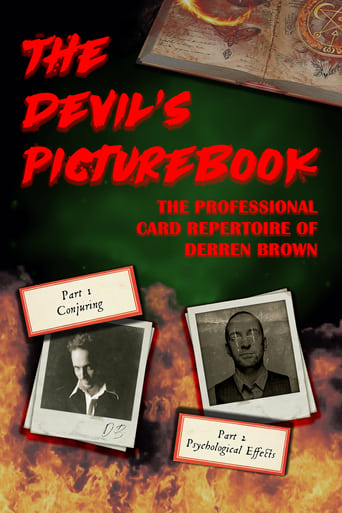
Released in 1999, The Devil's Picturebook is a stunning collection of card material that was years ahead of its time. The card magic that Derren performs and teaches offers a rare glimpse into how he thinks about his magic, and how he constructs routines. Then, as now, the audience's emotions are always Derren's primary focus. Over the course of three hours, The Devil's Picturebook gives the audience a detailed insight into this rare Derren Brown material. The first half explains in detail some classic card routines from his early career as a conjurer, all of which rely on sleight of hand, misdirection, and audience management. The second half features his incredible, pioneering psychological card routines and shows a distinct move towards the mentalism for which he is now known.
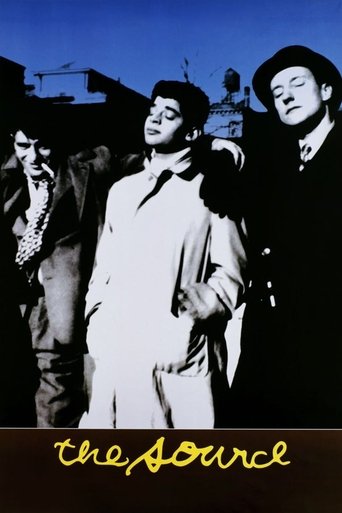
Traces the Beats from Allen Ginsberg and Jack Kerouac's meeting in 1944 at Columbia University to the deaths of Ginsberg and William S. Burroughs in 1997. Three actors provide dramatic interpretations of the work of these three writers, and the film chronicles their friendships, their arrival into American consciousness, their travels, frequent parodies, Kerouac's death, and Ginsberg's politicization. Their movement connects with bebop, John Cage's music, abstract expressionism, and living theater. In recent interviews, Ginsberg, Burroughs, Kesey, Ferlinghetti, Mailer, Jerry Garcia, Tom Hayden, Gary Snyder, Ed Sanders, and others measure the Beats' meaning and impact.
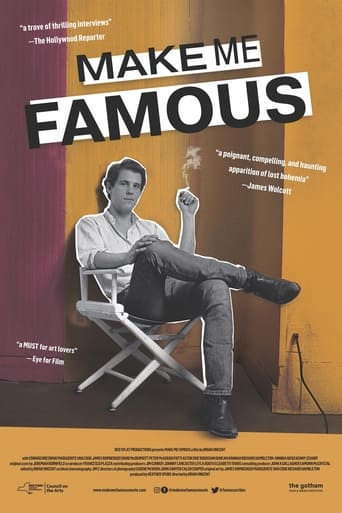
An investigation of Edward Brezinski, an ambitious, charismatic Lower East Side painter hell-bent on sucess, who thwarted his own career with antics that roiled NYC’s art elite. Brezinski’s quest for fame gives an intimate portrait of the art world’s attitude towards success and failure, fame and fortune, notoriety and erasure.
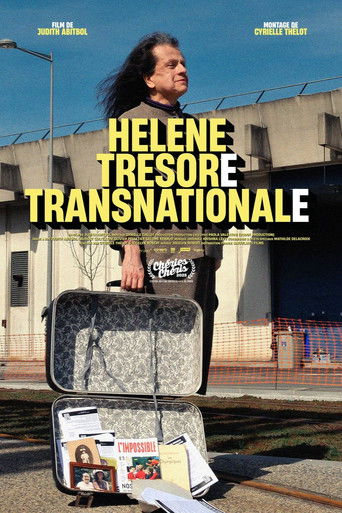
In this intimate portrait addressed directly to Hélène Hazera, filmmaker Judith Abitbol revisits a key figure of France’s countercultures from the late 1960s to the 1990s. A member of the Gazolines and the FHAR (Homosexual Front for Revolutionary Action), Hazera was a tireless LGBTQ activist who founded Act Up’s Trans and AIDS commissions—one of her proudest achievements. Her true victory, however, was becoming the first transgender journalist at a major national newspaper (Libération), and later a producer at Radio France and France TV. Through her story, Abitbol reconnects with the insurrectionary spirit and creative chaos of those decades—an era when French culture was shaken by radical imagination, humor, and defiance. The film celebrates these modern Antigones who dared to live their desires beyond the reach of any law.