



Documentary · Crime
Overview
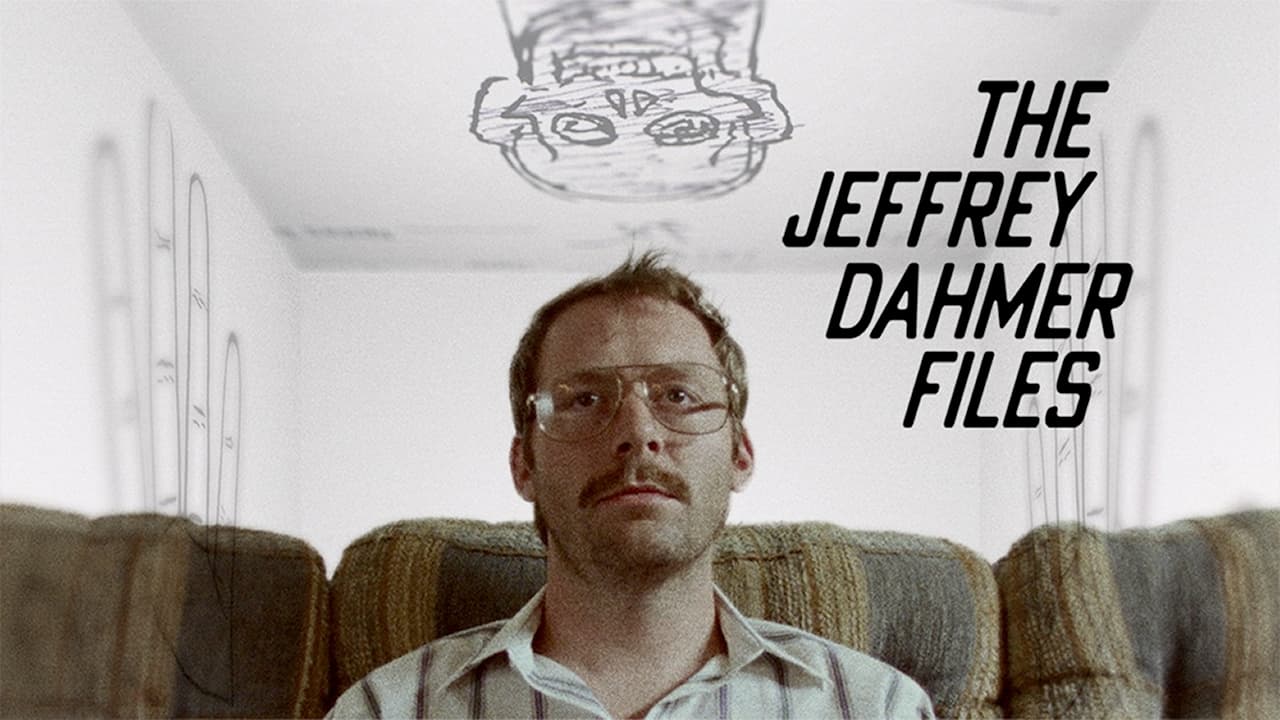
An experimental documentary film that uses archival footage, interviews, and fictionalised scenarios to tell the story of the people around Jeffrey Dahmer during the summer of his arrest in 1991.
Top Cast




Andrew Swant
Andrew Swant
Jeffrey Dahmer
Andrew Swant
Jeffrey Dahmer
Pamela Bass
Pamela Bass
Self - Jeffrey Dahmer's Neighbour
Pamela Bass
Self - Jeffrey Dahmer's Neighbour
Jeffrey Jentzen
Jeffrey Jentzen
Self - Medical Examiner
Jeffrey Jentzen
Self - Medical Examiner
Pat Kennedy
Pat Kennedy
Self - Detective
Pat Kennedy
Self - Detective
Similar Movies
Based on the true story of a Russian serial killer who, over many years, claimed victim to over 50 people. His victims were mostly under the age of 17. In what was then a communists state, the police investigations were hampered by bureaucracy, incompetence and those in power. The story is told from the viewpoint of the detective in charge of the case.
Sam Clayton's marriage to ex-stripper Freddie comes about when she's strong-armed into the match by Red, a club proprietor who once did her a favor. But Freddie falls in love with Jjaks, Sam's brother, and the pair tries to escape the situation together. It isn't long before both Sam and Red catch up with them, resulting in threats against the two of them -- although tension also starts to build between Sam and Red.
Sean Veil is an ultra paranoid murder suspect who takes to filming himself round the clock to provide an alibi, just in case he's ever accused of another crime. Problems arise however when the police do come calling and the one tape that can prove his innocence has mysteriously disappeared.
As a seasoned homicide detective, Thomas Craven has seen the bleakest side of humanity. But nothing prepares him for the toughest investigation of his life: the search for his only daughter Emma's killer. Now, he is on a personal mission to uncover the disturbing secrets surrounding her murder, including corporate corruption, government collusion and Emma's own mysterious life.
In the south of France, the body of a 22-year-old American tourist, Candice Strasberg, is discovered in the middle of the scrubland. Two days of rain prior to the discovery of the body made it difficult to collect evidence at the scene, as the rain had washed away the footprints. Using the victim’s diary, the police are attempting to piece together her movements. The investigation is entrusted to Gaston Delarue, the public prosecutor of Tarascon; Gérard Souffries, the investigating judge; Commissioner Bonetti of the Marseille police; and Divisional Commissioner Bretonnet of the Paris police. Among the six suspects is Bernard Vauquier, the son of the President of the Senate. The investigation proves to be as complicated as it is sensitive. But who murdered or killed Candice Strasberg? Screenplay adapted from ‘La Pieuvre’, a novel by Paul Andreota, published in 1970.
Rosa is a Mexican woman who, at the age of 17, migrated illegally to Austin, Texas. Some years later, she was jailed under suspicion of murder and then taken to trial. This film demonstrates how the judicial process, the verdict, the separation from her family, and the helplessness of being imprisoned in a foreign country make Rosa’s story an example of the hard life of Mexican migrants in the United States.
The film follows the career of detective inspector Marianne Atzeroth-Freier through the Hamburg police force of the 80s and 90s. At the end of the 70s, Marianne is 30 years old and a single parent; she becomes one of Hamburg's first female police officers. Marianne is one of the first women ever to be promoted to the Hamburg homicide squad. The opposing forces in this male-dominated world are strong, she is not really taken seriously and is even bullied along the way, until she comes to the attention of the furrier Lutz R.. Against the considerable resistance of her superior, Marianne investigates in her spare time and makes a significant contribution to solving the case of the "acid barrel murderer".
What question has plagued mankind more than the mystery—and terror—of death? This forbidden pursuit has driven Dr. Frances B. Gröss to the brink of madness, but in his obsession, he has amassed a uniquely comprehensive collection of films that depict life in its final, grueling moments. From the savagery of cold-blooded murder to the perverse realities of war, tragic accidents, and the everyday lives of those who collect, dissect, and bury the dead, this descent into morbidity lays bare a truth that all of us will one day face.