

Baiae, the Atlantis of Rome
Documentary · History
Overview
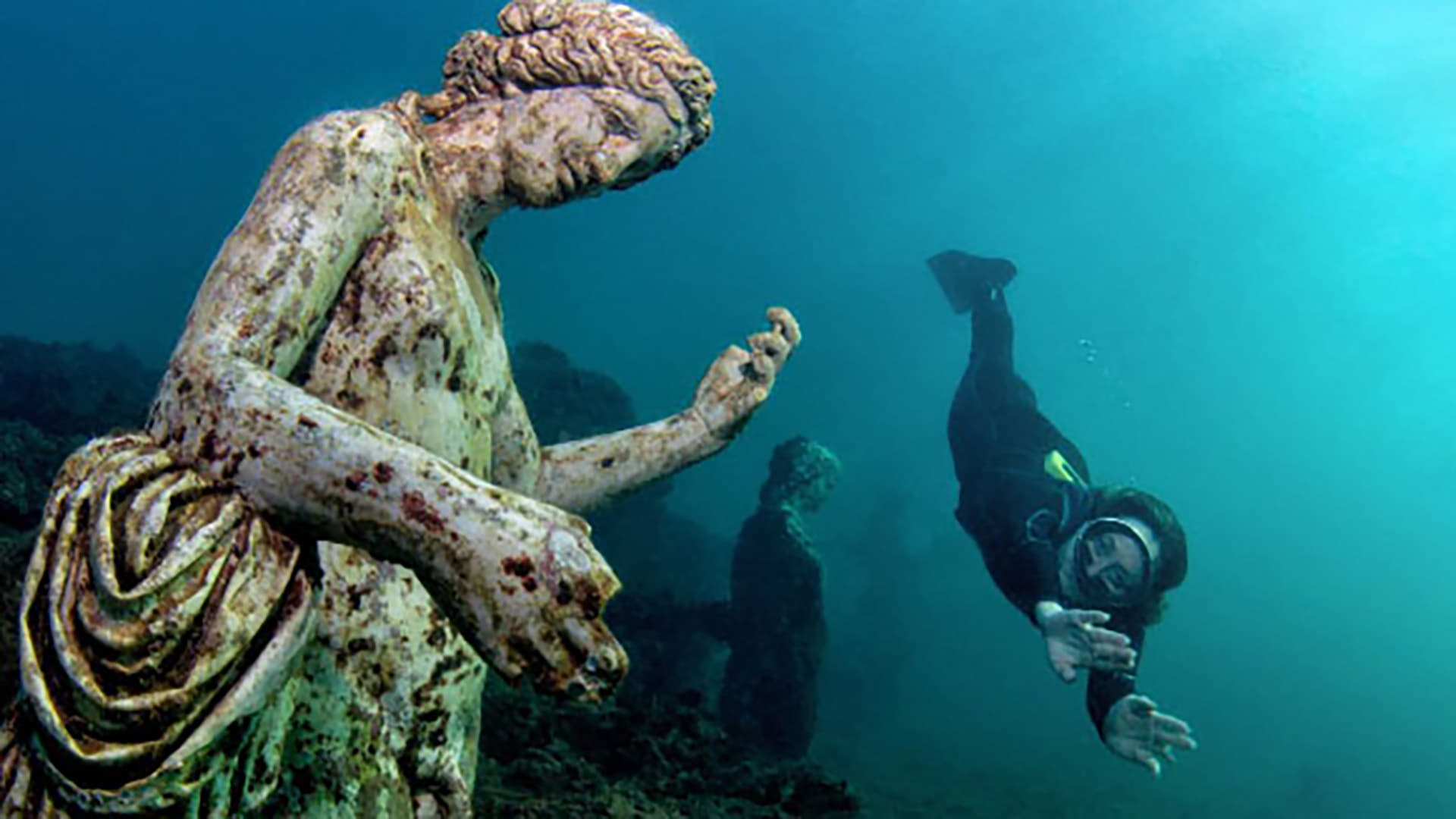
With an area three times larger than Pompeii, Baia, about 15 km from Naples and within the volcanic area of the Phlegraean fields, is the largest underwater archaeological site in the world. In 100 BC Pompeii is an ordinary city of small traders crouched on the slopes of Mt. Vesuvius, while Baia gains a peculiar reputation: it gradually becomes the ancient Las Vegas or Monte Carlo of the Roman Empire, a real posh center for noble gens and the powerful . Nestled in the center of the Gulf of Pozzuoli, Baia is flanked on one side by the port of Puteoli (ancient Pozzuoli) and on the other by the port of Capo Miseno.











No cast information.
Similar Movies
This short documentary depicts the search, discovery and authentication of the only known Norse settlement in North America - Vinland the Good. Mentioned in Icelandic manuscripts and speculated about for over two centuries, Vinland is known as "the place where the wild grapes grow" and was thought to be on the eastern coast between Virginia and Newfoundland. In 1960 a curious group of house mounds was uncovered at l'Anse aux Meadows in northern Newfoundland by Drs. Helge Ingstad and Anne Stine Ingstad of Norway. Added to the United Nations World Heritage List, l'Anse aux Meadows is considered one of the most important archaeological sites in the world.
In one of those wonderful coincidences of history, lumière, the French word for “light,” was also the last name of brothers Auguste and Louis, whose brilliant invention, the cinematograph, helped to inaugurate the most beloved art form of the last 130 years. Institute Lumière director Thierry Frémaux uses Lumière, Le Cinema! to guide the viewer through over a hundred shorts—some famous, some forgotten, some never before seen—directed by Lumière and company. In the process, Frémaux illuminates how the brothers employed the camera as a creative instrument as they (and their operators) mastered framing, staging, and subject selection for quotidian and exotic microdocumentaries as well as the first ever fictional motion pictures. The result is not only a glorious re(telling) of the genesis of cinema but a profound meditation on the beautiful world captured—and the mysterious world imagined—by the Lumières.
From the acclaimed director of American Movie, the documentary follows former Los Angeles police officer turned independent reporter Michael Ruppert. He recounts his career as a radical thinker and spells out his apocalyptic vision of the future, spanning the crises in economics, energy, environment and more.
The Victorian era is often cited for its lack of sexuality, but as this documentary reveals, the period's artists created a strong tradition surrounding the classical nude figure, which spread from the fine arts to more common forms of expression. The film explains how 19th-century artists were inspired by ancient Greek and Roman works to highlight the naked form, and how that was reflected in the evolving cultural attitudes toward sex.
The sinking of the Titanic sent shockwaves around the world and started debates that continue to this day. But new, explosive evidence from the most unlikely of sources may finally lay all arguments to rest and reveal, for the first time, the full story of what possibly doomed the "unsinkable" liner. Join us as we unveil recently discovered and never-before-seen photographs of the super ship that exposes shocking clues that investigators and historians once dismissed but can no longer ignore.
In the 21st century, commercial planes don’t just vanish. But in 2014, Malaysia Airlines flight MH370 did. Tells the definitive story of the flight’s devastating disappearance and unravels the many theories and conspiracies that have attempted to explain the cause of the lost flight. This special draws on new evidence, expertise from investigators and candid testimony from those closest to the tragedy–the victims’ families.