


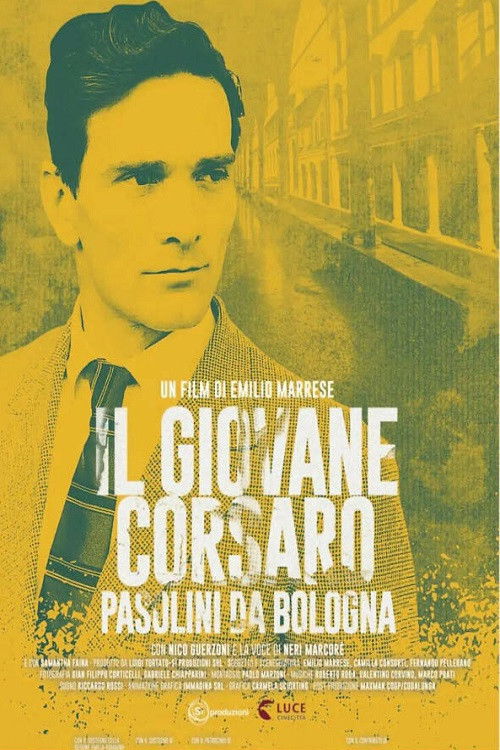
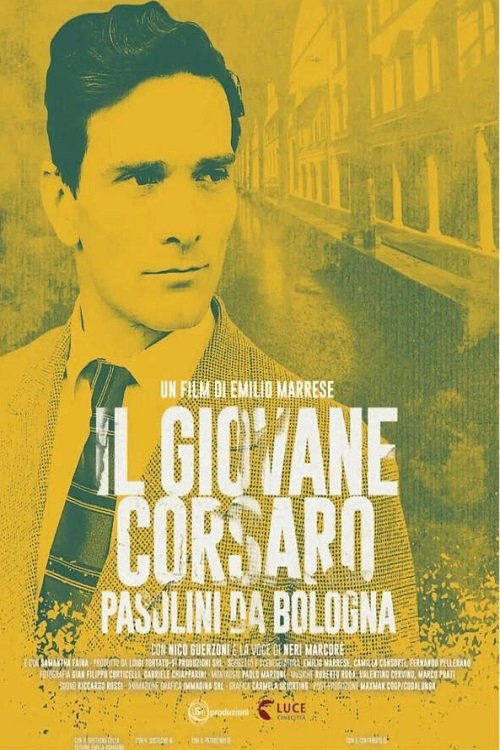
Il giovane corsaro - Pasolini da Bologna
Documentary
Overview
A young student prepares his degree thesis on Pasolini and Bologna by investigating the relationship of the great intellectual with the city of his childhood and his studies. Following in the footsteps left by Pasolini in Bologna, the protagonist will tell, for the first time in the form of a documentary and with a rock narrative rhythm, the emotional, visceral but also controversial bond of Pasolini with Bologna until his final days, also characterized by severe criticisms of the “consumerist and communist” city, a symbolic terrain of the adverse social and economic metamorphosis from paleoindustrial to neo-capitalist society.


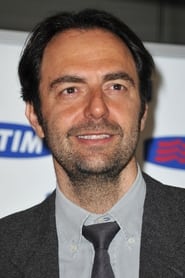
Neri Marcorè
Neri Marcorè
Narrator (voice)
Neri Marcorè
Narrator (voice)

Nico Guerzoni
Nico Guerzoni
Narrator (voice)
Nico Guerzoni
Narrator (voice)
Melissa d'Ottavi
Melissa d'Ottavi
Narrator (voice)
Melissa d'Ottavi
Narrator (voice)
Samantha Faina
Samantha Faina
Narrator (voice)
Samantha Faina
Narrator (voice)
Similar Movies

CHARBON depicts how Europe was built on fossil fuels over the past 100 years. And how it was torn apart by wars that were the result of these same fossil fuels. During 3 trips to Ukraine, Italy and Iraq, filmmaker Manu Riche explains how he and his French-German family are inseparably connected to the fate of the Iraqi filmmaker and refugee Hayder Helo.
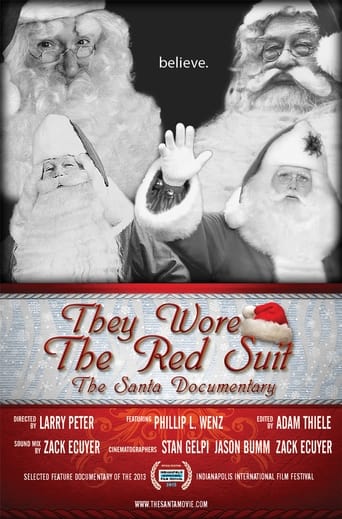
Every year, tens of thousands don the Red Suit for families, parties and parades, but only a handful of men have reclaimed the connection to childhood magic by turning the portrayal of Santa into a full-time career. They Wore the Red Suit is a documentary featuring the rare individuals who have devoted their lives to keeping that magic alive in the world by actually being Santa Claus 365 days a year.
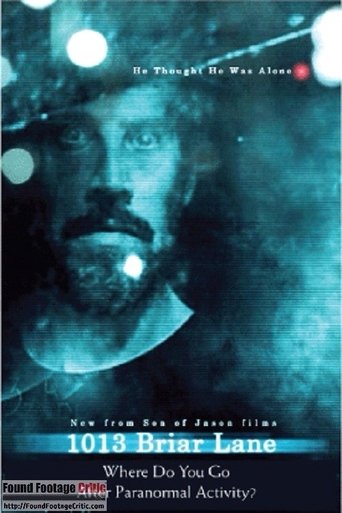
In 2008, a real-life mystery began to unfold when a real estate company (name withheld by request) discovered video footage shot in one of its vacant properties. The tapes were acquired by local documentary filmmakers Jarrod Rogan and Haman Movafagh, who began piecing together a series of bizarre instances recorded by a man living in the house. Apparently waiting for his wife and daughter to join him from out of state, the man began documenting strange activity that kept him from sleeping for days on end. The eerie recordings have become the subject of much controversy among paranormal investigators, and are finally being released to the general public. This first documentary from Son of Jason Films challenges audiences to explain what happened in the house on Briar Lane.
In the spring of 1970, between the African Orestiade and The Decameron, Pasolini shot a film for which he wrote a commentary in verses but never finished editing. The film was born as a typical Pasolini intervention: filming the strike of the garbage collectors in Rome, who at the time worked in dramatic health conditions, and filming the humility of their daily work, amidst the waste and scraps of society, in the squares and in the streets. Pasolini also filmed the faces of garbage collectors engaged in claims discussions and the result was an extraordinary anthropological picture of an unknown humanity.
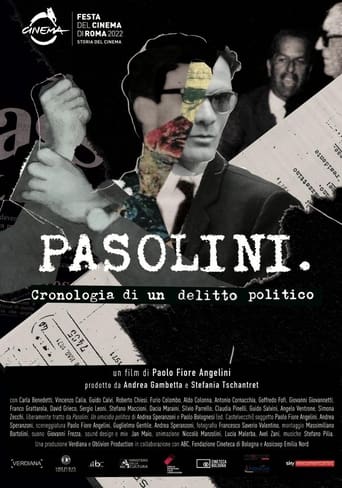
An investigative film, an "investigative itinerary" from 1960 to 1975, in the story of Pasolini alive, in search of the political truth of his murder. A violent death in the world of homosexual prostitution. And the "truth" is definitely written in black and white. But what happened to the testimonies of the inhabitants of the Idroscalo? Through testimonies and visual archival material, the true story of the assassination of Pier Paolo Pasolini is reconstructed in the documentary.
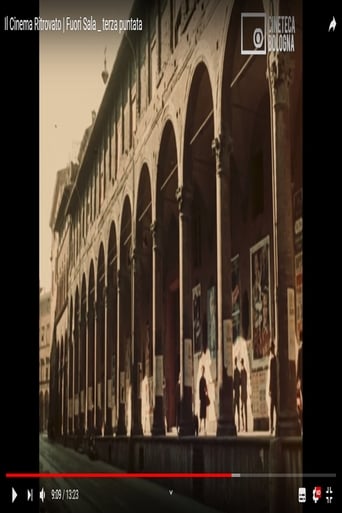
The documentary illustrates the history of the birth and development of the porticoes module in Bologna, starting from the Middle Ages. After a brief historical investigation on the origin of the arcades and on the revolution that affected urban architecture following their introduction, we analyze the social impact that these had, and still have, on the lives of Bolognese citizens. The porch, among other things, is presented as an architectural solution capable of facilitating meeting and communication.
In this poetic portrayal of Luigi Ghirri (1943–1992), a master of contemporary photography, the director gives voice and, in particular the image, to the protagonist. The photographer takes the audience on a tour of the outskirts of daily life as seen from the corner of his eye, the area in between what is artificial and authentic or grand and small – the meso-scale.
Pasolini seeks in Africa the peasant and revolutionary authenticity he had sought in the Roman villages. This hope will end in a new disappointment: Africa is a reservoir of irremediable contradictions that will explode in the massacres of yesterday and today. It is an Africa that starts from the outskirts of Rome, but thousands of non-EU citizens flock to the sub-proletariat of the villages.