

333
Music
Overview
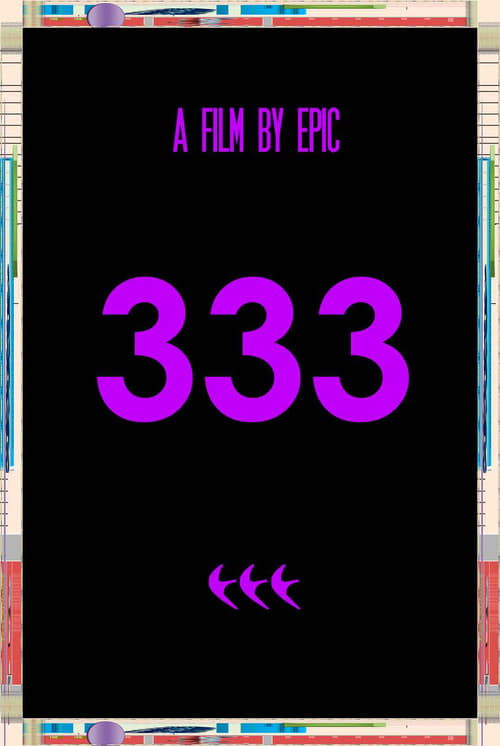
An experimental music film based on the eponymous album, created in a form of a collage of various videos, found footage, movie clips etc.



No cast information.
Similar Movies
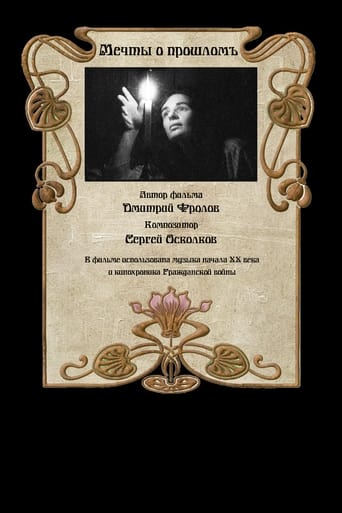
A film about peace, love and war. Dedicated to the 100th anniversary of the end of the Civil War in Russia. The film takes place at the end of the summer of 1917, when Russia and the whole world were at a crossroads between two eras. None of the people could even imagine how much his life would change in the very near future. In a strange way, the atmosphere of the film echoes our current reality and what is happening in Russia today. According to the form of visualization, the film belongs to experimental mockumentary cinema. To give greater authenticity to what is happening on the screen, the shooting was carried out on black-and-white negatives of 16 and 35 mm, hand-operated cameras were used and the material was developed in manual spiral tanks. The documentary chronicle of the Kolchak army of 1919 and the White army in the Far East of 1922 is embedded in the finale of the film.
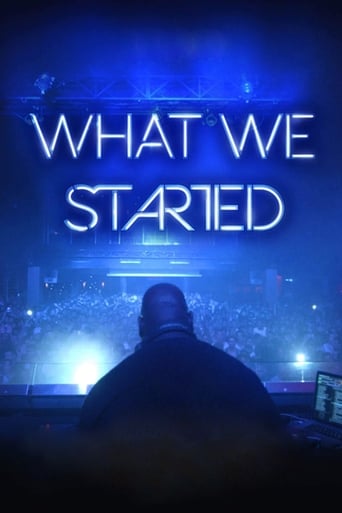
Bert Marcus and Cyrus Saidi present an informed and absorbing exploration of the history of EDM, boosted by an energetic soundtrack and anchored by the personal stories of legendary DJ Carl Cox and superstar newcomer Martin Garrix. Insights from numerous other DJs and musical talents like Moby, David Guetta, Paul Oakenfold and Usher help tell the often oppositional tales of old school vs. new school and mainstream vs. underground.
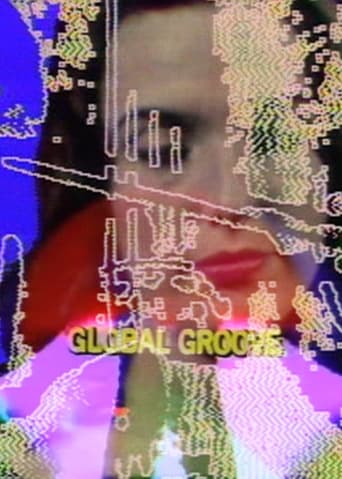
Global Groove was a collaborative piece by Nam June Paik and John Godfrey. Paik, amongst other artists who shared the same vision in the 1960s, saw the potential in the television beyond it being a one-sided medium to present programs and commercials. Instead, he saw it more as a place to facilitate a free flow of information exchange. He wanted to strip away the limitations from copyright system and network restrictions and bring in a new TV culture where information could be accessed inexpensively and conveniently. The full length of the piece ran 28 minutes and was first broadcasted in January 30, 1974 on WNET.
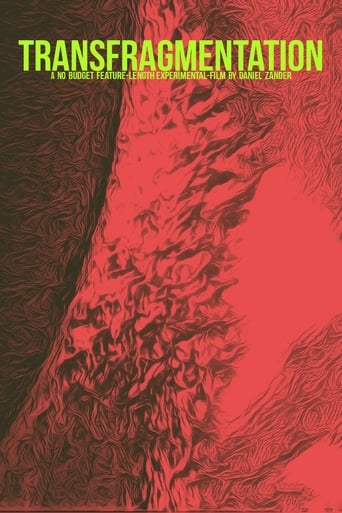
After I had already begun to conduct my first cinematographic experiments in 2015, I shot between 2016 and 2019 (during my time as a student in Rostock) exclusively for this "No Budget Feature-Length Experimental Film", now titled "Transfragmentation", which was originally conceived to last three hours, based on Werner Fritsch's "Faust Sonnengesang" (2011), but now has a running time of approximately two hours. In 2015, I also began my correspondence with the Brussels-based Sound-Artist Unenthüllte, who eventually composed four twenty-minute pieces for this work and has to be regarded as my sole artistic collaborator in this sense. My cinematographic concept was clearly outlined from the beginning: The duration of each shot is exactly 1 minute. Only two elements diverge from this primary premise: The Seventeen Minute Prelude, Created In Post-Production (2020-2022), And The Slow Motion Sequences Involving My Voice-Over, Which Linger In The Heart And At The End Of The Work.

Meet Shavon O'Brien: Her family doesn't understand her, her church ignores her, even Jesus forgets about her. With only the spirit of Sinead O'Connor to guide her, Shavon battles institutional child abuse, narcissistic group think, a talking stomach and a singing poop bucket! Shavon goes from Catholic to Crusty Punk in this very, very, very, dark musical comedy!
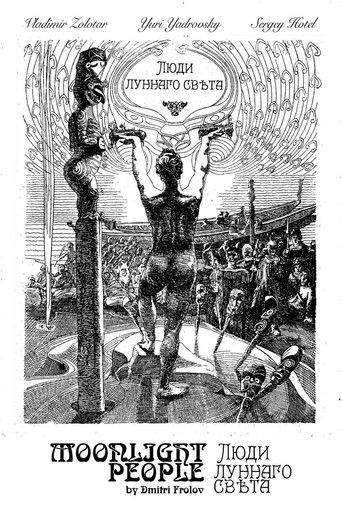
Two young men and two girls on a moonlit night confess to each other in their strange fantasies and loves that go beyond the usual standards.. The impetus to making the film was the book of the same name by the Russian religious philosopher Vasily Rozanov, who died 100 years ago. His treatise was devoted to the study of sexuality and its denial in Christianity. The film was made in the style of experimental films of the 1920s with a non-linear narration full of strange surrealistic images. He is black and white and devoid of dialogue. Filmed on film 16 mm of firm "Svema", released in the USSR. This added to his exoticism. The image was put to the music of Alexander Scriabin “The Poem of Ecstasy” (1907).