

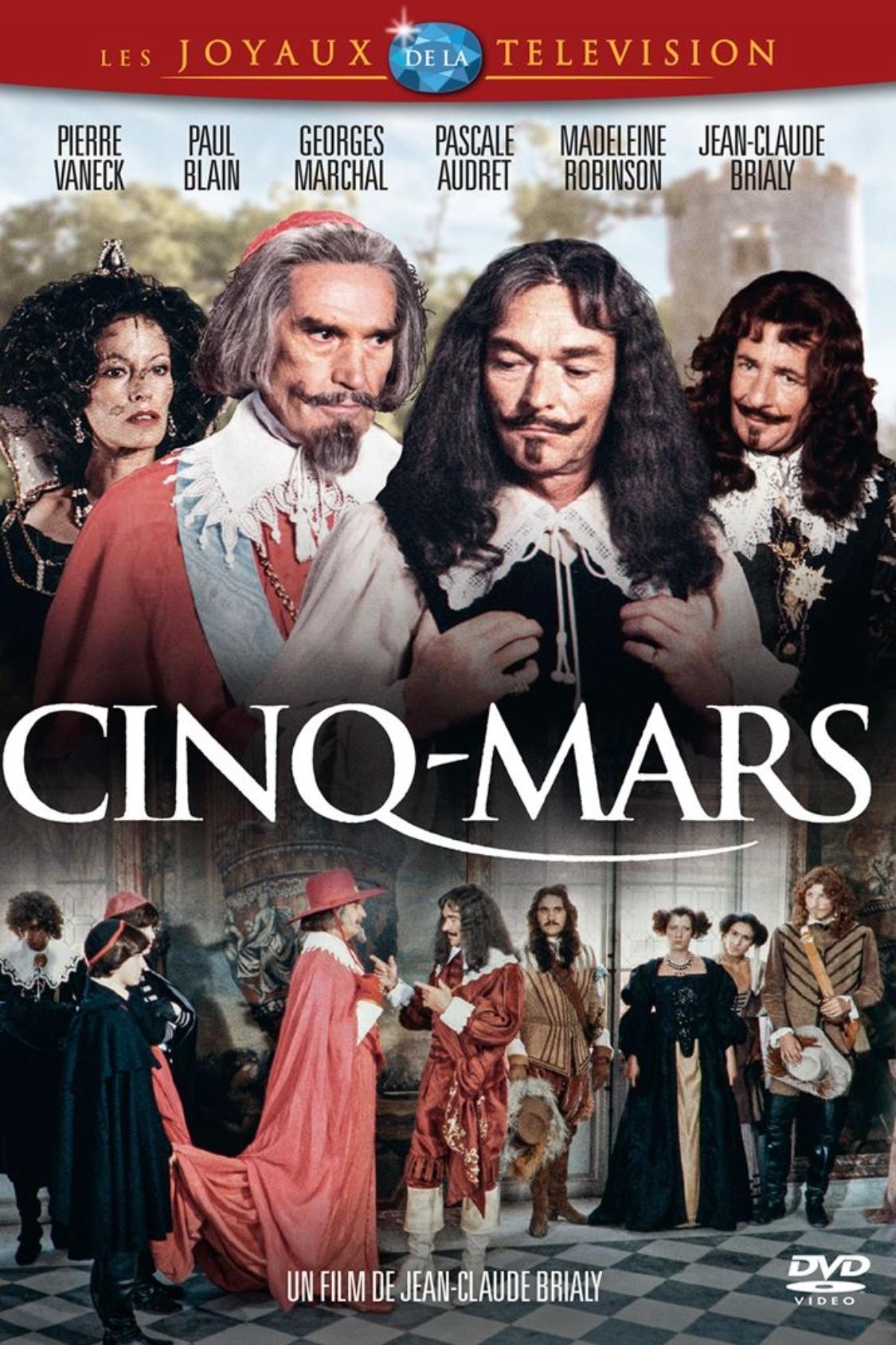
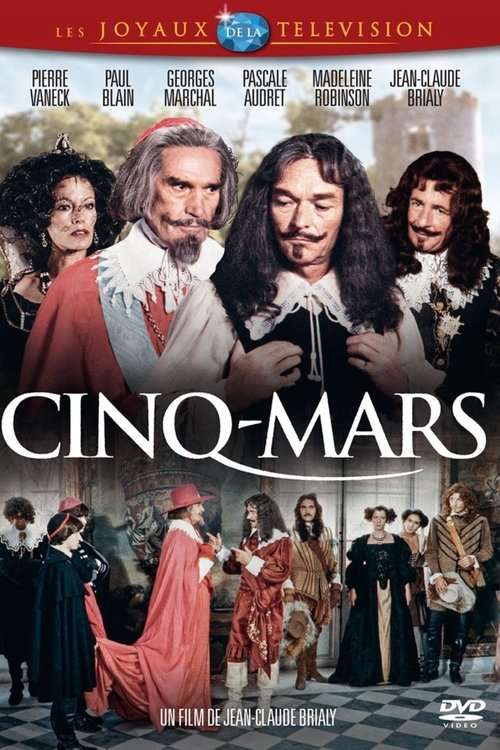
Cinq-Mars
History
Overview
In the 17th century, under Louis XIII, the policy of Cardinal de Richelieu aimed at the definitive establishment of a monarchic power, and gave rise to a struggle against the great feudal lords, who favored a weak central power. Numerous conspiracies against the Cardinal were led by the high nobility. The one led by Henri Coiffier de Ruzé d'Effiat, marquis de Cinq-Mars, was the last and most famous of them.
Top Cast
Pierre Vaneck
Louis XIII
Paul Blain
Cinq-Mars

Georges Marchal
Cardinal de Richelieu
Madeleine Robinson
Marie de Médicis

Jacques Duby
Père Joseph

Hervé Furic
François de Thou

Pascale Audret
Anne d'Autriche

Philippe Mareuil
Gaston d'Orléans
Thérèse Liotard
Louise-Marie de Gonzague
Edith Perret
la duègne
Max Montavon
La Chesnaye
Pierre-Alain Wolf
Ludovic



Pierre Vaneck
Pierre Vaneck
Louis XIII
Pierre Vaneck
Louis XIII
Paul Blain
Paul Blain
Cinq-Mars
Paul Blain
Cinq-Mars
Georges Marchal
Georges Marchal
Cardinal de Richelieu
Georges Marchal
Cardinal de Richelieu
Madeleine Robinson
Madeleine Robinson
Marie de Médicis
Madeleine Robinson
Marie de Médicis
Jacques Duby
Jacques Duby
Père Joseph
Jacques Duby
Père Joseph
Hervé Furic
Hervé Furic
François de Thou
Hervé Furic
François de Thou
Pascale Audret
Pascale Audret
Anne d'Autriche
Pascale Audret
Anne d'Autriche
Philippe Mareuil
Philippe Mareuil
Gaston d'Orléans
Philippe Mareuil
Gaston d'Orléans
Thérèse Liotard
Thérèse Liotard
Louise-Marie de Gonzague
Thérèse Liotard
Louise-Marie de Gonzague
Edith Perret
Edith Perret
la duègne
Edith Perret
la duègne
Similar Movies
In 1900, the eyes of the whole world are on Paris. The World's Fair welcomed 50 million amazed visitors, and the city celebrated itself in a glamorous era. This period went down in history as the "Belle Époque." Elaborately restored and colorized historical photographs bring to life the exciting life in Paris between the end of the 19th century and the beginning of World War I in 1914. Bicycles, cars, airplanes, moving pictures, newly founded film studios, revolutionary composers and painters, avant-garde ballet performances, fashion houses, summer resorts on the Atlantic coast – life was intoxicating. People celebrate in the variety shows, cabarets, and revue theaters of Paris. Moulin Rouge, Folies Bergères, Bal Tabarin—in Paris, the nights are long and life is too short to sleep through. It is a dance on the volcano, given the political developments in the world.
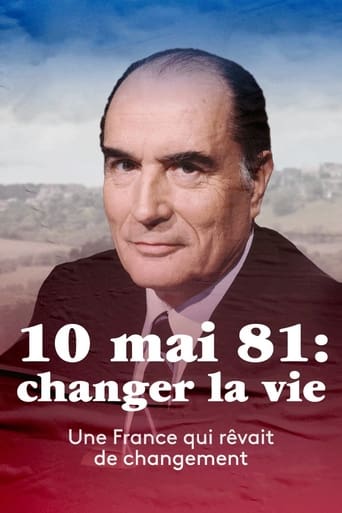
Fourty years ago, in May 1981, with François Mitterrand's election, some people were letting themselves dream about a better life while others were predicting the coming of soviet tanks upon the Champs-Élysées. If we gladly remember the turning point of austerity in 83, there were also the wage rises, the fifth week of paid leave, the abolition of death penalty, the decriminalisation of homosexuality, or the advent of independent radio stations. Rare archives and accounts by those who were at the heart of this story give an overview of it and shed light on lesser-known aspects.
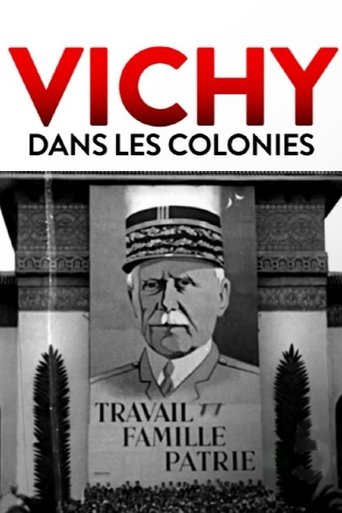
After the defeat of 1940, and faced with the unexpected collapse of French power, all eyes turned to a horizon of both hope and uncertainty: the colonies. France had suddenly become an empire without a metropolis, reduced to two-thirds of its former size. Pétain saw the colonies as a "consoling myth" after the defeat, while de Gaulle considered them essential strategic locations for the Resistance. The two clashed in a propaganda war.
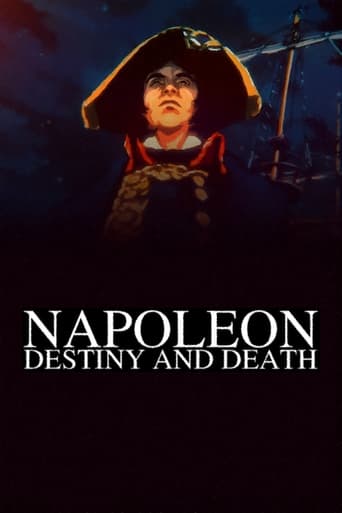
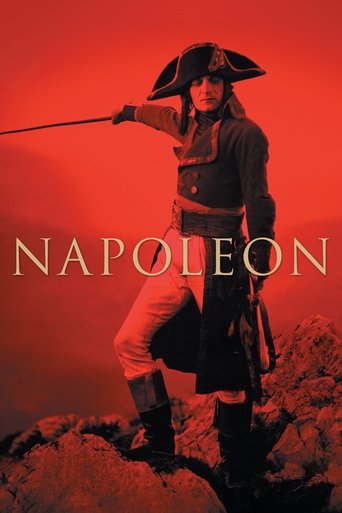
May 5, 1821. Napoleon Bonaparte, deposed emperor exiled on the island of St. Helena, is about to take his last breath. The son of a Corsican family, he has been close to death on many occasions since, as a young captain in the revolutionary army, he seized Toulon from the royalists in 1793.
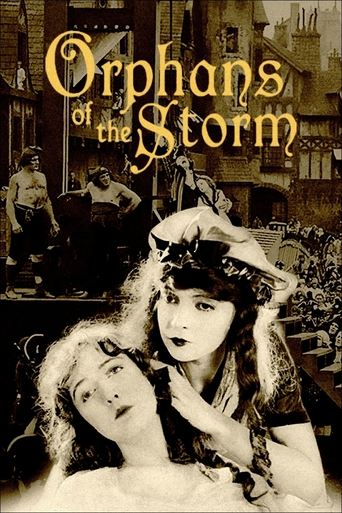
France, on the eve of the French Revolution. Henriette and Louise have been raised together as sisters. When the plague that takes their parents' lives causes Louise's blindness, they decide to travel to Paris in search of a cure, but they separate when a lustful aristocrat crosses their path.
A biopic of Napoleon Bonaparte, tracing the Corsican's career from his schooldays (where a snowball fight is staged like a military campaign) to his flight from Corsica, through the French Revolution (where a real storm is intercut with a political storm) and the Terror, culminating in his triumphant invasion of Italy in 1797.
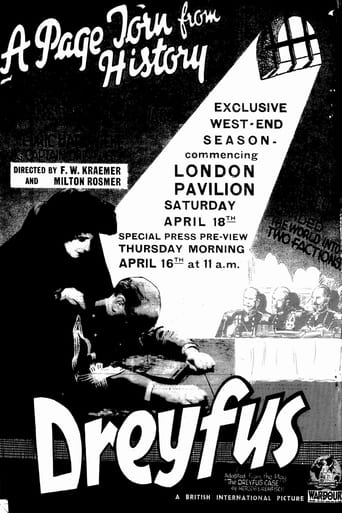
In 1894, French officer Alfred Dreyfus is wrongly convicted for the treasonous acts of another man, Major Esterhazy. When investigations begin into the dubious evidence used in the trial, an institutional coverup begins, aided by fears of army disgrace and anti-Semitic paranoia against Dreyfus. But a determined group, headed by prominent author Émile Zola, leads a mounting public call to reopen the Dreyfus case.
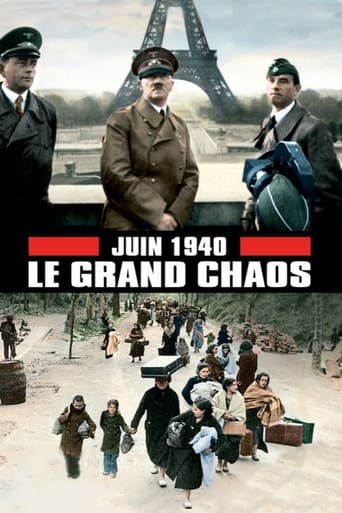
From May 10, 1940, France is living one of the worst tragedies of it history. In a few weeks, the country folds, and then collapsed in facing the attack of the Nazi Germany. On June 1940, each day is a tragedy. For the first time, thanks to historic revelations, and to numerous never seen before images and documents and reenacted situations of the time, this film recounts the incredible stories of those men and women trapped in the torment of this great chaos.