


Panduranga Mahatyam
History · Music · Drama
Overview
Panduranga Mahatyam is a 1957 Telugu film directed by Kamalakara Kameswara Rao and starring N. T. Rama Rao playing the role of Pundarika. The Lyrics written by Samudrala Ramanujacharya are excellent. The songs of Ghantasala Venkateswara Rao particularly Jaya Krishna Mukunda Murari and Amma Ani Pilichina are ever remembered as the best film songs expresses the human feelings of devotion and sorrow.
















N.T. Rama Rao
N.T. Rama Rao
Pundarika
N.T. Rama Rao
Pundarika

Anjali Devi
Anjali Devi
Rama
Anjali Devi
Rama

B. Saroja Devi
B. Saroja Devi
Kalavathi
B. Saroja Devi
Kalavathi

Chittoor V. Nagayya
Chittoor V. Nagayya
Chittoor V. Nagayya
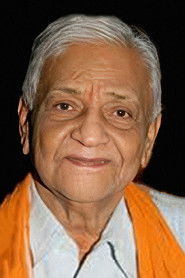
Padmanabham
Padmanabham
Hari
Padmanabham
Hari
Govindarajula Subba Rao
Govindarajula Subba Rao
Rama's father
Govindarajula Subba Rao
Rama's father
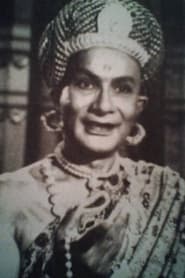
Vangara Venkata Subbaiah
Vangara Venkata Subbaiah
Panthulu
Vangara Venkata Subbaiah
Panthulu
Kasturi Sivarao
Kasturi Sivarao
Rangadasu
Kasturi Sivarao
Rangadasu
Peketi Sivaram
Peketi Sivaram
Kalavathi's paramour
Peketi Sivaram
Kalavathi's paramour

Sowcar Janaki
Sowcar Janaki
Rama's sister
Sowcar Janaki
Rama's sister
Similar Movies
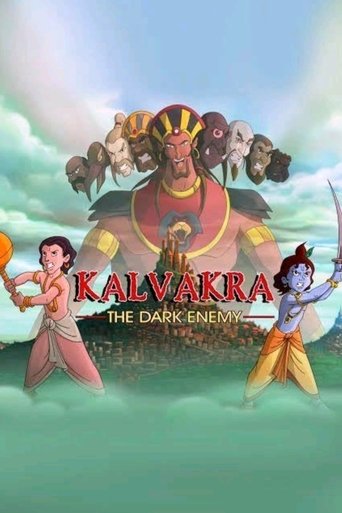
Kalvakra is a mighty asura and is regarded as a living devil. He has a powerful army of millions and is invincible in battle due to a boon he enjoys. When his Army carry away Udho, his friends Krishna and Balram, along with Radha, undertake the journey by sea to Kalvakra's island kingdom, upset Kalvakra's plans to capture them, mange to free Udho and get him safely back to Vrindavan.
Houses, now abandoned and empty, are being boarded up in Besence of the Ormányság. "Only-childism" is in fashion, due to the law that provides for the way in which landed properties are inherited. The birth of children that are "not desirable" is being prevented through illegal medical intervention, which is often responsible for the death of pregnant women. The happiness of János and Julis are also the victims of this attitude: their parents would not hear of another child.

The tranquility of a remote Armenian mountain community is disrupted when a group of shepherds affected by the pangs of an evening hunger, decide to butcher and barbecue the sheep of another's that have strayed into their herd. An official inquiry by the city police complicates matters, and questions of law, morality and community only seem to lead to further entanglements.