

The Witty Bus Girl
Comedy · Drama
Overview
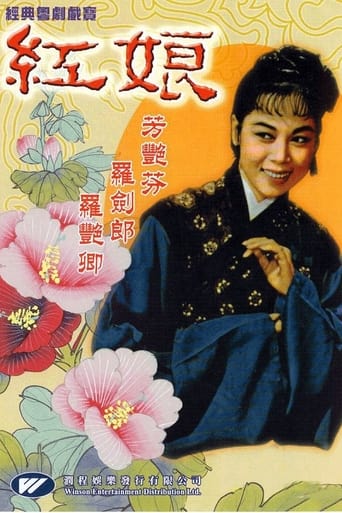
Industrialist Tam Kar-cheung knowingly puts the lives of his workers at risk so as to line his pocket with insurance payments. The chivalrous Bus Money gets into fisticuffs with Tam's chauffeur, Tam Biu, who bears a grudge against the assailant. When Money catches wind of Kar-cheung's vicious plot to set fire to a squatter area to clear the path for a property development project, she moves in and watches vigilantly for signs of arson. Soon, she saves Ah-hau, Biu's girlfriend and a young victim of drug rape, from her suicidal attempt by drowning. Money pursues fragments of clues which lead her to the victim's boss, Taipan Cheung who sucks up to his master Kar-cheung by drawing his prey to her trap. Money then organises squatter residences into fire brigade to guard against arson attacks and exposes Kar-cheung's evil. Realising he has been exploited for his blind loyalty, Biu teams up with Money to dispense justice.





Pak Yan
Pak Yan
Bus Money
Pak Yan
Bus Money
Sheung Kwun Kwan Wai
Sheung Kwun Kwan Wai
Kuei's wife
Sheung Kwun Kwan Wai
Kuei's wife
Keung Chung-Ping
Keung Chung-Ping
Taipan Cheung
Keung Chung-Ping
Taipan Cheung
Kong Hon
Kong Hon
Tam Biu
Kong Hon
Tam Biu
Lo Tun
Lo Tun
Tam Ka-cheung
Lo Tun
Tam Ka-cheung
Ng Sau-fong
Ng Sau-fong
Ah-hau
Ng Sau-fong
Ah-hau
Ng Tung
Ng Tung
manager (Ah Cheung)
Ng Tung
manager (Ah Cheung)
Siu Kam
Siu Kam
Ko Tak-sum
Siu Kam
Ko Tak-sum
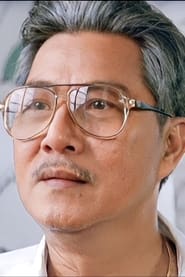
Leung Ming
Leung Ming
Uncle Ying
Leung Ming
Uncle Ying
Lui Sek-kwai
Lui Sek-kwai
Dai Se Ming
Lui Sek-kwai
Dai Se Ming
Similar Movies

"Family" (1953), which launched the Union Film legacy, "Spring" (1953) and "Autumn" (1954) are adaptations of Ba Jin's highly regarded novel "Torrent Trilogy". In "Family", director Ng Wui skilfully condenses the voluminous first part of the novel into an emotionally powerful and intellectually focused story of youngsters struggling to survive oppression and repression in a feudalistic family. This well-received film quickly established the company's reputation.
Guerrilla member Ting Siu-yuen works as a playwright and Lee, the leader of an opera troupe. They conceal their identities in the troupe in order to gather military intelligence. Yuen gradually falls in love with the lead actress Mui Law-heung. Ting is unsettled to learn that County Chief Fong covets Mui. He sneaks into Fong's residence and is astounded by the sight of his old lover Pak Kuen, now Fong's wife. Fong colludes with the military chief in conducting vicious schemes. With Kuen's help, Yuen is able to get the intelligence. But as Heung is not an insider, she reports to the Governor about the illicit relationship between Yuen and Kuen. Kuen backs Yuen to eliminate the conspirators and bring about the union of Yuen and Heung.

Teresa is a spirited young girl chafing under the oppressive attitudes of 1930s society, and her father in particular. She fancies her poverty-stricken Latin tutor Johnathan Crow, without realising he merely considers her a pleasant diversion and nothing more, and eventually follows him from Sydney to London. En route she meets the gentle banker James Quick. Whilst navigating her relationships in London, including with a political poet bound for the Spanish Civil War, she experiences a transformation in her understanding of love. Based upon Christina Stead's best-selling Australian novel.
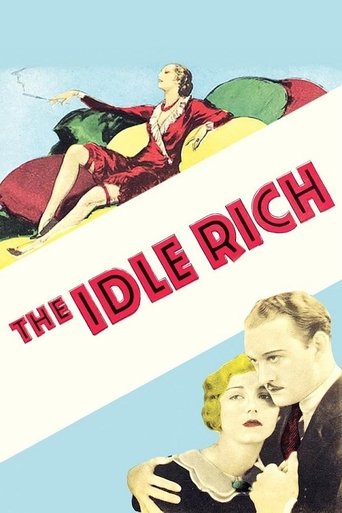
Millionaire William van Luyn falls in love with his secretary Joan Thayer and marries her. Her family, part of "the great middle class" (as blowhard nephew Henry keeps reminding us), is happy for Joan, but reluctant to take charity from Will. He moves in with them, and they keep resisting, until one day he takes drastic action.

Hak-ming heads the Ko Family, but he and his brothers, Hak-ting and Hak-on, and the second wife of the late Master Ko quarrel. Young Cousin Mui, who has tuberculosis, is forced by to marry an older woman. Kok-sun is guilty of being unable to stop the marriage. Sun and maid Chui-wan are wary of their feelings for each other due to class difference. Cousin Mui dies of illness. Hak-ting has his eyes on Wan. His wife, Wong, complains to their daughter, Shuk-ching, who cannot take it and commits suicide. Wong blames herself for her death. Undergone these tragedies, Cousin Kam's mother let Kam have a modern wedding with Kok-man. When Ming is ill, Ting and On want to sell the ancestral home. Hak-ming dies of angst. When the fifth uncle of Sun forces Wan to be his concubine, Wan tries to kill herself but is intercepted by Sun. Pressurised by people of the house over the issue of inheritance, Sun protests by declaring his love for Wan and leaves the family, with his mother, brother Man and Wan.
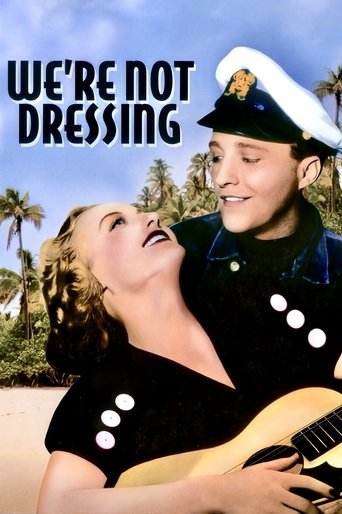
Beautiful high society type Doris Worthington is entertaining guests on her yacht in the Pacific when it hits a reef and sinks. She makes her way to an island with the help of singing sailor Stephen Jones. Her friend Edith, Uncle Hubert, and Princes Michael and Alexander make it to the same island but all prove to be useless in the art of survival. The sailor is the only one with the practical knowhow to survive but Doris and the others snub his leadership offer. That is until he starts a clam bake and wafts the fumes in their starving faces. The group gradually gives into his leadership, the only question now is if Doris will give into his charms.
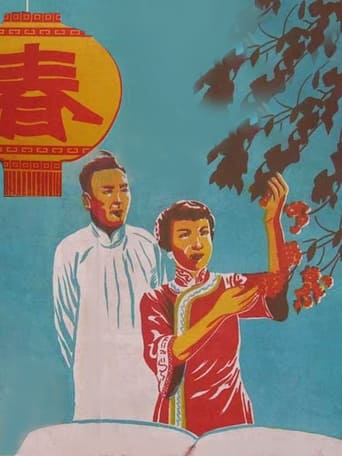
Ko Suk-ying is saddened over her arranged marriage as manipulated by her father Hak-ming. Ko Kok-sun's Cousin Chow Wai's spends the Mid-Autumn Festival before her marriage with the Kos. She has been in love with Sun. Sun finds out about her love for him when she is about to be married off, he is too weak to oppose to Wai's betrothal to another man. Sun's son, Hoi-sun, falls ill. Fearing the displeasure of his elders, Sun dares not consult a western doctor. Meanwhile, another dispute arises among members of the family over the ancestral land. When accused of being incompetent in his management, Sun takes the blame silently. Wai dies of grief while Hoi-sun becomes a victim of mistreatment. Sun is devastated at this double blow. Hak-ming instructs Sun to arrange for Ying's wedding. Knowing the kind of man Ying's fiancee is, Sun is reluctant. Not wanting to follow in Wai's footsteps, Ying fights for her own rights, and backed by an enlightened Sun, she leaves for a new start.
Nikolai Gogol's The Inspector General is a satire play well-known around the world. In the period between the end of World War II and the 1960s, the play was adapted in Hong Kong cinema a total of six times. Director Huang Yu alone adapted it twice, as a Republic era story and a period comedy, respectively. The 1955 Republic era-set film is more faithful to its source material, following a spoiled rich brat who is mistaken as a government inspector in a small town and ends up being wined and dined by a corrupted local official. The film pokes fun at the ugliness of bureaucracy in old society, calling back to renowned Qing Dynasty novel Officialdom Unmasked while keeping the original play's artistic style.
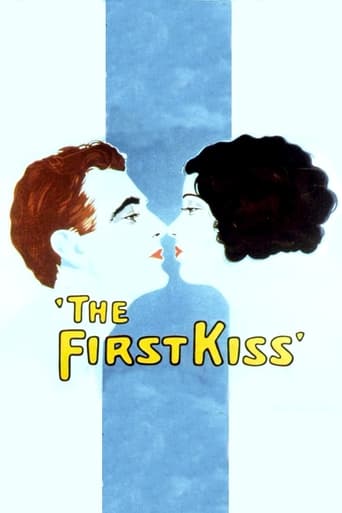
The Talbots, formerly one of the Eastern Shore's first families, have gone to seed: Pap is a drunk, soddenly decaying in his ruined ancestral home, and three of his sons (William, Carol, and Ezra) are lazy, shiftless young men. Mulligan, Pap's second son who supports the entire family by oyster fishing, falls in love with wealthy Anna Lee, but when he first kisses her, she calls him "white trash."