


Silnější než strach
Drama
Overview
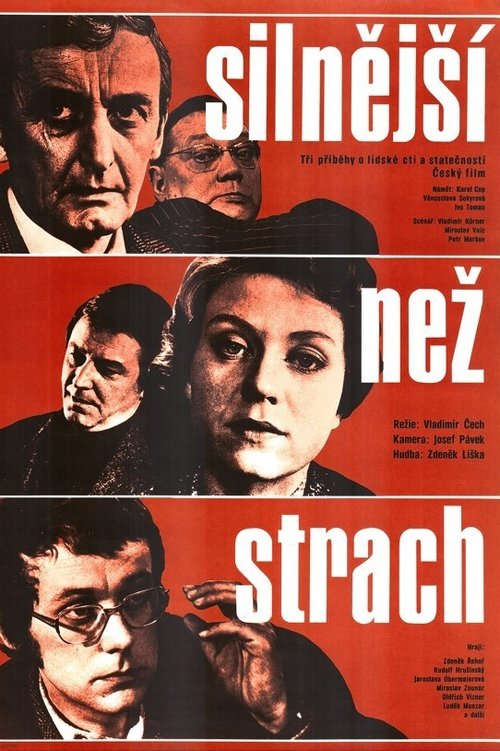
A short story film in which the first story takes place at the end of the German occupation, when a resistance fighter is arrested while transporting leaflets. The second story takes place in the 1950s at a cattle shed. The final episode tells the story of a doctor terrorized by fleeing criminals.





Zdeněk Řehoř
Zdeněk Řehoř
Zdeněk Řehoř
Rudolf Hrušínský
Rudolf Hrušínský
Rudolf Hrušínský
Oldřich Velen
Oldřich Velen
Oldřich Velen

Jan Kuželka
Jan Kuželka
Jan Kuželka
Lubomír Kostelka
Lubomír Kostelka
Lubomír Kostelka
Miloslav Šindler
Miloslav Šindler
Miloslav Šindler
Marcela Martínková
Marcela Martínková
Marcela Martínková
Raoul Schránil
Raoul Schránil
Raoul Schránil
Jiří Zahajský
Jiří Zahajský
Jiří Zahajský
Žofie Veselá
Žofie Veselá
Žofie Veselá
Similar Movies
What is “Slovakia”? How to explain the notion of “Slovakia” of the past 20 years to an unknown stranger, a visitor from another planet? What is the genetic makeup or the software for “Slovakia”? How to use it? How does it change? Slovakia 2.0 is a film about twenty years of independent Slovakia as seen from the perspective of ten film directors. It is composed of ten 10-minute films of different genres ranging from drama, through animation and documentaries, to experimental film. The ten recognised film directors who offer an answer to what is Slovakia include a wide range of generations, views and genres, namely Juraj Herz, Martin Šulík, Peter Kerekes, Zuzana Liová, Mišo Suchý, Ondrej Rudavský, Iveta Grófová, Peter Krištúfek, Viera Čákanyová, and Miro Jelok.
In the heat of a summer day, Draginja discovers a dead body that resembles her. In the heat of a summer day, Draginja hires a fake husband to show off in front of her friends. In the cold of a winter night, Draginja roams the streets hoping to recover her lost memory. Through three different life possibilities, a middle-aged woman tries to get out of her skin.
The film is a high-concept project with five stories exploring the themes of motherhood and pregnancy, directed by women filmmakers from five former Yugoslav republics. “Croatian Story” follows an anguished painter who must decide whether or not to keep one of her unborn twins, diagnosed with Down syndrome. “Serbian Story” finds an expectant mother in the same emergency room with a charming killer. “Bosnia-Herzegovina Story” centers on a financially strapped Sarajevo family whose son?s lover is pregnant. “Macedonian Story” unfolds in a clinic where a drug addict struggles to keep her baby, and “Slovenian Story” ends the omnibus on a humorous note with a nun who finds her own way to immaculate conception.
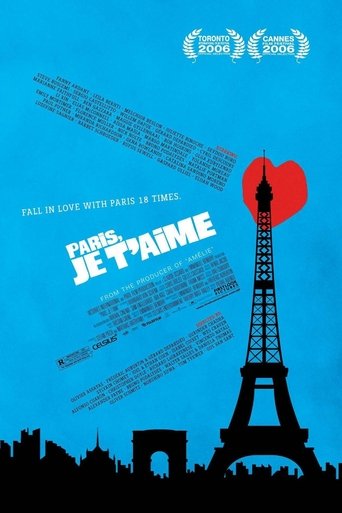
Olivier Assayas, Gus Van Sant, Wes Craven and Alfonso Cuaron are among the 20 distinguished directors who contribute to this collection of 18 stories, each exploring a different aspect of Parisian life. The colourful characters in this drama include a pair of mimes, a husband trying to choose between his wife and his lover, and a married man who turns to a prostitute for advice.