

Mitterrand et la télé
Documentary · TV Movie · History
Overview
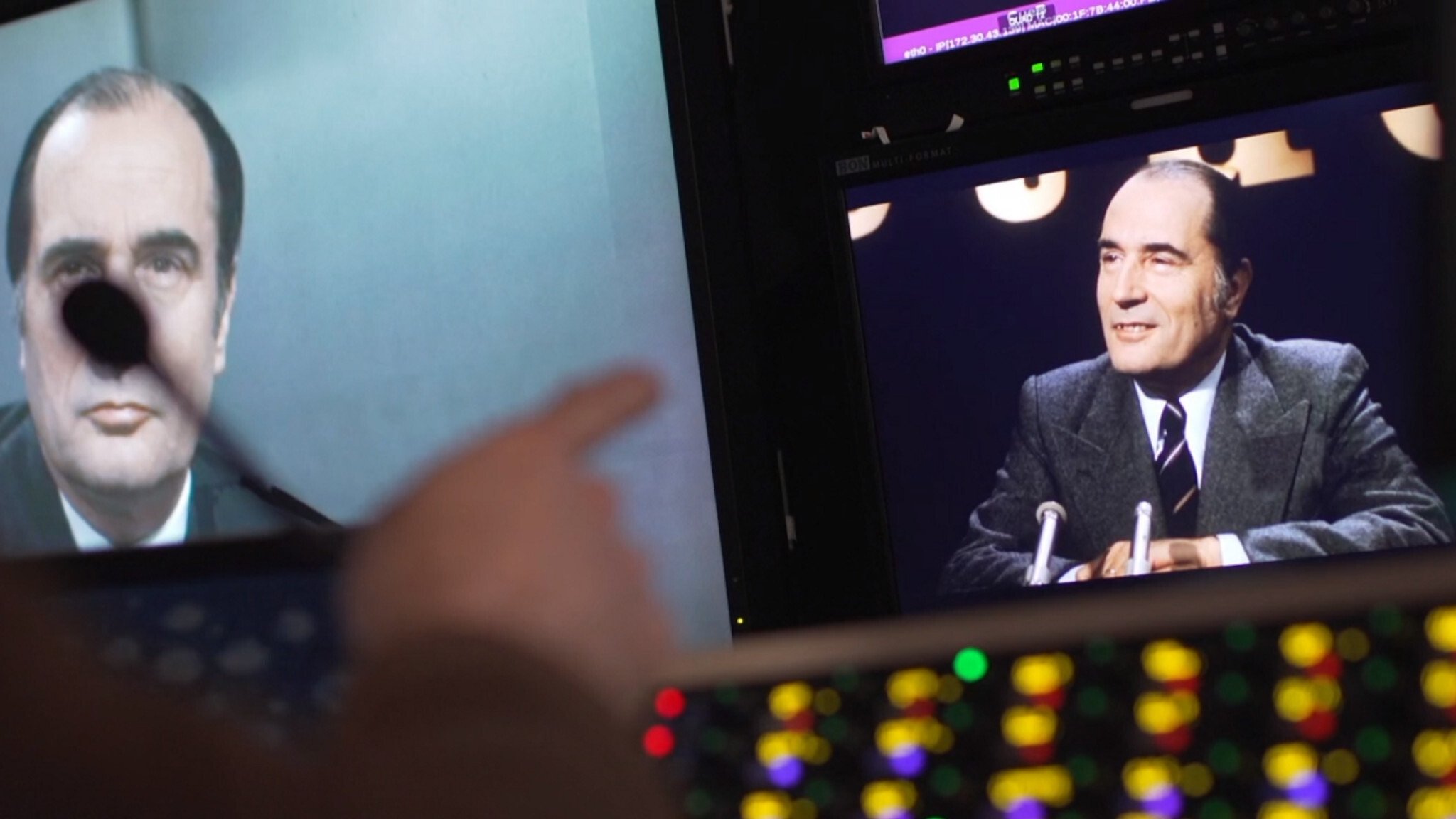
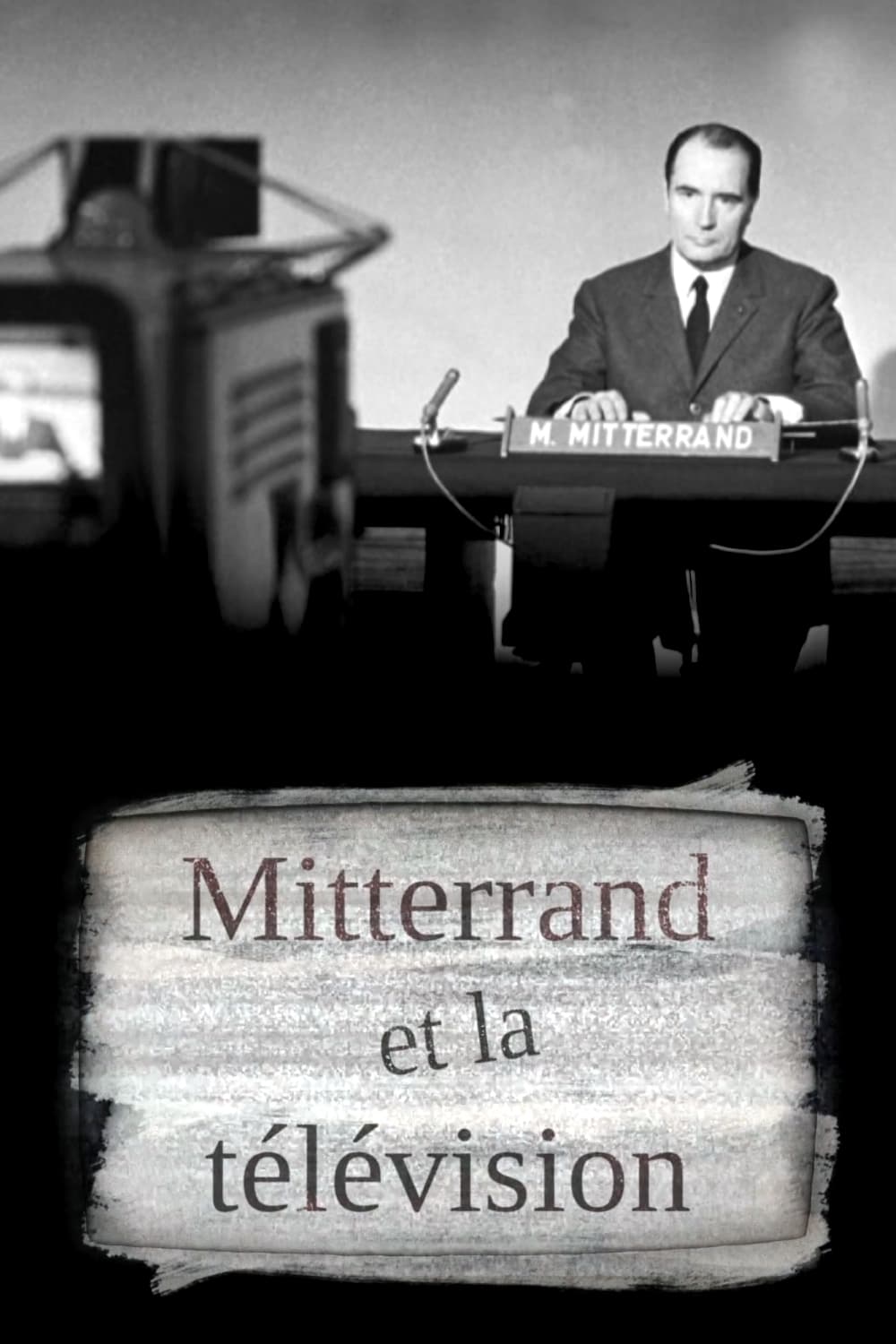
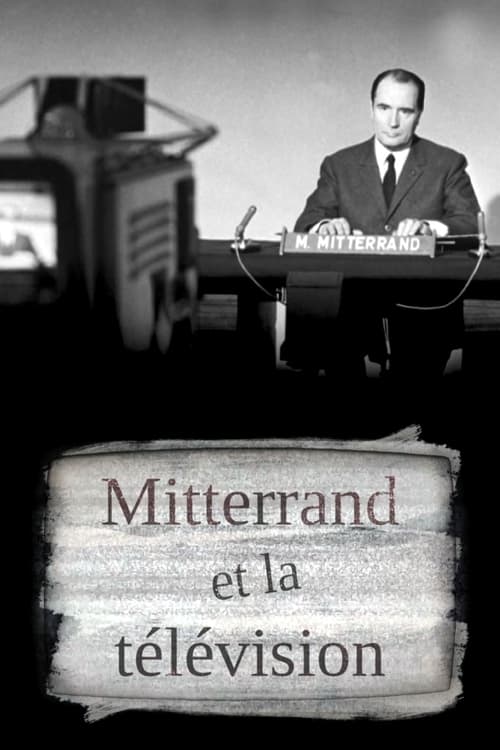
May 10th, 1981. François Mitterrand is elected President of the Republic. The “soviet tanks” supposedly coming upon the Champs-Élysées dressed in red, feared by some, did not march. Serge Moati takes a personal look at this episode, focusing on the relationship the president had with television, that he witnessed and played a role in.
Top Cast
Serge Moati
Self
François Mitterrand
Self (archive footage)
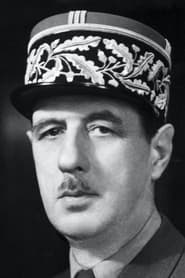
Charles de Gaulle
Self (archive footage)
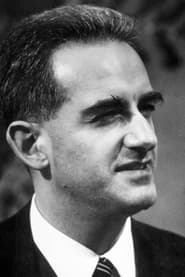
Alain Peyrefitte
Self (archive footage)
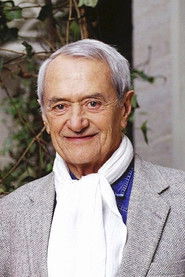
Georges de Caunes
Self (archive footage)
André Harris
Self (archive footage)

Danielle Mitterrand
Self (archive footage)
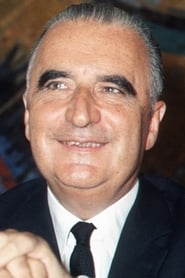
Georges Pompidou
Self (archive footage)
Michel Bassi
Self (archive footage)
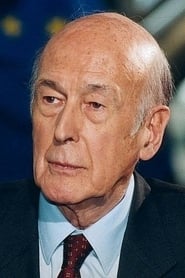
Valéry Giscard d'Estaing
Self (archive footage)
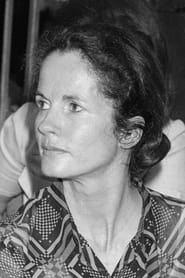
Anne-Aymone Giscard d'Estaing
Self (archive footage)
Julien Besançon
Self (archive footage)




Serge Moati
Serge Moati
Self
Serge Moati
Self
François Mitterrand
François Mitterrand
Self (archive footage)
François Mitterrand
Self (archive footage)
Charles de Gaulle
Charles de Gaulle
Self (archive footage)
Charles de Gaulle
Self (archive footage)
Alain Peyrefitte
Alain Peyrefitte
Self (archive footage)
Alain Peyrefitte
Self (archive footage)
Georges de Caunes
Georges de Caunes
Self (archive footage)
Georges de Caunes
Self (archive footage)
André Harris
André Harris
Self (archive footage)
André Harris
Self (archive footage)
Danielle Mitterrand
Danielle Mitterrand
Self (archive footage)
Danielle Mitterrand
Self (archive footage)
Georges Pompidou
Georges Pompidou
Self (archive footage)
Georges Pompidou
Self (archive footage)
Michel Bassi
Michel Bassi
Self (archive footage)
Michel Bassi
Self (archive footage)
Valéry Giscard d'Estaing
Valéry Giscard d'Estaing
Self (archive footage)
Valéry Giscard d'Estaing
Self (archive footage)
Similar Movies
Homo Cinematographicus is a human species whose unit of measurement and point of reference is the cinema and its derivative, television. Filmed at the 1998 Cannes Film Festival, the film offers an unspecified number of statements, talking about memories and a thousand fragments of stories, titles and film scenes, the warp of a gigantic collective Chanson de geste.
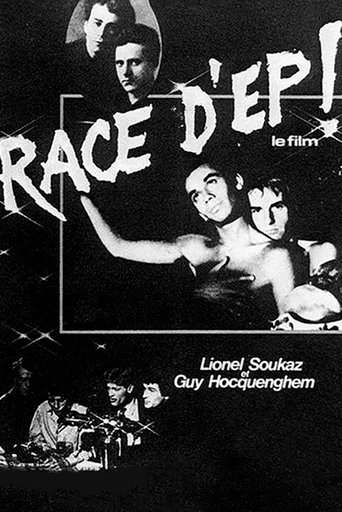
"Race d’Ep!" (which literally translates to "Breed of Faggots") was made by the “father of queer theory,” Guy Hocquenghem, in collaboration with radical queer filmmaker and provocateur Lionel Soukaz. The film traces the history of modern homosexuality through the twentieth century, from early sexology and the nudes of Baron von Gloeden to gay liberation and cruising on the streets of Paris. Influenced by the groundbreaking work of Michel Foucault on the history of sexuality and reflecting the revolutionary queer activism of its day, "Race d’Ep!" is a shockingly frank, sex-filled experimental documentary about gay culture emerging from the shadows.
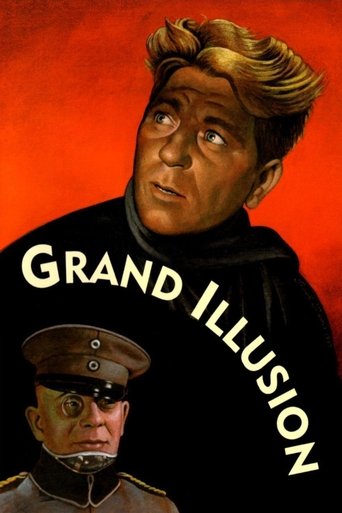
A group of French soldiers, including the patrician Captain de Boeldieu and the working-class Lieutenant Maréchal, grapple with their own class differences after being captured and held in a World War I German prison camp. When the men are transferred to a high-security fortress, they must concoct a plan to escape beneath the watchful eye of aristocratic German officer von Rauffenstein, who has formed an unexpected bond with de Boeldieu.
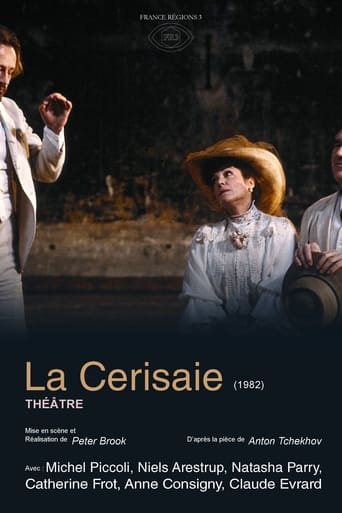
The last vestiges of a family that has gone from cherry season to sorrow... Madame Ranevskaya is a spoiled, aging aristocrat who, upon returning from a trip to Paris, must face the loss of her magnificent Cherry Orchard estate after defaulting on her mortgage. In denial, she continues to live in the past, deluding herself and her family, while the magnificent cherry trees are chopped down by the new owner Lopakhin, her former serf, who has his own agenda.

Iranian Iradj Azimi directed this French historical drama re-creating events depicted in the famous 1819 painting The Raft of the Medusa by Jean Louis Andre Theodore Gericault (1791-1824). The ill-fated voyage of the frigate Medusa begins when it departs Rochefort for Senegal in 1816. After striking a sandbar off the African coast, 150 civilians row safely to shore, but Captain Chaumareys (Jean Yanne) orders 140 soldiers and sailors onto a raft (minus supplies) and has it cut loose. Only 14 survive from the 140, creating a scandal back in France. Gericault (Laurent Terzieff) later talks to three of the survivors while researching his painting. Work on this film began in 1987, but sets destroyed by Hurricane Hugo caused delays, so the film was not completed until 1990. However, it then remained undistributed until an incident in which writer-director Azimi slashed his wrists in front of French Ministry of Culture officials.