

Olivier Messiaen: The Music of Faith
Music · Documentary
Overview
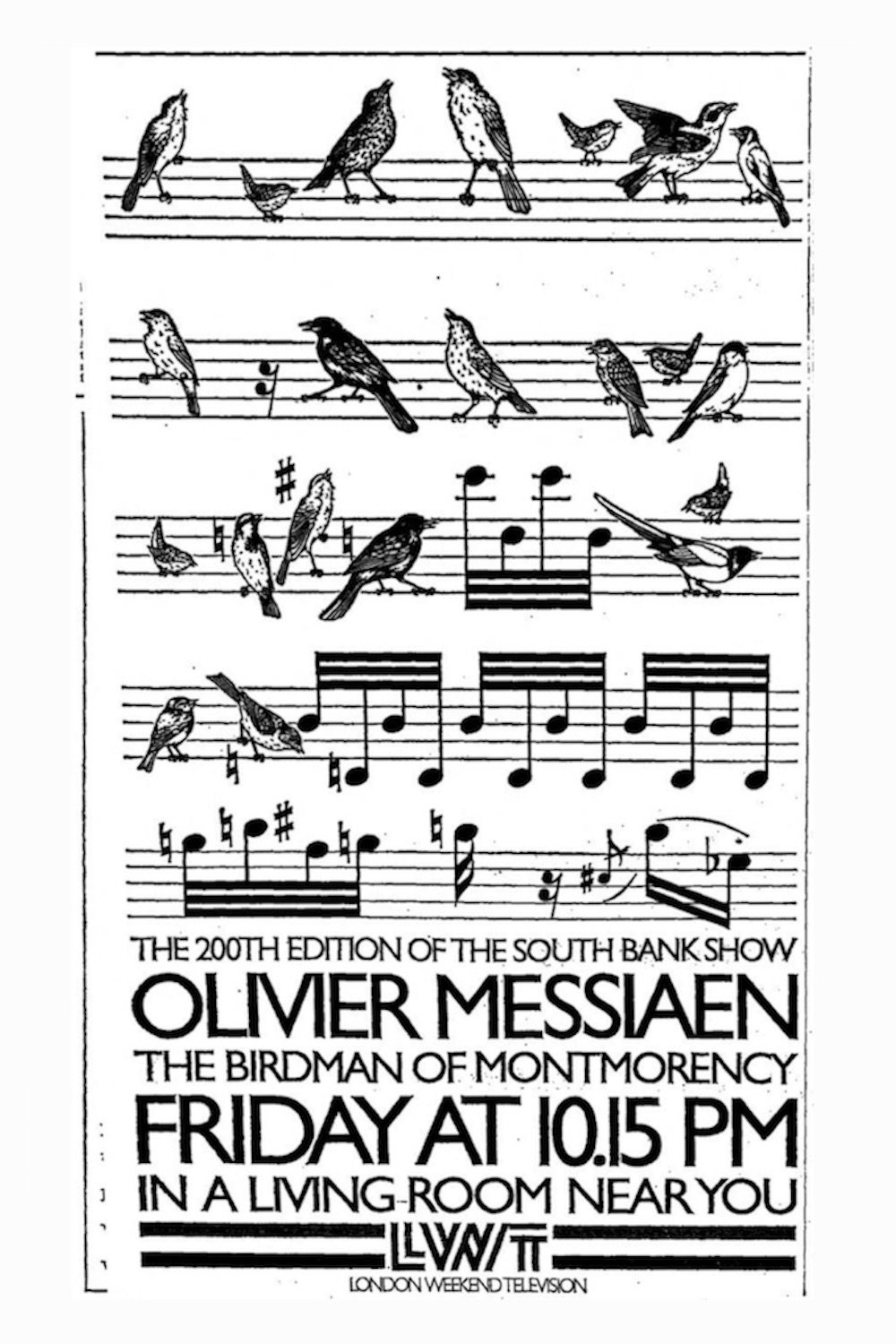
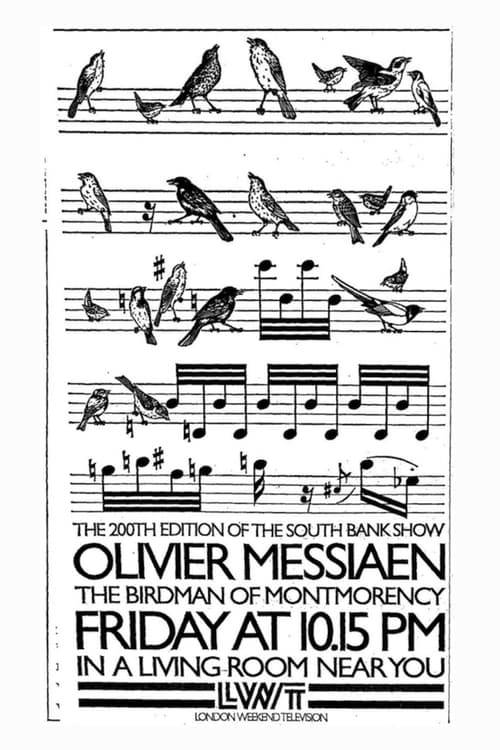
Olivier Messiaen played a leading role in the evolution of 20th-century music. In this classic interview, the late composer talks on topics such as his love of nature and his fervent Christian faith, two themes that profoundly shaped his work; his views on rhythm and tonal color; his relationship with his mother, the poet Cécile Sauvage; and his professorship at the Paris Conservatoire. Film clips of Messiaen improvising on the organ and notating birdsong for his compositions—plus excerpts of his music, some of which are performed by his wife, the celebrated pianist Yvonne Loriod—provide a deeper appreciation of his special genius. (79 minutes)

No cast information.
Similar Movies
José Manuel Ortiz, 32, has had a great interest and sensitivity towards music since he was very young. He grows up listening to the anecdotes of his great-grandfather Carlos Amable Ortiz who was the first academic musician in Ecuador. After the death of Carlos Amable Ortiz, his fame begins to fade, but his 237 scores have managed to survive time. Upon recovering the works, José Manuel's interest in studying and deepening the music found is awakened.
Yvonne Loriod was not only an incredible performer of the music of her time, but also Olivier Messiaen's muse, the one in whom and for whom he found the natural and concrete extension of his art, of his inspiration. This documentary is a beautiful testament to what this great artist represented.
After the acclaimed Met premiere of Thomas Adès's "The Tempest" in 2012, the composer returned with another masterpiece, this time inspired by filmmaker Luis Buñuel's seminal surrealist classic "El Ángel Exterminador", during the 2017–18 season. As the opera opens, a group of elegant socialites gather for a lavish dinner party, but when it is time to leave for the night, no one is able to escape. Soon, their behavior becomes increasingly erratic and savage. The large ensemble cast tackles both the vocal and dramatic demands of Adès's opera with one riveting performance after another. Tom Cairns, who also penned the work's libretto, directs an engrossing and inventive production, using a towering wooden archway to trap the characters onstage. And Adès himself takes the podium to conduct the frenzied score, which features a host of unconventional instruments, including the eerie electronic ondes Martenot.
The film traces the career of some of the winners of this new generation nicknamed the "K-Classics Generation", including the 2 recent winners of the Queen Elisabeth Competition, the soprano Hwang Sumi and the violinist Lim Jiyoung. In Korea, where it all began, and in Germany where most of them have settled.
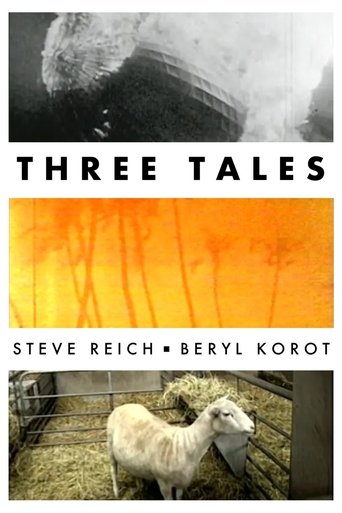
"Three Tales" is a video music work by American composer Steve Reich and video artist Beryl Korot. It is set in three "Acts", each depicting a technological advance of the 20th century and its negative implications on humanity: the dirigible airship Hindenburg and its explosion; the Atom Bomb and its testing on Bikini Atoll; and Dolly the sheep, first successful genetic cloning of a mammal.
This seminal work of avant-garde opera from composer Philip Glass and director Robert Wilson arrives full-circle, coming to France, the site of its 1976 Avignon Festival world premiere, at the tail end of this 2014 revival tour for a landmark Theâtre du Châtelet production and a first ever filming by award-winning arts filmmaker Don Kent. Eschewing conventional narrative, the opera revolves loosely around pacifist Einstein’s relationship to the creation of the atomic bomb.
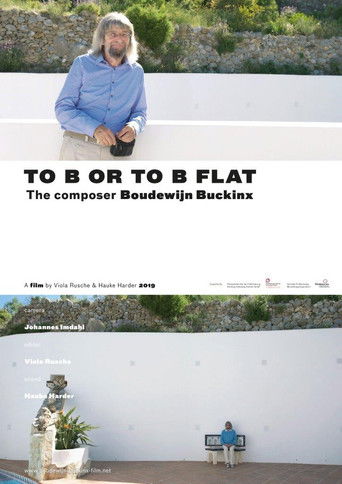
Who gets the idea to write “Nine unfinished symphonies” - one of them perhaps the shortest Symphony in music history? Or "1001 sonatas’ - each lasting about a minute but in total being one of the longest pieces ever written? Like a postmodern Erik Satie the Belgium composer Boudewijn Buckinx is using music history as a playing field. The classical music audience is irritated, the avant-gardist wrinkles his nose... "Daisies in a Meadow" - that's how Buckinx described his "1001 Sonatas” for violin and piano, They play a leading role in our film, in the supporting roles the Spanish sun and the Belgian rain. The latter, however, did not show up at the set - just as you always have to be prepared for surprises with Boudewijn Buckinx. "Why is my music so simple? - Why is my music so complex?" With a wink, Buckinx gives various answers to these recurring questions. The portrait of an immensely productive artist who is radically taking his own path.
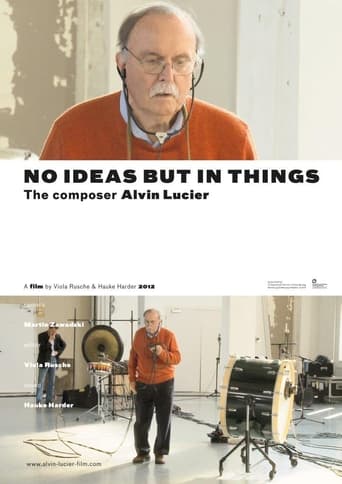
“Don’t ask me what I mean, ask me what I’ve made” – inspired by this motto, the documentary accompanies the American composer Alvin Lucier (1931 - 2021) on concert travels to The Hague (Netherlands) and Zug (Switzerland). Lucier explains and comments on his œuvre – from his early live electronics performances (MUSIC FOR SOLO PERFORMER,1965 and BIRD AND PERSON DYNING, 1975) up to the premiere of his ensemble piece PANORAMA 2 in 2011. One of Lucier’s key works, I AM SITTING IN A ROOM (1969), is introduced as a central structuring device in the film. At home in Middletown, Connecticut, Lucier offers rare insights into the beginnings of his pioneering works, his time as a member of the Sonic Arts Union, his relations with John Cage and David Tudor, as well as his teaching practice at Wesleyan University.
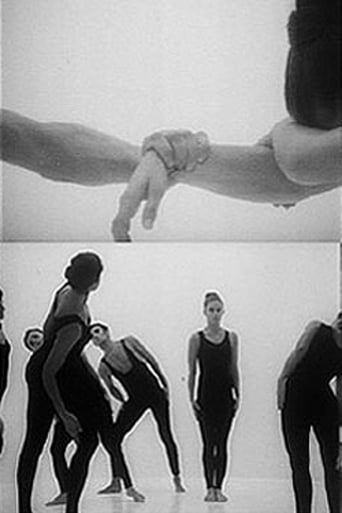
The first experimental dance film from Croatia, which pays homage to the pioneer of experimental and dance film Maya Deren and her "Study in Choreography for Camera" from 1945. The theme of the film is inspired by a composition by Ivo Malec "Miniatures for Lewis Carroll", and the dance is performed by the members of the Studio for Contemporary Dance who, in black suits and white surroundings, seem to float in the space captured by the eye of the camera.