

Maija Isola, Master of Colour and Form
Documentary
Overview
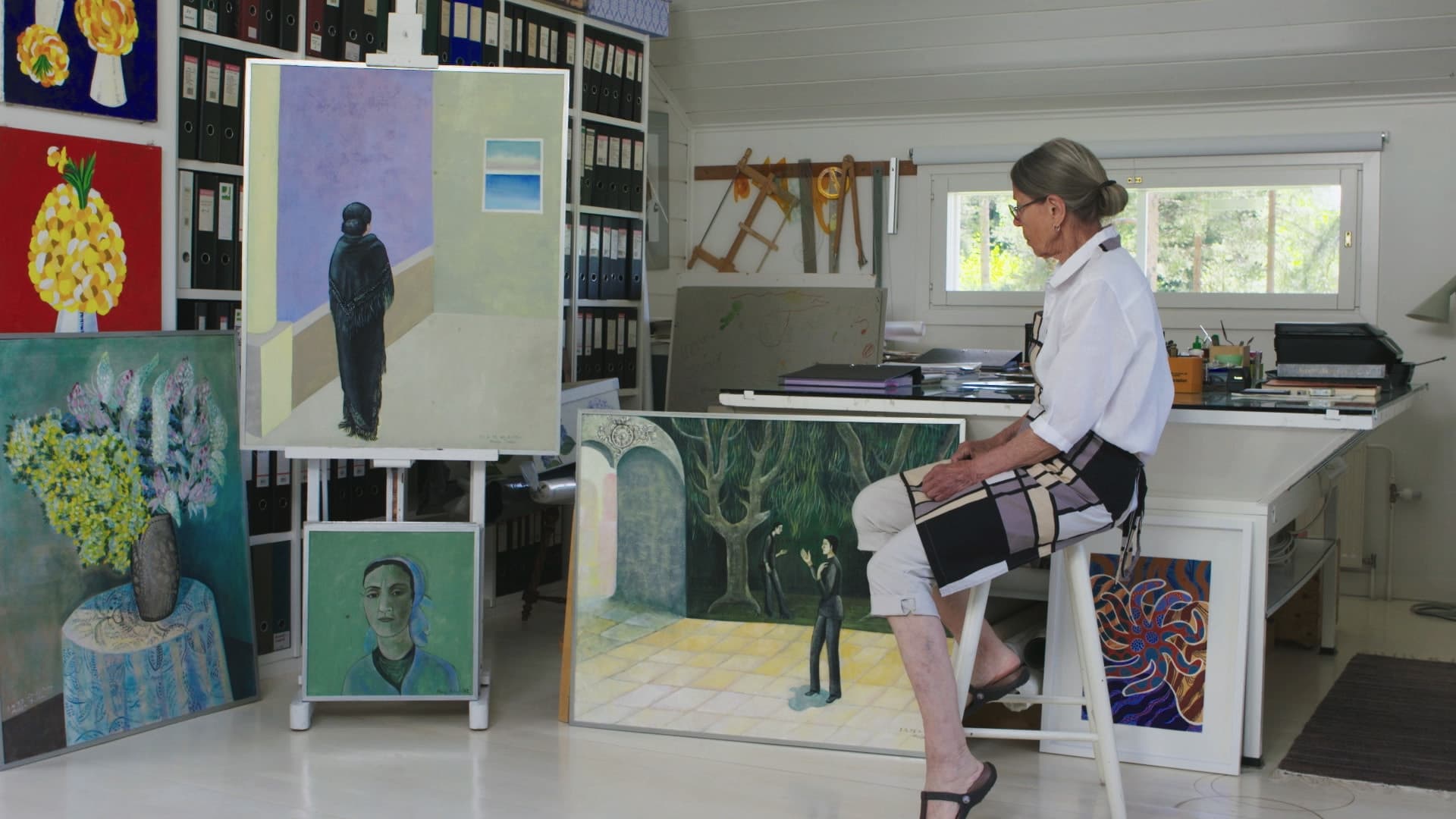
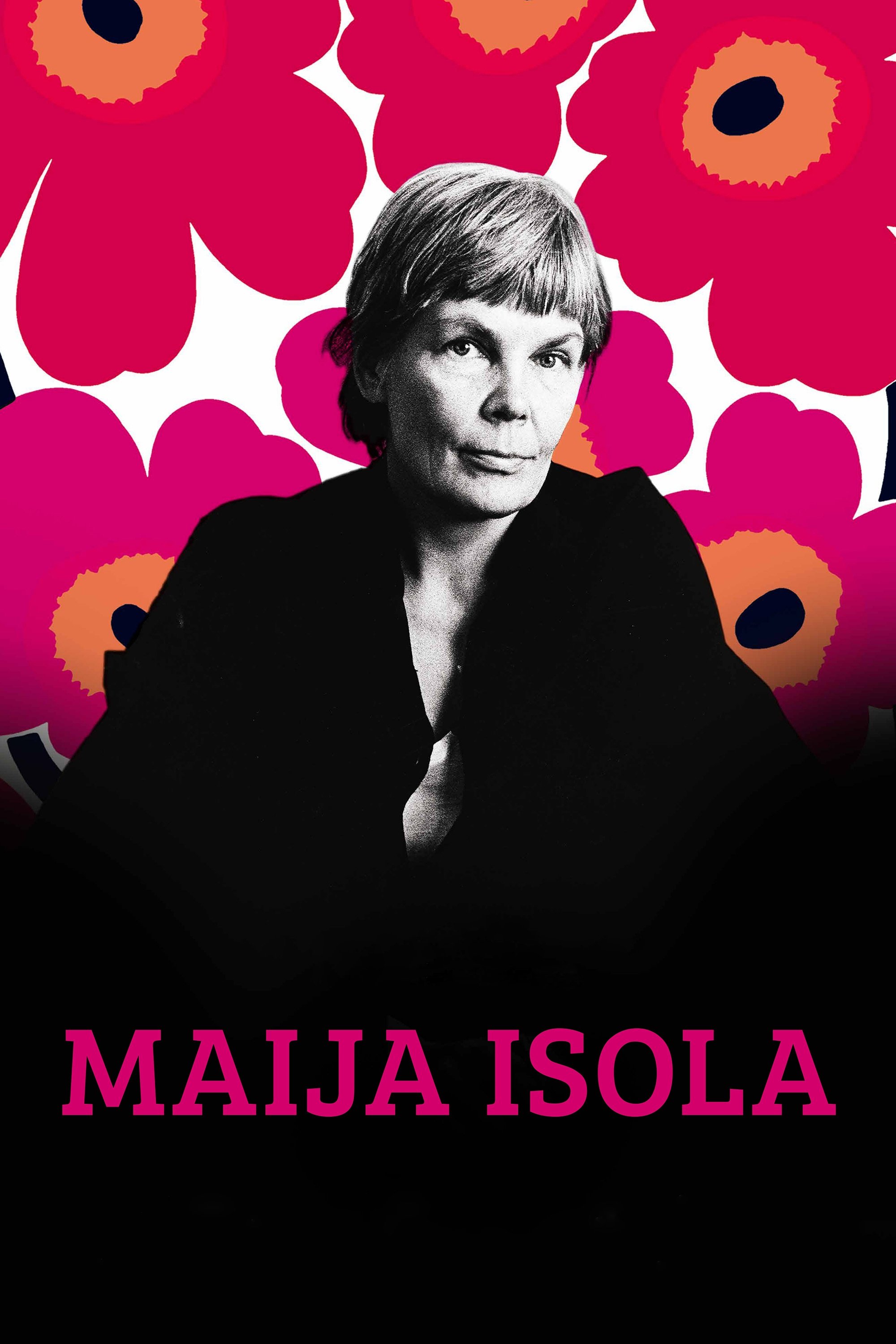
A film about Maija Isola, the designer of Finland’s most beloved fabrics. Her bold designs, which include classics like Unikko, Kivet, Kaivo and Melooni, were essential in creating Marimekko’s lifestyle universe. The film shows the secrets to the success of Maija Isola’s fabrics, the values at the heart of Isola’s globetrotter lifestyle, and the legacy she left us. The film is narrated by Maija Isola, as well as her daughter Kristina Isola. It takes us close to Maija as a person, artist, thinker and visionary through her letters. We also hear Armi Ratia’s thoughts on Isola both as an employee and as a friend.
Top Cast




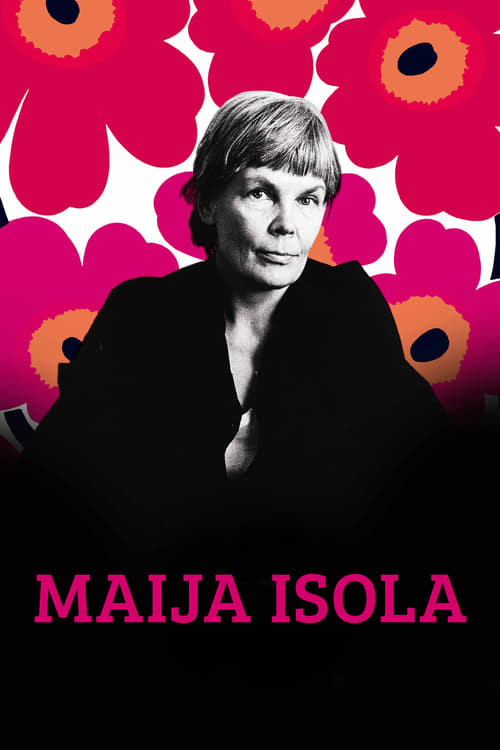
Maija Isola
Maija Isola
Self (Archive footage)
Maija Isola
Self (Archive footage)
Kristiina Isola
Kristiina Isola
Self
Kristiina Isola
Self
Emma Isola
Emma Isola
Self
Emma Isola
Self
Päivi Järvinen
Päivi Järvinen
Maija Isola
Päivi Järvinen
Maija Isola
Margit Westerlund
Margit Westerlund
Armi Ratia
Margit Westerlund
Armi Ratia
Similar Movies
The heroine of the film, fashion designer Tanya Kotegova, has become an unquestioned authority in the world of fashion, a queen of style with an inimitable energy in every collection. How did a girl from Magadan reach the heights of design art? The fashion show is the most honest account of the inner world, passions, and experiences of a woman who has dedicated herself to her craft and her fashion house.
Documentary devoted to the architectural and urban planning designs of Le Corbusier. The architect supports his in-depth reflection on the city and its necessary adaptation to modern life with plans, drawings and images, particularly Paris, whose revolutionary development dreamed of by Le Corbusier is exhibited here. Its first projects will remain at the stage of a model: the modernization plan for the city of Algiers. Some will be created by other architects: Ministry of Education in Rio de Janeiro, UN Palace in New York. From the post-war period in less than 10 years, Le Corbusier created large housing units in Marseille, Nantes, a chapel in Ronchamps, a factory in Saint-Dié, a town in Chandigarh in India. Through diagrams, the architect presents his theory of the "radiant city", the mathematical key modulor of his work as well as his project for reorganizing the countryside, industrial and urban cities into a grouping around a cooperative system.

Toypunks is a documentary film series covering the converging world of Japanese toys, fashion and punk rock. Exploring the birth of the designer vinyl explosion from its roots in character culture and punk music, Toypunks takes you in-depth with Japanese fashion icon, Hikaru Iwanaga, creator of the worlds first designer toy. Frank Kozik, Hiddy Kinoshita of Secret Base, Balzac, Three Tides Tattoo and more are interviewed highlighting profound cross-cultural connections between todays top creative talents in toys and fashion.
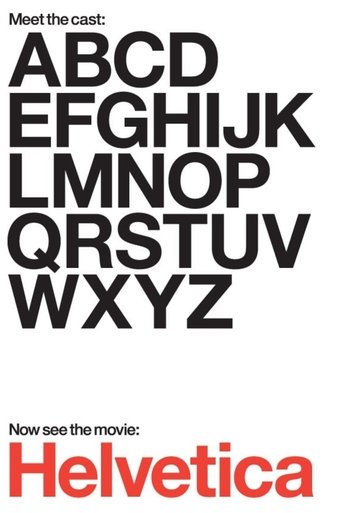
Helvetica is a feature-length independent film about typography, graphic design and global visual culture. It looks at the proliferation of one typeface (which will celebrate its 50th birthday in 2007) as part of a larger conversation about the way type affects our lives. The film is an exploration of urban spaces in major cities and the type that inhabits them, and a fluid discussion with renowned designers about their work, the creative process, and the choices and aesthetics behind their use of type.

Immersion in a world of contemporary design in search of more virtuous practices. In Helsinki, German designer Julia Lohmann uses seaweed to create dyed garments; in Amsterdam, Marjan van Aubel creates objects powered by organic photovoltaic cells; in London, the Superflux duo develops futuristic installations to alleviate potential food shortages.
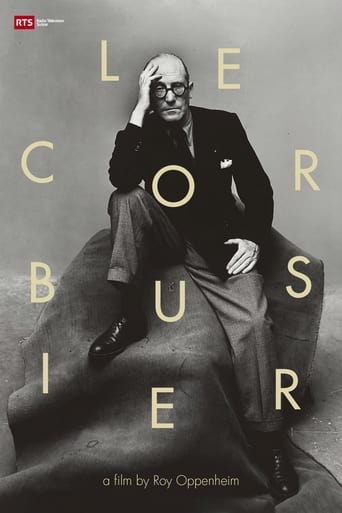
Making a documentary on Le Corbusier is not easy, because he is undoubtedly the architect most familiar to the general public but also the most unknown. If most people know his great achievements, such as the Cité radieuse of Marseille, the pavilions of the Cité universitaire de Paris or the Tourettes convent, many are unaware of his works in Moscow, Rio de Janeiro or Chandigarh. Roy Oppenheim pays a vibrant tribute to Corbusier, dismissing the criticisms and darker facets of the character. It presents the career of this pioneering architect, as well as his thinking, the essential principle of which was aimed at the development of human beings and the balance of society. Light, space and greenery are integrated into his large futuristic cities, because according to him the eyes of the inhabitants should be drawn into the distance and not into their neighbor's bathroom.