

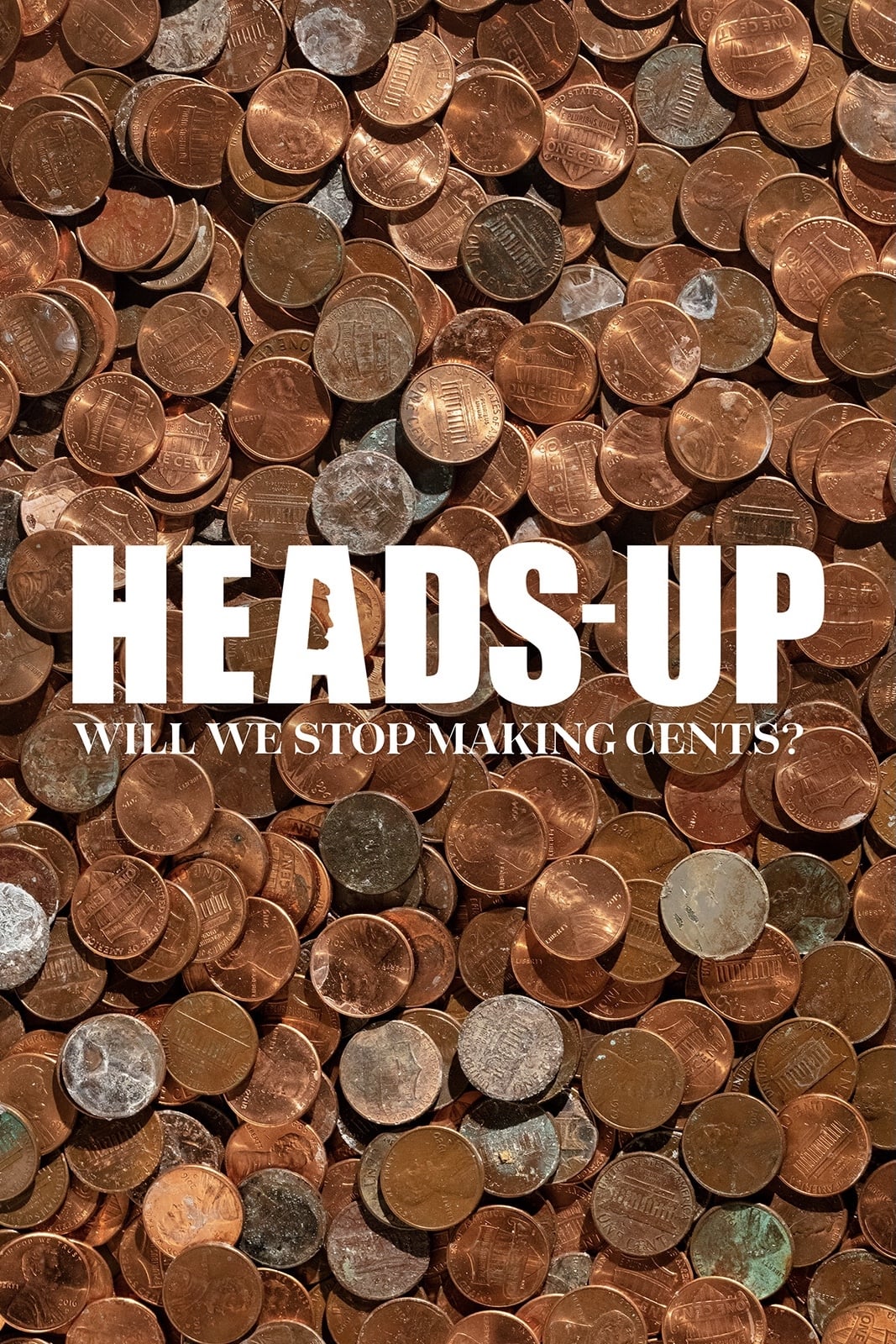
Heads-Up: Will We Stop Making Cents?
Documentary
Overview
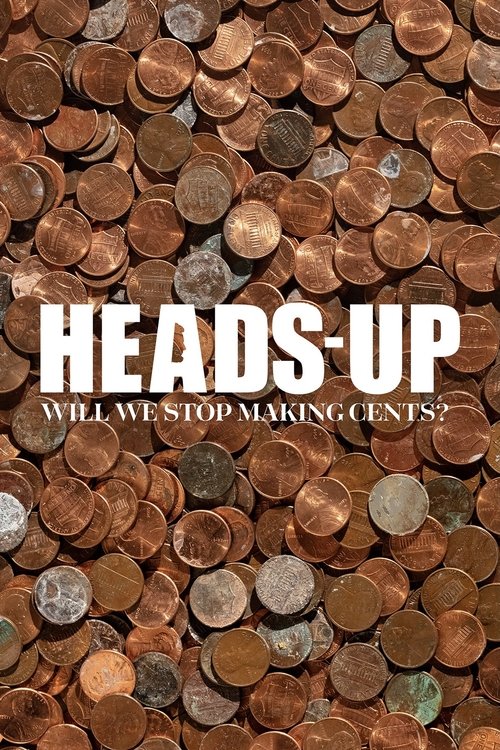
Should the United States eliminate the penny? "Heads-Up: Will We Stop Making Cents?" is a documentary that explores the different sides of the debate, touching on the role of the penny in today's economy, predictive economic models of a penny-less future, and the cultural importance of the coin. Radio DJ and Actor Laurie Gallardo narrates the penny odyssey as we travel from Texas to Canada, stopping to speak with former Mint Directors, lawmakers, economists, and more than a few unique penny characters, including a coin-hunter, a former President*, and one very memorable penny prankster. * "Abraham Lincoln" appears in the film.



No cast information.
Similar Movies
The hallmarks of popular music - artist independence and diversity of voices - are threatened by a contracting marketplace of record companies, radio ownership and playlists, as well as increased use in advertising. Big-name artists, historians and economists explain how popular music is produced and marketed and critique its current state.
Based on Reich's 2010 book Aftershock: The Next Economy and America's Future, the film examines widening income inequality in the United States. U.S. Labor Secretary Robert Reich tries to raise awareness of the country's widening economic gap. He publicly argued about the issue for decades, and producing a film of his viewpoints was a "final frontier" for him. In addition to being a social issue documentary, Inequality for All is also partially a biopic regarding Reich's early life and his time as Secretary of Labor under Bill Clinton's presidency. Warren Buffett and Nick Hanauer, two entrepreneurs and investors in the top 1%, are interviewed in the film, supporting Reich's belief in an economy that benefits all citizens, including those of the middle and lower classes.

Artists Nathalie Gabrielsson and Peter Sköld uncover a massive disinformation campaign against the Swedish welfare model that started in the 1970s. The campaign is unique in the world in its strategic structure and extensive scope. All the problems we see today with a growing distrust of the political and democratic system, and scientific facts, can therefore be seen as a predictable consequence of this campaign and paradigm shift. It also gives us an idea of the background to when politics began to become meaningless, and more about creating mock debates and rhetorical plays in the media where, for example, scientific facts are no longer an obvious starting point. The Swedish Troll Factory makes visible the strategies and power interests behind this unique disinformation campaign and how it manipulates the democratic system.
25 Million Pounds details the collapse of Barings Bank in the mid 1990s primarily by a broker called Nick Leeson, who lost £827 million ($1.3 billion) by speculating on futures contracts. The film contextualises the downfall as the history of Barings Bank was one of the oldest and most prestigious merchant banks in Britain, run by the same family for decades with extensive ties to Britain's elites. But in the late 19th century Barings almost went bankrupt after investing heavily in South American bonds, including backing the construction of a sewer system in Buenos Aires. The bank was saved by The Bank of England, but Edward Baring, the head of the bank, was financially ruined and never recovered.
The poor may always have been with us, but attitudes towards them have changed. Beginning in the Neolithic Age, Ben Lewis's film takes us through the changing world of poverty. You go to sleep, you dream, you become poor through the ages. And when you awake, what can you say about poverty now? There are still very poor people, to be sure, but the new poverty has more to do with inequality...

Why is social trust breaking down, and how do we find it again? This is the question at the heart of Leviathan. Directed and produced by Alexander Beiner, it draws on sociology, myth, psychology, economics and systems theory to delve into the deep code of culture and make sense of the times we live in. It’s a journey that invites the viewer to confront the shadows lurking at the heart of our systems, and points the way toward hope, healing and action.

In June 1893, European prospectors unlawfully took claim to ‘The Golden Mile’ on Aboriginal land. In little over a hundred years the natural landscape has been transformed into the industrial hellscape of Kalgoorlie-Boulder. As incumbent Mayor John Bowler starts to campaign for a second term, independent prospector John ‘General Hercules’ Katahanas decides to run against him on an anti-corruption ticket. What starts out as a quirky David-vs-Goliath political battle, unravels into a portrait of a man, a town and a country sent mad by the timeless cycles of exploitation, racism and greed.
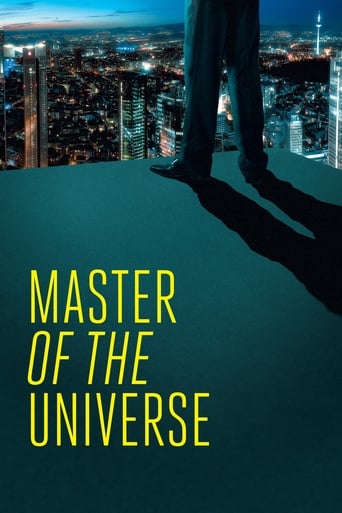
He was one of Germany's leading investment experts with an income of several million Euros per day. Now, he sits on one of the upper floors of an empty bank building in the middle of Frankfurt, overlooking a skyline of glass and steel. And talks. In an extended mix of a monologue and an in-depth interview, which is as frightening as it is fascinating, he shares his inside knowledge from a megalomaniac parallel world where illusions are the market's hardest currency. Marc Bauder's 'Master of the Universe' is based on meticulous research and provides us with geniune insight into the notoriously secretive and self-protective 'universe' of which our nameless protagonist experiences himself a master. Where other films on the financial meltdown have focused on the epic nature of larger-than-life business, Bauder probes the mentality that made it possible in the first place. A tense drama where psychology meets finance - two things that are more closely linked than you would like to believe.
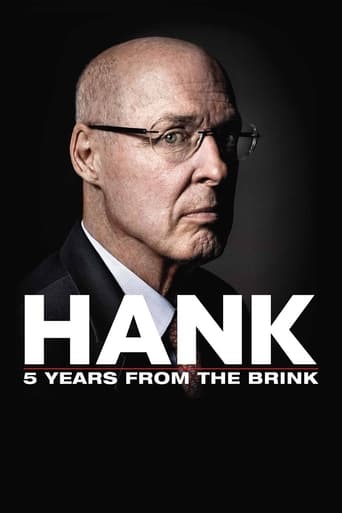
For three weeks in September 2008, one person was charged with preventing the collapse of the global economy. No one understood the financial markets better than Hank Paulson, the former CEO of Goldman Sachs. In Hank: Five Years from the Brink, Paulson tells the complete story of how he persuaded banks, Congress and presidential candidates to sign off on nearly $1 trillion in bailouts - even as he found the behavior that led to the crisis, and the bailouts themselves, morally reprehensible. Directed by Academy Award nominee Joe Berlinger (Paradise Lost Trilogy, Some Kind of Monster), the film features Paulson, and his wife of 40 years, Wendy. it's a riveting portrait of leadership under unimaginable pressure - and a marriage under unfathomable circumstances.
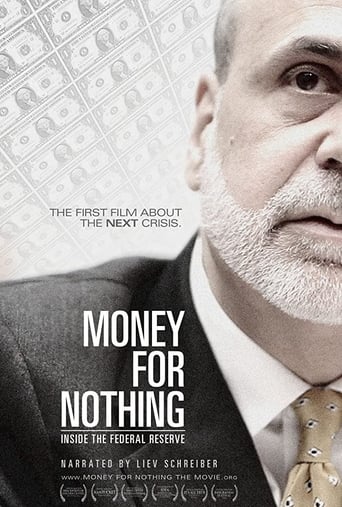
Nearly 100 years after its creation, the power of the U.S. Federal Reserve has never been greater. Markets and governments around the world hold their breath in anticipation of the Fed Chairman's every word. Yet the average person knows very little about the most powerful - and least understood - financial institution on earth. Narrated by Liev Schreiber, Money For Nothing is the first film to take viewers inside the Fed and reveal the impact of Fed policies - past, present, and future - on our lives. Join current and former Fed officials as they debate the critics, and each other, about the decisions that helped lead the global financial system to the brink of collapse in 2008. And why we might be headed there again.