

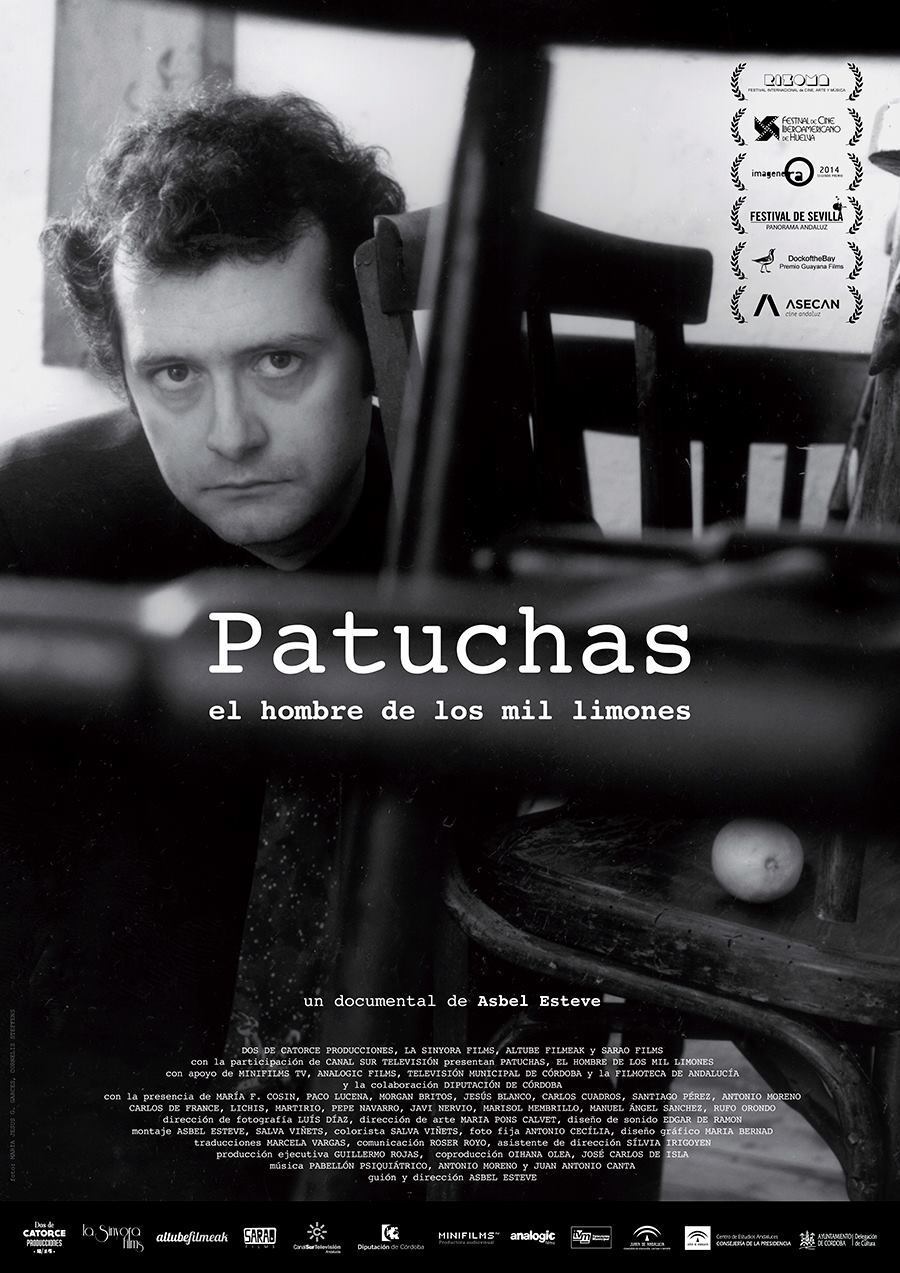
Patuchas, el hombre de los mil limones
Documentary · Music
Overview
Documentary film about the life of musician and theater writer Juan Antonio Castillo "Canta" (Córdoba, 1966-1996), known as "Patuchas" by his friends.








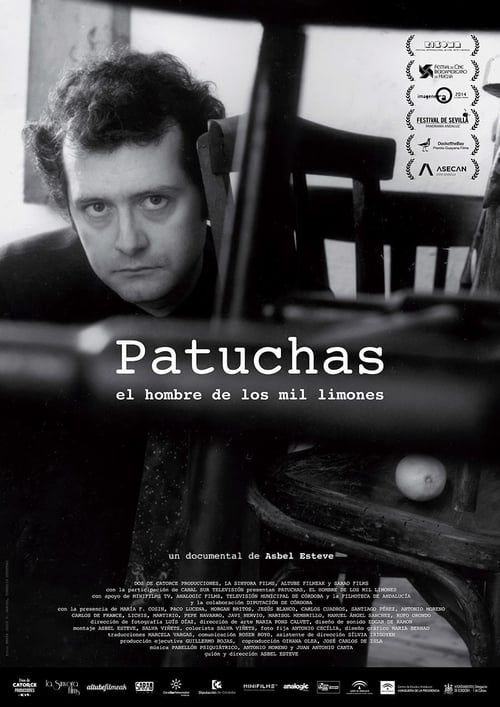
Juan Antonio Canta
Juan Antonio Canta
Self (archive footage)
Juan Antonio Canta
Self (archive footage)

Martirio
Martirio
Self
Martirio
Self

Pepe Navarro
Pepe Navarro
Self
Pepe Navarro
Self
Carlos de France
Carlos de France
Self
Carlos de France
Self

Marisol Membrillo
Marisol Membrillo
Self
Marisol Membrillo
Self

Miguel Ángel Hernando Trillo
Miguel Ángel Hernando Trillo
Self (as Lichis)
Miguel Ángel Hernando Trillo
Self (as Lichis)
Similar Movies
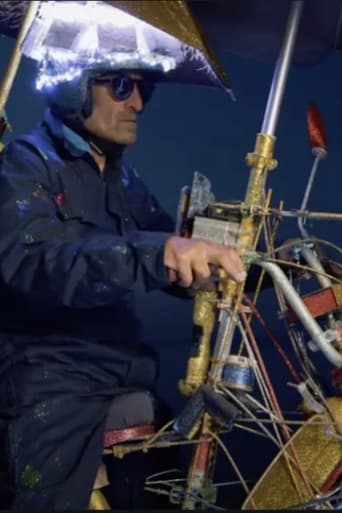
On the outskirts of Augusta lives Orazio: a mechanic by vocation. Due to countless misadventures he cannot open a workshop. To give vent to his anger, he transforms mopeds and scooters into “glittered motorized umbrellas.” Glitter helmets and hyper-colored decorations dress him up; thus begins his passion for “light” understood as a superior force.
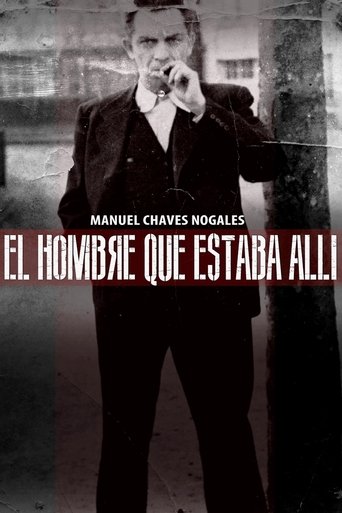
The Spanish journalist Manuel Chaves Nogales (1897-1944) was always there where the news broke out: in the fratricidal Spain of 1936, in Bolshevik Russia, in Fascist Italy, in Nazi Germany, in occupied Paris or in the bombed London of World War II; because his job was to walk, see and tell stories, and thus fight against tyrants, at a time when it was necessary to take sides in order not to be left alone; but he, a man of integrity to the bitter end, never did so.
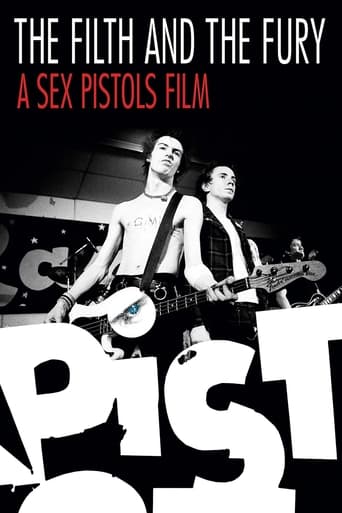
Julien Temple's second documentary profiling punk rock pioneers the Sex Pistols is an enlightening, entertaining trip back to a time when the punk movement was just discovering itself. Featuring archival footage, never-before-seen performances, rehearsals, and recording sessions as well as interviews with group members who lived to tell the tale--including the one and only John Lydon (aka Johnny Rotten).

Loïe Fuller, stage name of Marie Louise Fuller: the American actress and dancer trained in burlesque, circuses and variety shows who, in the 1890s, signed by the Folies Bergère of Paris, became a star. She was portrayed by Toulouse-Lautrec, loved by the symbolists, the inspiration for Art Nouveau, in her shows she combined dance, spirals of fabric and light, reflected from behind or from below through the glass floor that she had created. She transformed into the "Fairy of Light", was taken up (especially in her Serpentine Dance) by Georges Méliès and Alice Guy and influenced René Clair's early films.