

Mammoth of Pavlov
Documentary
Overview
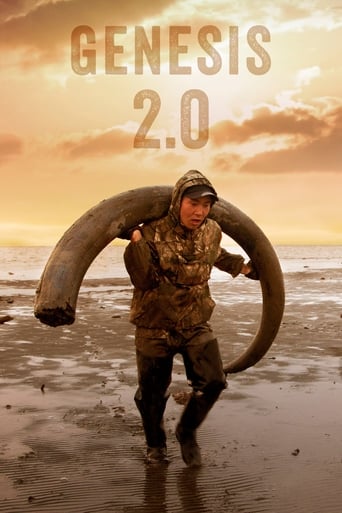
A group of scientists from the Academy of Sciences of the Republic of Sakha (Yakutia), led by Innokentiy Pavlov, with the support of residents of the Alaikhovsky ulus, in early June 2019, went to the northern tip of Kotelny Island of the Novosibirsk Islands archipelago in the Arctic. The goal is to extract fragments of a mammoth carcass in the intertidal zone of the Arctic Ocean.




No cast information.
Similar Movies
Titans of the Ice Age transports viewers to the beautiful and otherworldly frozen landscapes of North America, Europe and Asia ten thousand years before modern civilization. Dazzling computer-generated imagery brings this mysterious era to life - from saber-toothed cats and giant sloths to the iconic mammoths, giants both feared and hunted by prehistoric humans.
A unique story on the discovery of a 40-thousand-year-old, perfectly preserved baby woolly mammoth. Cutting edge science and Arctic adventure come alive in this story of a unique discovery: a perfectly preserved baby woolly mammoth that suddenly appears on a Siberian riverbank, triggering an extraordinary investigation into her life and death at the end of the Ice Age. Solving the mystery of her origins unites men whose lives are worlds apart except for their link to the woolly mammoth.
A scientist wants to recover some mammoth DNA to clone a live mammoth. So he finds a buried mammoth in the vast, rock hard permafrost of Siberia, digs it out in the middle of a blizzard and flies it home. Of course he needed a little help. So he befriended an arctic nomad who knows ever rill, rock, pond and stream in the entire region. As background to the quest, National Geographic relates the migratory history of the mammoth family.
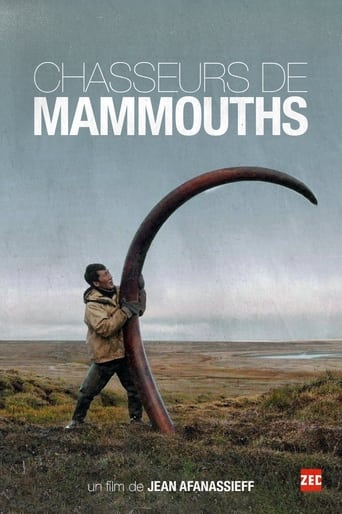
Since the ban on elephant hunting, Russia has had a monopoly on the ivory trade. But this ivory comes from mammoths, whose tusks, skeletons and sometimes frozen bodies are regularly found in the frozen ground of Siberia. According to estimates by some scientists, it could contain the remains of several million mammoths! eternal ice. Their goal: to discover the frozen remains of mammoths trapped in the permafrost. Using derisory means, they dig the frozen ground from which they extract bones, teeth, skulls... and above all, precious mammoth tusks. Ivory - the white gold of the tundra - will sell for over $50 a kilo. A total market appears at $2.5 million, with hubs in Moscow and Hong Kong.
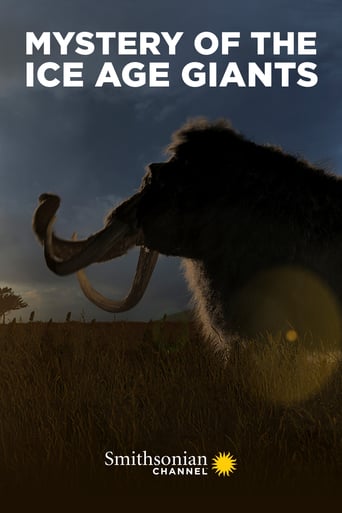
During the last Ice Age, millions of large animals roamed the Earth, from wooly mammoths and giant sloths to cave lions and saber-toothed cats. But as the temperatures rose, three-quarters of these species died out. What happened? Can environmental changes alone really explain this mass extinction, or did humans - who at this very time were beginning their conquest of the planet - play a key role? To find out, researchers around the world are hunting and studying fossils in their search for answers to solve the mystery of the Ice Age giants.
In the remote Russian Arctic, an aging scientist and his son are trying to recreate the Ice Age. They call their experiment Pleistocene Park – a perfect home for woolly mammoths, resurrected by modern genetics. But the mammoths are only a means to a bigger end: defusing a carbon timebomb frozen in the permafrost to slow the effects of global warming.