

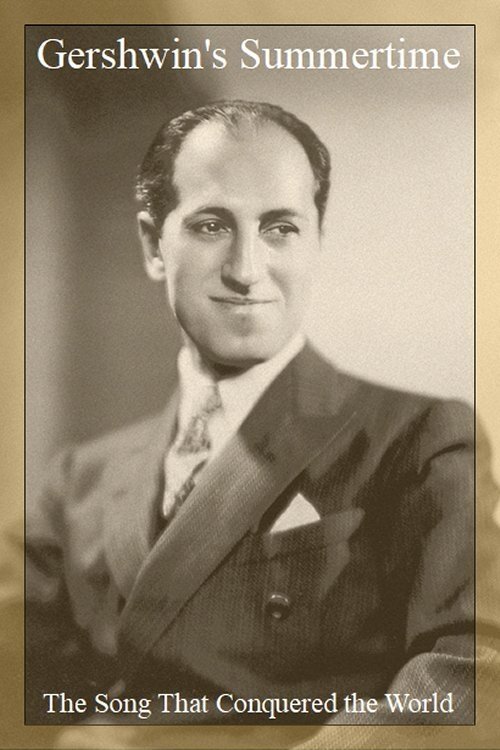
Gershwin's Summertime: The Song That Conquered the World
Documentary · Music
Overview
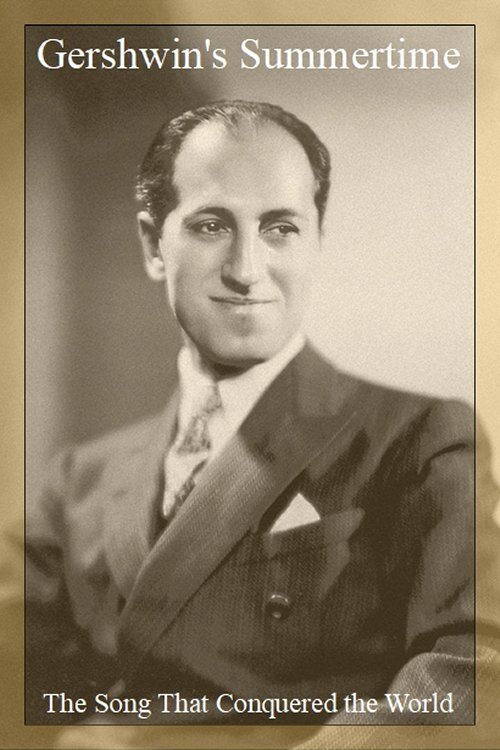
The song "Summertime" was written by George Gershwin for the 1935 opera Porgy and Bess. The lyrics are by DuBose Heyward and although not thought to be directly involved, Ira Gershwin gets an official credit. The song soon developed a life of it's own beyond the original opera and has been recorded and adapted into many different styles of music from jazz to opera, rock to reggae, soul to samba. It has been recorded and performed in many different languages around the world and remains one of the most famous and best loved songs ever written. This documentary looks at its history, how it came to be created, and its subsequent history as it traveled through time and around the world. "Summertime" is the most covered song on the planet. At least 25,000 versions of it exist.
Top Cast





Pauline Black
Pauline Black
Narrator
Pauline Black
Narrator
Similar Movies

Larry the Cucumber's vision of the future includes automated robotic hosts telling jokes with random punch lines and musical numbers in which the performers and themes are chosen entirely by chance. As Bob the Tomato quickly points out, the jokes of the future aren't very funny because they don't make sense. Worse, technical malfunctions in the Ventrilomatic hosts actually promote emotional instability. Nonetheless, Bob admits that Larry's vision of the future contains some very cool adaptations of classic songs like Gilbert and Sullivan's fast-talking "Modern Major General" and Binky the Aardvark's solo performance of Mozart's The Barber of Seville. Larry's vision of the future also includes an amusing animated short about greed called "Lunch." Junior Asparagus calls Bob and Larry back to the present with a final song celebrating God's unconditional love.
The documentary film tells the story of Zucchero Sugar Fornaciari through his words and those of colleagues and friends such as Bono, Sting, Brian May, Paul Young, Andrea Bocelli, Salmo, Francesco Guccini, Francesco De Gregori, Roberto Baggio, Jack Savoretti, Don Was, Randy Jackson and Corrado Rustici. A journey of the soul which, thanks to images coming from Zucchero's private archives and from the "World Wild Tour", his last and triumphant world tour, goes beyond the portrait of a successful musician reaching into the doubts and fragilities of 'man.

In 1812, during the French period, large parts of Germany are occupied by the troops of Napoleon. Several paramilitary Freikorps units battle the French forces, among them the Black Brunswickers led by the 'Black Duke' Frederick William of Brunswick-Wolfenbüttel. After the War of the Fifth Coalition, the Black Hussars are pursued by Napoleon throughout the country, but frequently take refuge with the noble-minded German people.
In the summer of 1961, a group of young Italian anthropologists made a clandestine journey through Spain, in order to record popular songs that supported anti-Franco resistance. As a result of their work, they were prosecuted and their recordings were censored. Sixty years later, and guided by Emilio Jona, aged 92, the last living member of that group of travellers, we recover the unpublished recordings and reconstruct the journey, today, across an emotional and political landscape, regaining historical memories through these songs, as relevant today as they were then.
Casimê Celîl was born into a Yezidi Kurdish family in 1908, in a village called Kızılkule, located in Digor, Kars. The village and family life, which he longed to remember throughout his life, ends with the massacre they endured in 1918. During his long road to Erivan, Armenia, he lost all his family members. Left all alone, Casim was placed into an orphanage and was forced to change his name. To remember who he was and where he came from, every morning he repeated the mantra “Navê min Casim e, Ez kurê Celîlim, Ez ji gundê Qizilquleyê Dîgorê me, Ez Kurdim, Kurdê Êzîdî me”, which translates to: “My name is Casim, I am the son of Celîl, I come from the village of Kızılkule in Digor, I am a Kurd, and I am Yezidi”. He clings to every piece of his culture he can find, reads, and saves whatever Kurdish literature or art he comes across. As the year’s pass, Casim finds himself with an impressive collection of Kurdish culture and history.
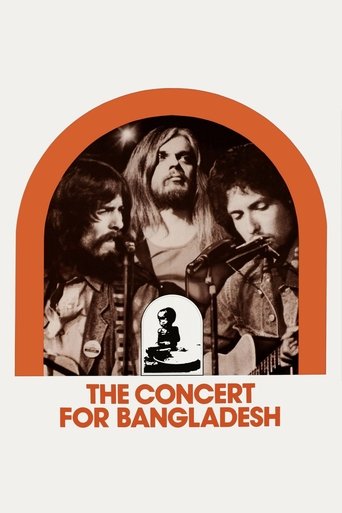
A film about the first benefit rock concert when major musicians performed to raise relief funds for the poor of Bangladesh. The Concert for Bangladesh was a pair of benefit concerts organised by former Beatles guitarist George Harrison and Indian sitar player Ravi Shankar. The shows were held at 2:30 and 8:00 pm on Sunday, 1 August 1971, at Madison Square Garden in New York City, to raise international awareness of, and fund relief for refugees from East Pakistan, following the Bangladesh Liberation War-related genocide.
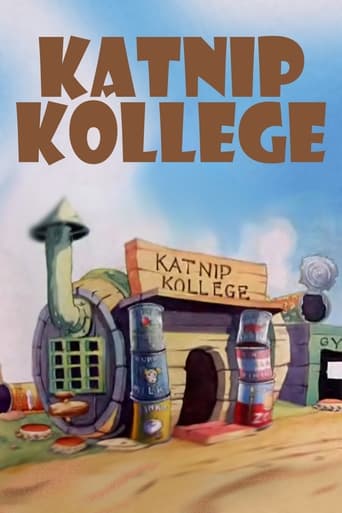
At the Katnip Kollege, we see a roomful of cats taking a course in Swingology. Everyone swings except Johnny, who can't cut it and has to sit in the dunce chair. Miss Kitty Bright tells him to look her up when he learns how to swing. Finally, listening to the pendulum clock at night, Johnny gets the beat. He rushes out to where everyone is playing and sings "Easy As Rollin' Off a Log" to Kitty Bright. She joins in; he grabs a trumpet for an instrumental break, with the complete band. They both fall off a log; she covers him with kisses.