

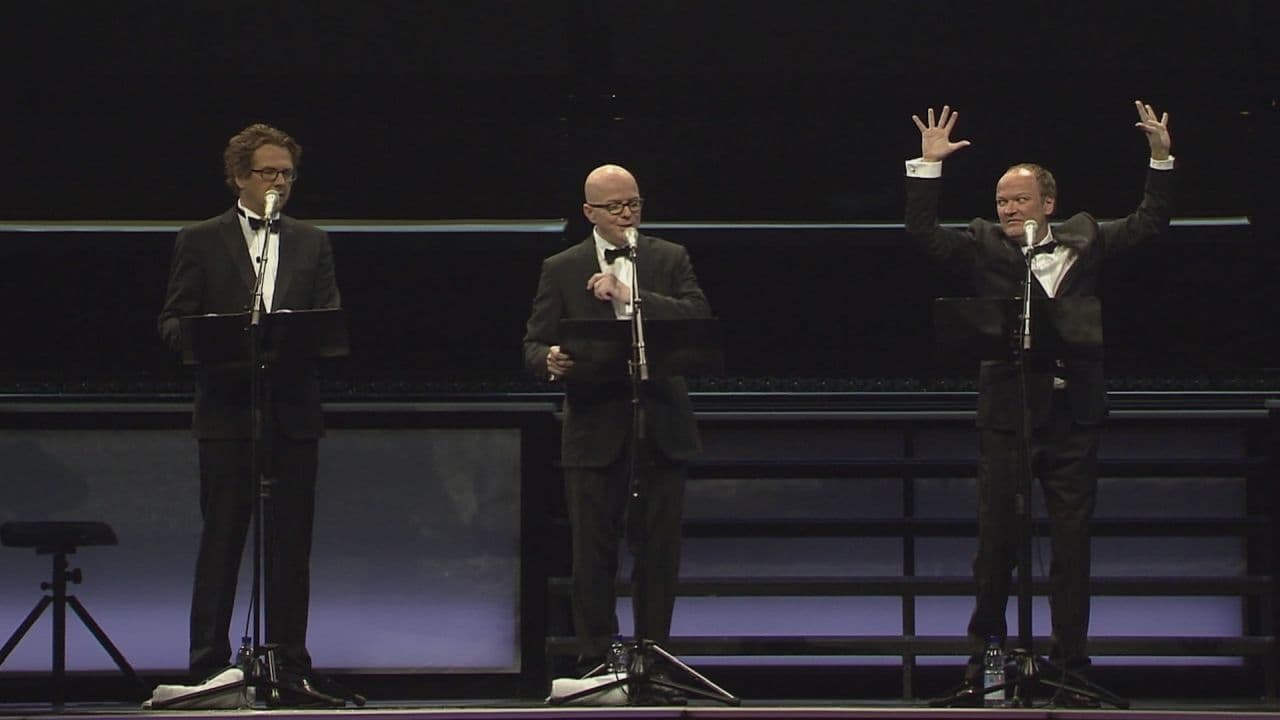
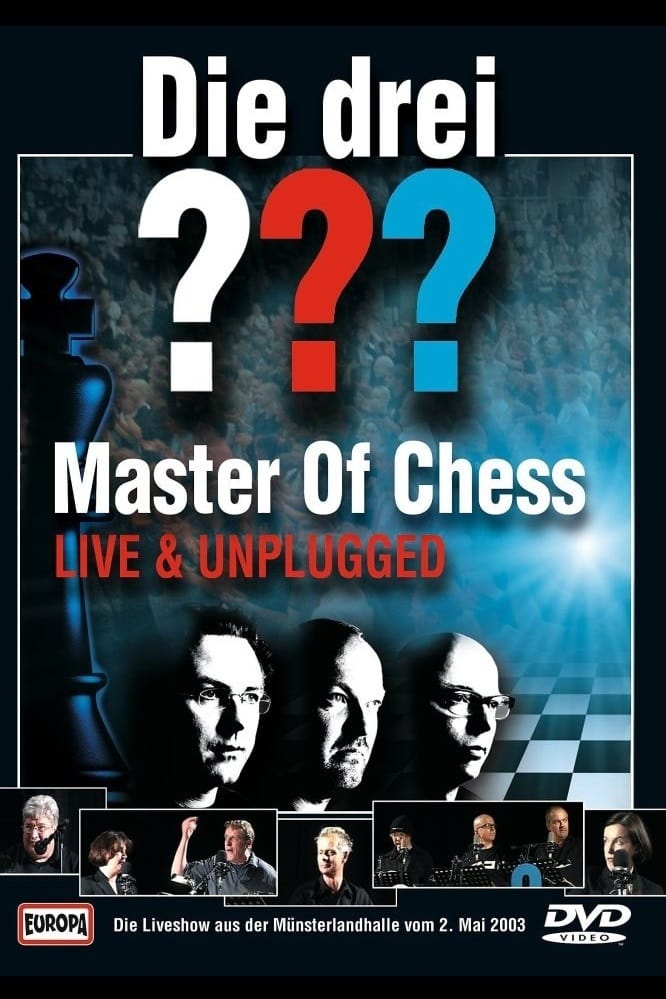
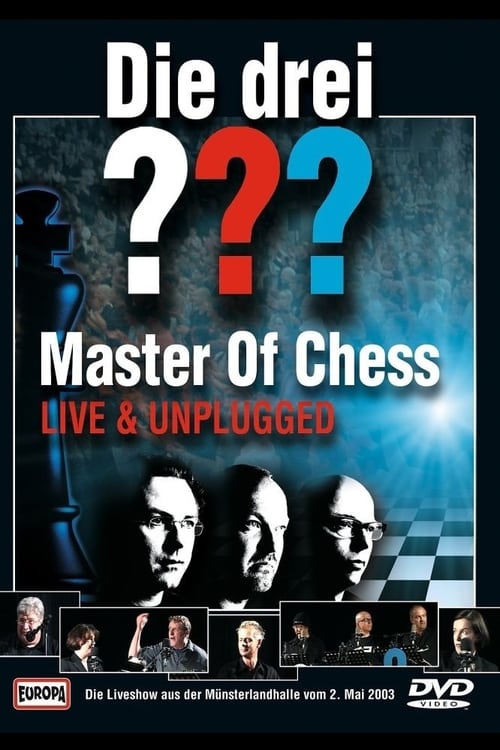
Die drei ??? LIVE - Master of Chess
Mystery · Family · Comedy
Overview
It was Peter's idea to invite his friends on a joyride on Justus' birthday of all days. In pouring rain, a car breakdown forces the three detectives to seek refuge at the creepy "Blackstone" castle. When lightning knocks out the power line, the three investigators are stuck for good. It soon becomes clear to the three junior detectives that the lord of the castle, Count Gallagher, is a real chess fanatic. But not only that - the old castle makes a spooky impression and then there is Moe, the count's sinister servant. What is it about the chess pieces on the dilapidated, centuries-old chess table that seem to move by themselves, move after move, as if by magic? Is the old building really haunted? The first detective is immediately hooked and senses a new case, only Peter wants to run away. It soon becomes clear to the three investigators that this is about much more than just a game of chess...




Helmut Krauss
Helmut Krauss
Erzähler
Helmut Krauss
Erzähler

Oliver Rohrbeck
Oliver Rohrbeck
Justus Jonas
Oliver Rohrbeck
Justus Jonas
Jens Wawrczeck
Jens Wawrczeck
Peter Shaw
Jens Wawrczeck
Peter Shaw

Andreas Fröhlich
Andreas Fröhlich
Bob Andrews
Andreas Fröhlich
Bob Andrews
Frauke Poolmann
Frauke Poolmann
Ana / Gräfin Gallagher / Virginia Burnett
Frauke Poolmann
Ana / Gräfin Gallagher / Virginia Burnett
Olaf Kreutzenbeck
Olaf Kreutzenbeck
Passfellow / Graf Seamus Gallagher / Moe
Olaf Kreutzenbeck
Passfellow / Graf Seamus Gallagher / Moe
Similar Movies
Bernard, an executive for a big company, tries to get home in time for his wedding but is caught in the middle of a mass suicide. He saves a sect member who then follows him like a puppy, and is chased by the sect leaders, two over-the-top crooks with bloated egos and a craving for money.
The tranquility of a remote Armenian mountain community is disrupted when a group of shepherds affected by the pangs of an evening hunger, decide to butcher and barbecue the sheep of another's that have strayed into their herd. An official inquiry by the city police complicates matters, and questions of law, morality and community only seem to lead to further entanglements.

If you get the chance to fulfill your lifelong dream, you shouldn't hesitate for long and must seize the opportunity. That's how idealistic midwife Irene Lieblich sees it. Her big dream is to open her own birth center. She has already found the perfect place for her project: a beautifully situated property on the outskirts of a picturesque Bavarian town. It all seems like a sure thing - the application has been submitted to the local council, the building finance is secured thanks to an unexpected inheritance and Irene has already rented a small terraced house for herself and her nine-year-old daughter Katja. But then, to Irene's horror, another interested party turns up for the property: funeral director Siegfried Schroff. He also wants to fulfill his dream of opening a private cemetery in this rural idyll.
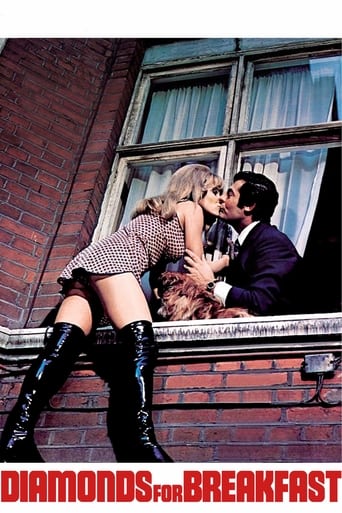
Swinging playboy Grand Duke Nicholas Goduno, a direct descendent of the Romanov family who were overthrown in the Russian Revolution of 1917, learns that his family's crown jewels will be exhibited at a London museum and plots to steal them. To this end, he gathers a crew of beautiful but dangerous women, led by Bridget Rafferty, to assist in his plot against Popov, the Soviet functionary in charge of the exhibit.
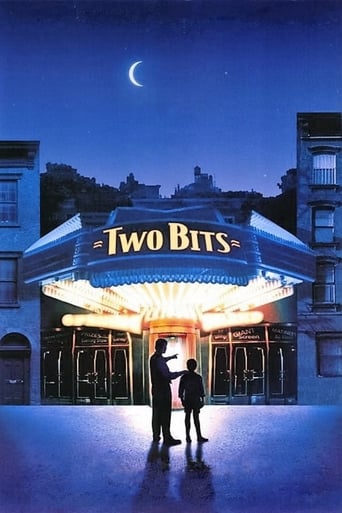
It's a hot summer day in 1933 in South Philly, where 12-year old Gennaro lives with his widowed mom and his ailing grandpa, who sits outside holding tight to his last quarter, which he's promised to Gennaro and which Gennaro would like to have to buy a ticket to the plush new movie theater. But grandpa's not ready to pass on the quarter or pass on to his final reward: he has some unfinished business with a woman from his past, and he enlists Gennaro to act as his emissary.
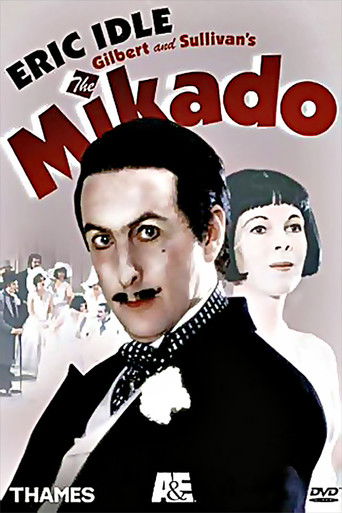
Jonathan Miller set his well-known production of The Mikado, staged for the English National Opera, in a British seaside resort of the 1920s. The result, complete with a chorus of gentlemen of Japan as cartoon-like British peers, emphatically underscores the Englishness of the satire. The occasional non sequiturs, like a bunch of gentry dressed for Ascot and singing in Japanese, are loonily fun, and no more absurd than the fantasyland Japan that Gilbert and Sullivan invented. The time frame, though, seems little more than an excuse for a smart black-and-white production design.