

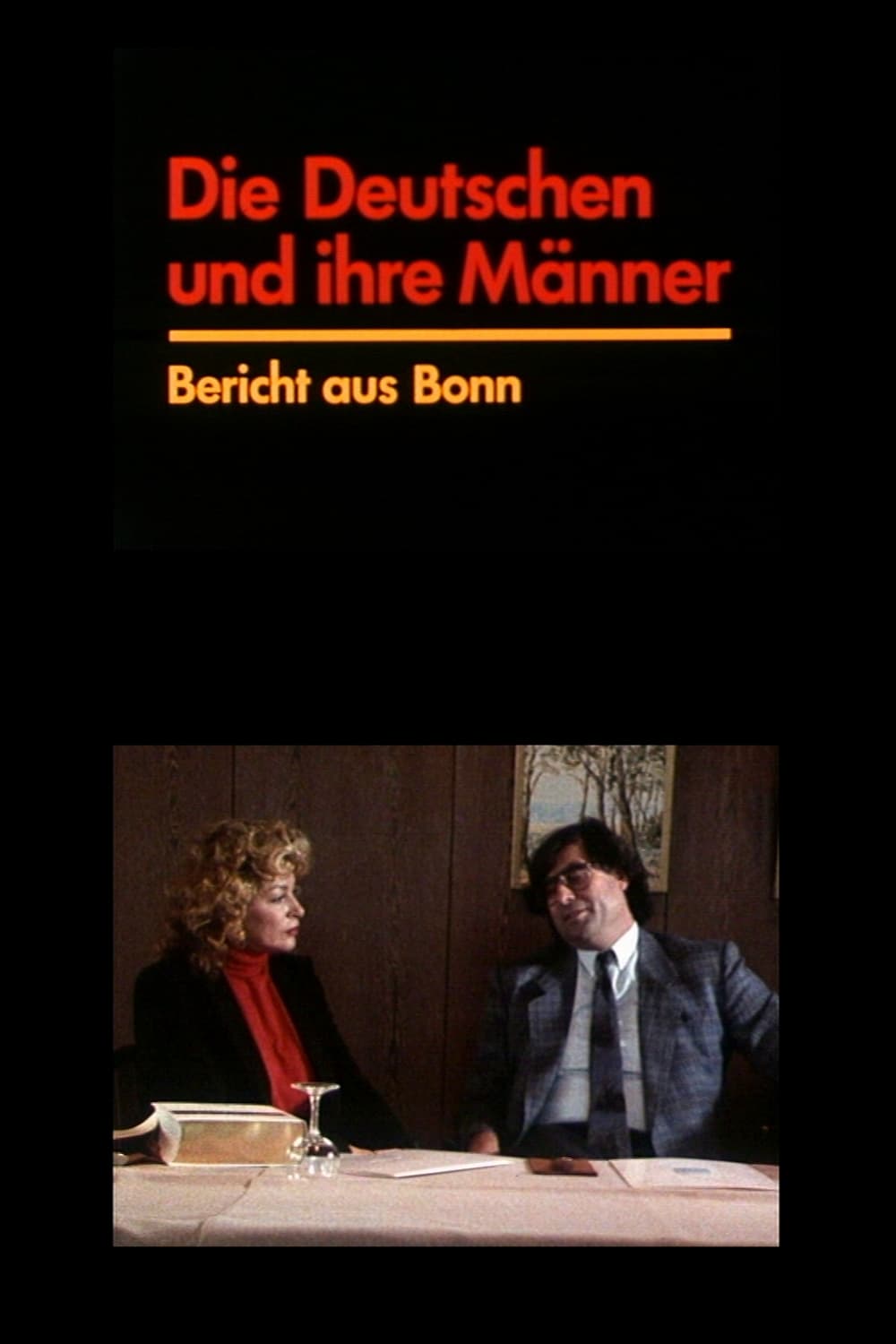
The Germans and Their Men
Documentary · Drama · Comedy
Overview
A documentary with fictious elements. Ms. Elisabeth (Lieschen) Müller from Austria comes to Bonn, Germany to find herself a man. During the search she investigates the connections between neckties, political power and prostitution, and tries to look for the influence the german feminist movement had on the men in Germany's capital.







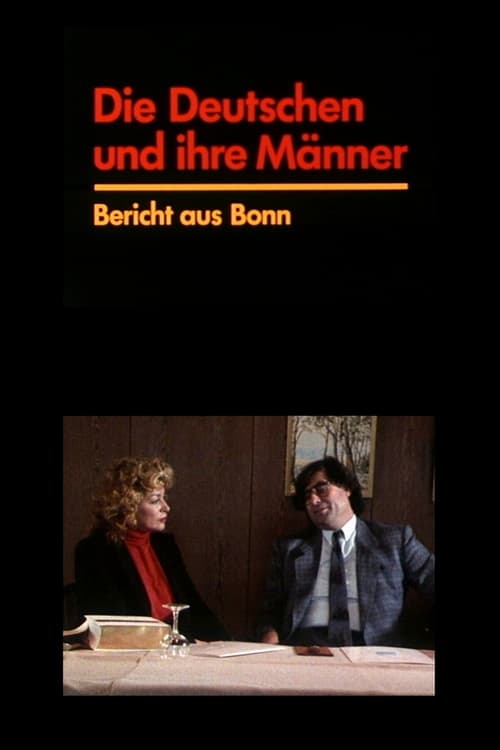
Renée Felden
Renée Felden
Elisabeth Müller
Renée Felden
Elisabeth Müller

Helke Sander
Helke Sander
Self - Interviewer
Helke Sander
Self - Interviewer
Luise F. Pusch
Luise F. Pusch
Self - Interviewer
Luise F. Pusch
Self - Interviewer

Helmut Kohl
Helmut Kohl
Self
Helmut Kohl
Self
Erich Mende
Erich Mende
Self
Erich Mende
Self

Gerhart Baum
Gerhart Baum
Self
Gerhart Baum
Self
Claudia von Alemann
Claudia von Alemann
Self
Claudia von Alemann
Self
Daniel Mehltretter
Daniel Mehltretter
Self
Daniel Mehltretter
Self
Brigitta Schork
Brigitta Schork
Self
Brigitta Schork
Self
Frauke Roth
Frauke Roth
Self
Frauke Roth
Self
Similar Movies
Based on the well-loved Australian classic by Mrs. Aeneas Gunn, this is the remarkable true story of Jeannie Gunn, a woman who fought to overcome sexual and racial prejudice amid the harsh beauties of the outback. Leaving her Melbourne existence for a new life on her husband's isolated ranch, Jeannie's feisty, good-natured attitude soon wins over the misogynistic stockmen, but she faces a much tougher challenge in trying to change their racist attitudes towards the indigenous aboriginal population.

The death of the minotavr talks about the concept of the heroine's journey. Suffering, horror and exhaustion lead the protagonist to a process of transformation, abyss and expiation, because only murdering to minotaur and everything he represents is possible to return to life. From the female gaze, it shows the depth of the emotional wounds caused by domestic violence; the same one that the surrealist Dora Maar lived and that ask why, as a society, instead of killing the minotaur, we blindly continue to send him women only to be devoured and ask them why they simply did not fight, why they did not try get out of the labyrinth.
Üftade has long been the object of men’s fury. Her only hope is to marry the young man she is in love with and escape her traumatic life in the home of her abusive stepfather. However, when her lover suddenly leaves her, Üftade's despair increases exponentially, and she begins to lose her mental balance due to the traumas of her childhood. Throughout the years, her suffering is witnessed by her nephew, who feels helpless to do anything about her condition.
Over many years, the director’s father filmed his family life almost obsessively. His daughter’s birth, his son’s first steps, and always Valérie, the young mother. An impressive fund of material which their now grown-up daughter Faustine appropriates to tell quite a different story: that of a woman who sees her role as a mother and its demands take away her freedom step by step.

The stories of three lesbian couples -- who live in the same house at different periods of time -- who are at a crossroads in their lives. In 1961, Edith loses her lover, Abby, to a stroke. Linda and Amy struggle with feminist issues in 1972. And, in 2000, Kal and Fran try to have a baby with the help of sperm donor.