

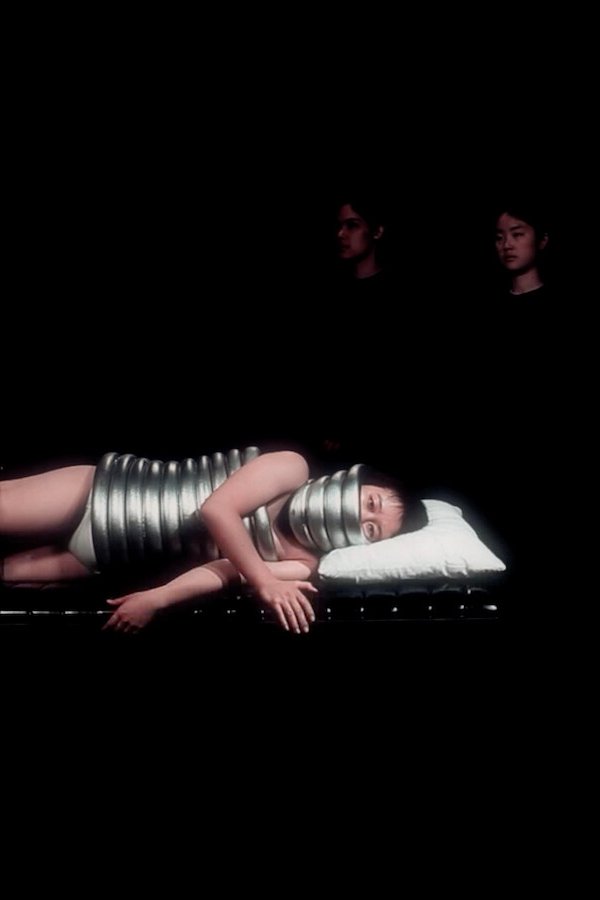
The Machinist's Lament
Overview
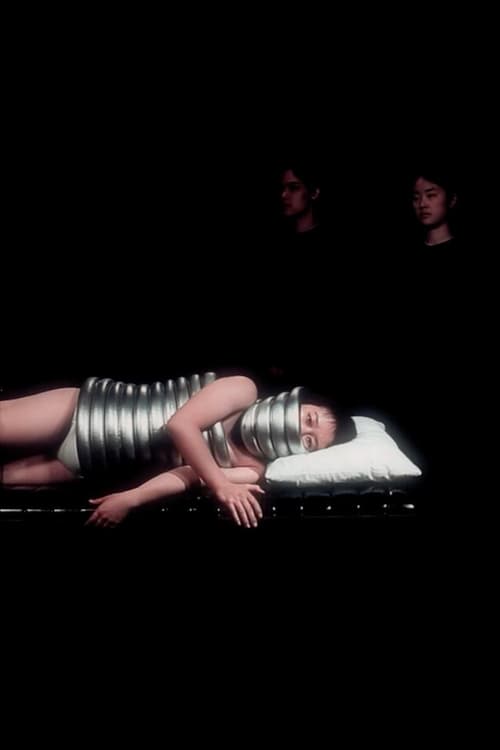
"In factories, everyone has their place. Western industrial production is a site of magical thinking: an old history that will never return, an idealized construction that never really was. It's impossible to know what the true costs would be if it were to return - societal, environmental, and psychological – and yet, entire political campaigns are built around this. This piece speculates on re-industrialization, and is a sequel to my 2013 video, Safety First (Bad, Don’t Touch, Mercy!). Like its prequel, it posits a non-specific future populated by female factory workers. The geometric aesthetics of power and the romance of industrial-era alienation, are paired with theoretical and fictional texts about alternate social economies. Video footage was shot in Ohio, animation and soundtrack by the artist. Voiceover text sources include Industrial supply catalogs, OSHA safety manuals, Monique Wittig’s Les Guerilleres, and Adorno’s Minima Moralia." -Taken from Jen Liu's Vimeo page.
Top Cast


Wang Si
Wang Si
CHOREOGRAPHER / MASK DANCER / TEST SUBJECT
Wang Si
CHOREOGRAPHER / MASK DANCER / TEST SUBJECT
Xu Mengchen
Xu Mengchen
Test Scientist
Xu Mengchen
Test Scientist
Joelle Lingat
Joelle Lingat
Test Chorus
Joelle Lingat
Test Chorus
Katherine Hamilton
Katherine Hamilton
Test Chorus
Katherine Hamilton
Test Chorus
Similar Movies
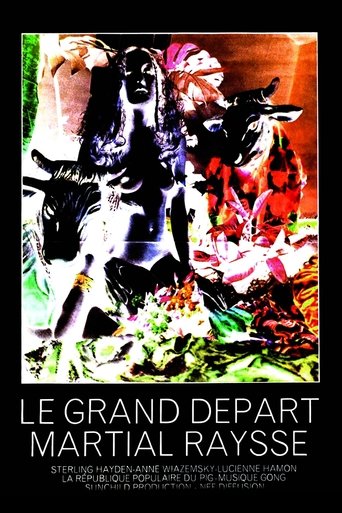
This is the only feature directed by the famed French painter and sculptor Martial Raysse. In keeping with the revolutionary spirit of the time, the movie has no plot to speak of and appears to have been largely made up on the spot. We follow the cat man into a bizarre fantasy universe presented in negative exposure that reverses color values (black is white and vice versa) and written words. The cat man steals a car and then picks up a young girl he promises to take to “Heaven.” Heaven turns out to be a country chateau inhabited by several more animal mask wearing weirdoes...

We were slightly feverish when we started working with a particular color process. At the development, we had obtained wonderful tones of blue and yellow as well as colored solarizations. Thus, this process was used for 15 days then the fever subsided. At that time they listened to the music of Gilbert and Lewis, and that is why they put a piece on the soundtrack.
The rare short film presents a curious dialogue between filmmaker Julio Bressane and actor Grande Otelo, where, in a mixture of decorated and improvised text, we discover a little manifesto to the Brazilian experimental cinema. Also called "Belair's last film," Chinese Viola reveals the first partnership between photographer Walter Carvalho and Bressane.