


Documentary · History
Overview
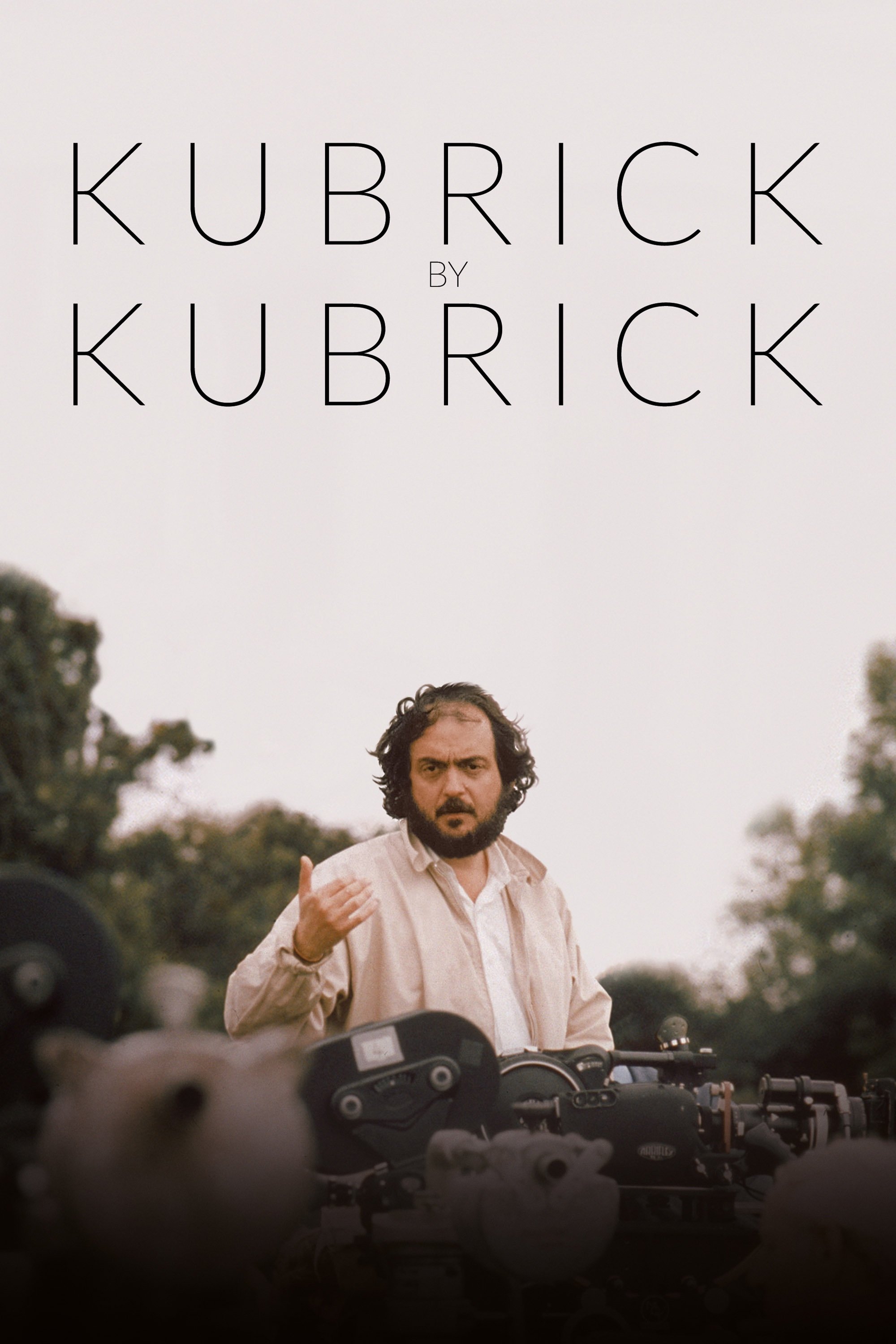
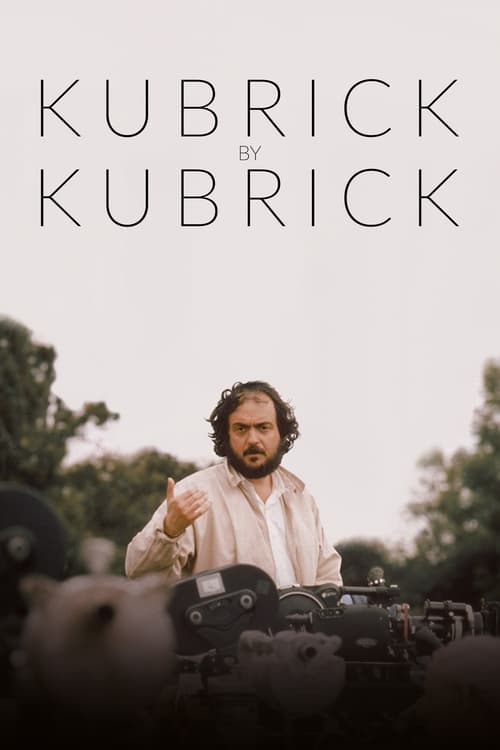
American filmmaker Stanley Kubrick (1928–1999), one of the greatest in history, but also one of the most reserved, gave few interviews throughout his long career, and none of them were filmed. A first-person journey through his life and work, based on a recorded conversation with French film critic Michel Climent.
Top Cast
Stanley Kubrick
Self (archive footage)

Kirk Douglas
Self (archive footage)
James Mason
Self (archive footage)

Christiane Kubrick
Self (archive footage)
Malcolm McDowell
Self (archive footage)
Michel Ciment
Self (archive footage)

Marisa Berenson
Self (archive footage)
Sterling Hayden
Self (archive footage)

Shelley Duvall
Self (archive footage)
Jack Nicholson
Self (archive footage)
Garrett Brown
Self (archive footage)
Ken Adam
Self (archive footage)





Stanley Kubrick
Stanley Kubrick
Self (archive footage)
Stanley Kubrick
Self (archive footage)
Kirk Douglas
Kirk Douglas
Self (archive footage)
Kirk Douglas
Self (archive footage)
James Mason
James Mason
Self (archive footage)
James Mason
Self (archive footage)
Christiane Kubrick
Christiane Kubrick
Self (archive footage)
Christiane Kubrick
Self (archive footage)
Malcolm McDowell
Malcolm McDowell
Self (archive footage)
Malcolm McDowell
Self (archive footage)
Michel Ciment
Michel Ciment
Self (archive footage)
Michel Ciment
Self (archive footage)
Marisa Berenson
Marisa Berenson
Self (archive footage)
Marisa Berenson
Self (archive footage)
Sterling Hayden
Sterling Hayden
Self (archive footage)
Sterling Hayden
Self (archive footage)
Shelley Duvall
Shelley Duvall
Self (archive footage)
Shelley Duvall
Self (archive footage)
Jack Nicholson
Jack Nicholson
Self (archive footage)
Jack Nicholson
Self (archive footage)
Similar Movies
A biographical film about the life of the great Russian scientist, inventor of rocket technology and the founder of theoretical astronautics — Konstantin Tsiolkovsky, the hard spiritual work of the thinker, overcoming the stagnation of the surrounding and dramatic events of his family life.
Don Emilio is a humble, 63-year-old man who lives in the Amazon rainforest, seven miles from the city of Iquitos, Peru. For all of his adult life he has worked as a curandero and vegetalista, a traditional healer. He estimates that in his career he has treated more than 2,500 clients. Through the camera lens of anthropologist Luis Eduardo Luna, Don Emilio tells us about his practice, his beliefs, his community, and his life. He shows us how he prepares ayahuasca and other herbal medicines. Finally, we see Don Emilio treat a man who has come to him for help, and hear from a poor woman who has brought her infant son for medical care.
In August of 1949, Life Magazine ran a banner headline that begged the question: "Jackson Pollock: Is he the greatest living painter in the United States?" The film is a look back into the life of an extraordinary man, a man who has fittingly been called "an artist dedicated to concealment, a celebrity who nobody knew." As he struggled with self-doubt, engaging in a lonely tug-of-war between needing to express himself and wanting to shut the world out, Pollock began a downward spiral.
In the mid-1960s, wealthy debutant Edie Sedgwick meets artist Andy Warhol. She joins Warhol's famous Factory and becomes his muse. Although she seems to have it all, Edie cannot have the love she craves from Andy, and she has an affair with a charismatic musician, who pushes her to seek independence from the artist and the milieu.
Everyone knows his name. The novels on the life and crimes of Hannibal Lecter are a worldwide phenomenon, and so are the movies and the TV show. Not mentionning the parodies, the plays... and even a wine named after him! He has become an icon of evil, but also of intelligence and refinement. Let's look back on the incredible Hannibal Lecter phenomenon.
New York in the 1920s. Max Perkins, a literary editor is the first to sign such subsequent literary greats as Ernest Hemingway and F. Scott Fitzgerald. When a sprawling, chaotic 1,000-page manuscript by an unknown writer falls into his hands, Perkins is convinced he has discovered a literary genius.
In 1967, experimental filmmaker Jorgen Leth created a striking short film, The Perfect Human, starring a man and women sitting in a box while a narrator poses questions about their relationship and humanity. Years later, Danish director Lars von Trier made a deal with Leth to remake his film five times, each under a different set of circumstances and with von Trier's strictly prescribed rules. As Leth completes each challenge, von Trier creates increasingly further elaborate stipulations.
For the first 50 years of film history, the newsreel was a fixture in American movie theaters. From 1911 to 1967, these shorts proved an influential source of information – and misinformation – for generations of American moviegoers. Television news and public affairs programs became a great improvement over the scanty information offered by the newsreels. This documentary offers insight into a medium which has disappeared.