



Hell Train
Crime · Drama
Overview
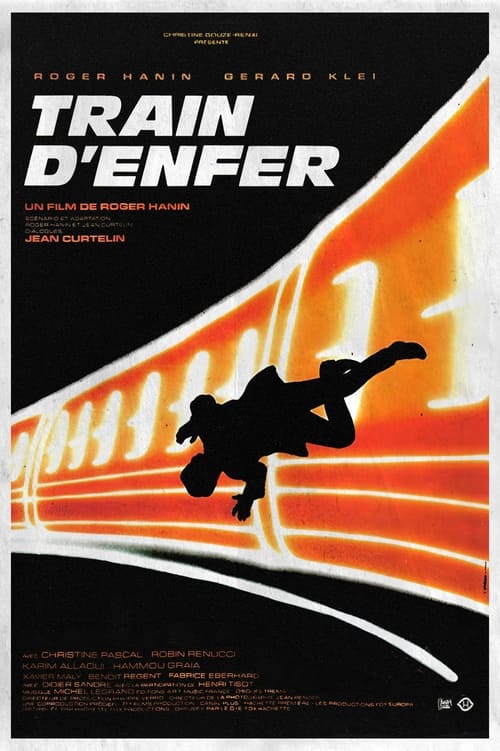
Hell Train is a French film based on a true story. One evening at a ball in a small town, a fight breaks out in an atmosphere tinged with racism. Three of the ringleaders end up at the police station. The next day, November 14, 1983, on the Bordeaux-Ventimiglia train, the three men who were candidates for enlistment in the Foreign Legion beat Habib Grimzi, a 26-year-old Algerian, before throwing him out of a window. A young woman, who witnessed the murder, alerted the police. The investigation begins in a climate of extreme tension. In the city, provocations and attacks are increasing...













Roger Hanin
Roger Hanin
Commissaire Couturier
Roger Hanin
Commissaire Couturier

Hammou Graïa
Hammou Graïa
Habib Grimzi
Hammou Graïa
Habib Grimzi

Christine Pascal
Christine Pascal
Isabelle
Christine Pascal
Isabelle

Karim Allaoui
Karim Allaoui
Karim
Karim Allaoui
Karim

Gérard Klein
Gérard Klein
Salviat
Gérard Klein
Salviat

Rabah Loucif
Rabah Loucif
Farid
Rabah Loucif
Farid

Sam Karmann
Sam Karmann
Duval
Sam Karmann
Duval

Robin Renucci
Robin Renucci
Muller
Robin Renucci
Muller
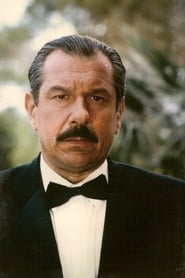
Jean-Claude de Goros
Jean-Claude de Goros
Agent grade
Jean-Claude de Goros
Agent grade

Xavier Maly
Xavier Maly
Legoff
Xavier Maly
Legoff
Similar Movies

The country that gave the world football has since delivered a painful pattern of loss. Why can’t England’s men win at their own game? With the worst track record for penalties in the world, Gareth Southgate knows he needs to open his mind and face up to the years of hurt, to take team and country back to the promised land.
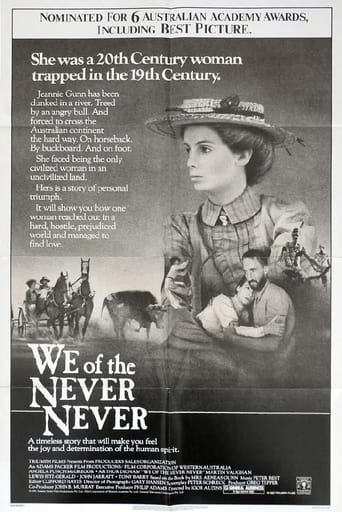
Based on the well-loved Australian classic by Mrs. Aeneas Gunn, this is the remarkable true story of Jeannie Gunn, a woman who fought to overcome sexual and racial prejudice amid the harsh beauties of the outback. Leaving her Melbourne existence for a new life on her husband's isolated ranch, Jeannie's feisty, good-natured attitude soon wins over the misogynistic stockmen, but she faces a much tougher challenge in trying to change their racist attitudes towards the indigenous aboriginal population.
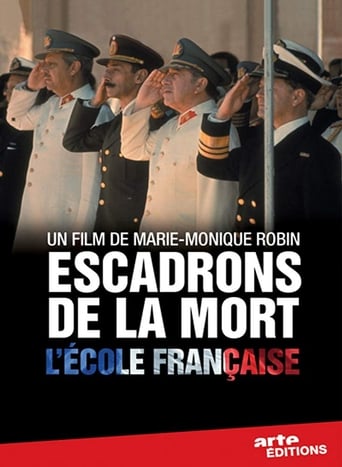
After the Battle of Algiers, France and its army exported, as true experts, anti-subversive methods to Latin America and the United States in the 1960s. After more than a year of investigation in Argentina , in Chile, Brazil, the United States and France, the director collected, sometimes under the cover of a hidden camera, recorded conversations, the exclusive testimonies of the main protagonists. From General Aussaresses to former Minister of the Armed Forces Pierre Messmer, including General Reynaldo Bignone (head of the military junta in Argentina from 1982 to 1984), General Albano Harguindéguy, General Manuel Contreras, and Generals John Johns and Carl Bernard, this investigation gives us a hidden reality of the country of Human Rights.

Andrei is the head of a gang of antisemitic skinheads clinging to the old communist ideals in post-Communist Moscow. When he learns that his long lost father actually is a Jewish bohemian living in Moscow, rather than an Afghanistan war hero, he traces him down in order to kill him. But the intriguing father and his "reactionary" lifstyle soon fascinates Andrei which leads to a clash with his gang.

Years after her Indian family was forced to flee their Uganda home, twentysomething Mina finds herself co-operating a motel in the faraway land of Mississippi. Her passionate romance with charming Black carpet cleaner Demetrius challenges the prejudices of their conservative families and exposes the rifts between the region's Indian and African-American communities.

Aibileen Clark is a middle-aged African-American maid who has spent her life raising white children and has recently lost her only son; Minny Jackson is an African-American maid who has often offended her employers despite her family's struggles with money and her desperate need for jobs; and Eugenia "Skeeter" Phelan is a young white woman who has recently moved back home after graduating college to find out her childhood maid has mysteriously disappeared. These three stories intertwine to explain how life in Jackson, Mississippi revolves around "the help"; yet they are always kept at a certain distance because of racial lines.