


We Are the Guinea Pigs
Documentary
Overview
Farmers and parents of young children, who live in the Harrisburg, Pa., area, discuss their fears of radioactive contamination from the Three Mile Island nuclear reactor accident in 1979. Scientists and physicians also expound on the lethal dangers of nuclear power and the risks in containment processes.
Top Cast
Joan Harvey
Self - Interviewer (voice)

Michio Kaku
Self - Professor of Physics, City University of New York
Clair Hoover Sr.
Self - Dairy Farmer, Middletown, Pa.
Walter Hooper
Self - Parent, Harrisburg, Pa.
Sheryl Hooper
Self - Parent, Harrisburg, Pa.
Gene Adams
Self - President, Local 1688, United Steelworkers of America
Tom Jenkins
Self - President, Harrisburg Coalition of Black Trade Unions
Suzanne Magda
Self - High School Teacher, Harrisburg, Pa.
Louise Hardison
Self - Goat Farmer, Middletown, Pa.
Susan Cassidy
Self - Parent, Halifax, Pa.
Kevin Cassidy
Self - Parent, Halifax, Pa.
Cathie Musser
Self - Mother, Elizabethtown, Pa.


Joan Harvey
Joan Harvey
Self - Interviewer (voice)
Joan Harvey
Self - Interviewer (voice)
Michio Kaku
Michio Kaku
Self - Professor of Physics, City University of New York
Michio Kaku
Self - Professor of Physics, City University of New York
Clair Hoover Sr.
Clair Hoover Sr.
Self - Dairy Farmer, Middletown, Pa.
Clair Hoover Sr.
Self - Dairy Farmer, Middletown, Pa.
Walter Hooper
Walter Hooper
Self - Parent, Harrisburg, Pa.
Walter Hooper
Self - Parent, Harrisburg, Pa.
Sheryl Hooper
Sheryl Hooper
Self - Parent, Harrisburg, Pa.
Sheryl Hooper
Self - Parent, Harrisburg, Pa.
Gene Adams
Gene Adams
Self - President, Local 1688, United Steelworkers of America
Gene Adams
Self - President, Local 1688, United Steelworkers of America
Tom Jenkins
Tom Jenkins
Self - President, Harrisburg Coalition of Black Trade Unions
Tom Jenkins
Self - President, Harrisburg Coalition of Black Trade Unions
Suzanne Magda
Suzanne Magda
Self - High School Teacher, Harrisburg, Pa.
Suzanne Magda
Self - High School Teacher, Harrisburg, Pa.
Louise Hardison
Louise Hardison
Self - Goat Farmer, Middletown, Pa.
Louise Hardison
Self - Goat Farmer, Middletown, Pa.
Susan Cassidy
Susan Cassidy
Self - Parent, Halifax, Pa.
Susan Cassidy
Self - Parent, Halifax, Pa.
Similar Movies
Gory real-life footage of blood and guts on the German Autobahn, drug smugglers getting blown away, a parachutist landing in a crocodile pit, torture and murder in El Salvador, a PCP addict getting stoned, a videotaped rape/murder, a car thief getting ripped apart by two junkyard dogs, and much more.

Taking its lead from French artists like Renoir and Monet, the American impressionist movement followed its own path which over a forty-year period reveals as much about America as a nation as it does about its art as a creative power-house. It’s a story closely tied to a love of gardens and a desire to preserve nature in a rapidly urbanizing nation. Travelling to studios, gardens and iconic locations throughout the United States, UK and France, this mesmerising film is a feast for the eyes. The Artist’s Garden: American Impressionism features the sell-out exhibition The Artist’s Garden: American Impressionism and the Garden Movement, 1887–1920 that began at the Pennsylvania Academy of the Fine Arts and ended at the Florence Griswold Museum, Old Lyme, Connecticut.
The US detonated 67 nuclear weapons over the Bikini Atoll in the Marshall Islands during the Cold War, the consequences of which still reverberate down four generations to today. "NUKED," is a timely new feature documentary focussing on the human victims of the nuclear arms race, tracing the displaced Bikinian's ongoing struggle for justice and survival even as climate change poses a new existential threat. Using carefully restored archival footage to resurrect contemporaneous islanders’ voices and juxtaposing these with the full, awesome fury of the nuclear detonations, NUKED starkly contrasts the official record with the lived experience of the Bikinians themselves, serving as an important counterpoint to this summer’s Oppenheimer.
This film deals straightforwardly with the consequences of a nuclear attack for the Canadian Prairies. The Prairies are singled out because of their proximity to huge stockpiles of intercontinental ballistic missiles located in North Dakota. Scenes include a visit to a missile base and to an emergency government bunker in Manitoba. A doctor, a farmer and a civil defence coordinator provide different perspectives on nuclear war. Although the film focuses on one region, it provides a model for people everywhere who would like to know more about their own situation but don't know what questions to ask.
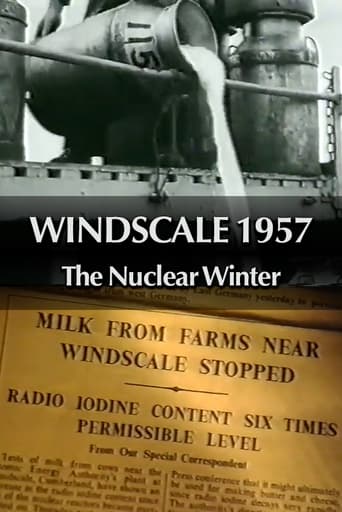
In October 1957, one of the Windscale nuclear reactors caught fire. It was the world's first nuclear accident, attributed to the rush to build atomic weapons. This programme highlights the mistakes leading to a nuclear event which, 40 years on, still takes second place only to Chernobyl.
With unprecedented access to the nuclear industry in France, Russia, and the United States, Nuclear Now explores the possibility for the global community to overcome the challenges of climate change and energy poverty to reach a brighter future through the power of nuclear energy. Beneath our feet, Uranium atoms in the Earth’s crust hold incredibly concentrated energy. Science unlocked this energy in the mid-20th century, first for bombs and then to power submarines. The United States led the effort to generate electricity from this new source. Yet in the mid-20th century as societies began the transition to nuclear power and away from fossil fuels, a long-term PR campaign to scare the public began, funded in part by coal and oil interests.
An initiative discusses a videotape in which a group of activists portrays themselves and their work against the "nuclear power mafia." After argumentatively and polemically confronting the economic and political power of the energy industry, the activists call for the shutdown of escalators to counteract people's electro-paralysis.
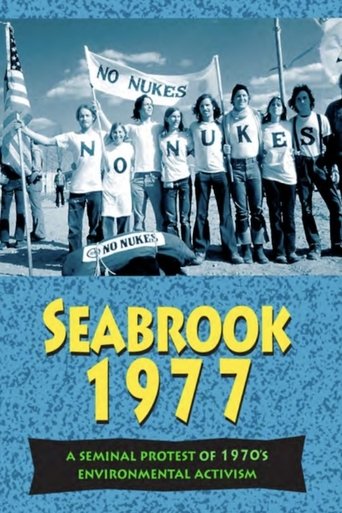
In April 1977, the small coastal town of Seabrook, New Hampshire became an international symbol in the battle over atomic energy. Concerned about the dangers of potential radioactive accidents, over 2,000 members of the Clamshell Alliance, a coalition of environmental groups, attempted to block construction of a nuclear power plant. 1,414 people were arrested in that civil disobedience protest and jailed en masse in National Guard armories for two weeks.

60 years ago, in the Algerian desert, an atomic bomb, equivalent to three or even four times Hiroshima, exploded. Named the “Blue Gerboise”, it was the first atomic bomb tested by France, and of hitherto unrivaled power. This 70 kiloton plutonium bomb was launched in the early morning, in the Reggane region, in southern Algeria, during the French colonial era. If this test allowed France to become the 4th nuclear power in the world, it had catastrophic repercussions. France had, at the time, certified that the radiation was well below the standard safety threshold. However, in 2013, declassified files revealed that the level of radioactivity had been much higher than announced, and had been recorded from West Africa to the south of Spain.
A portrait of Highlights Magazine following the creation of the cultural phenomenon's 70th Anniversary issue, from the first editorial meeting to its arrival in homes, and introducing the quirky people who passionately produce the monthly publication for "the world's most important people,"...children. Along the way, a rich and tragic history is revealed, the state of childhood, technology, and education is explored, and the future of print media is questioned.