

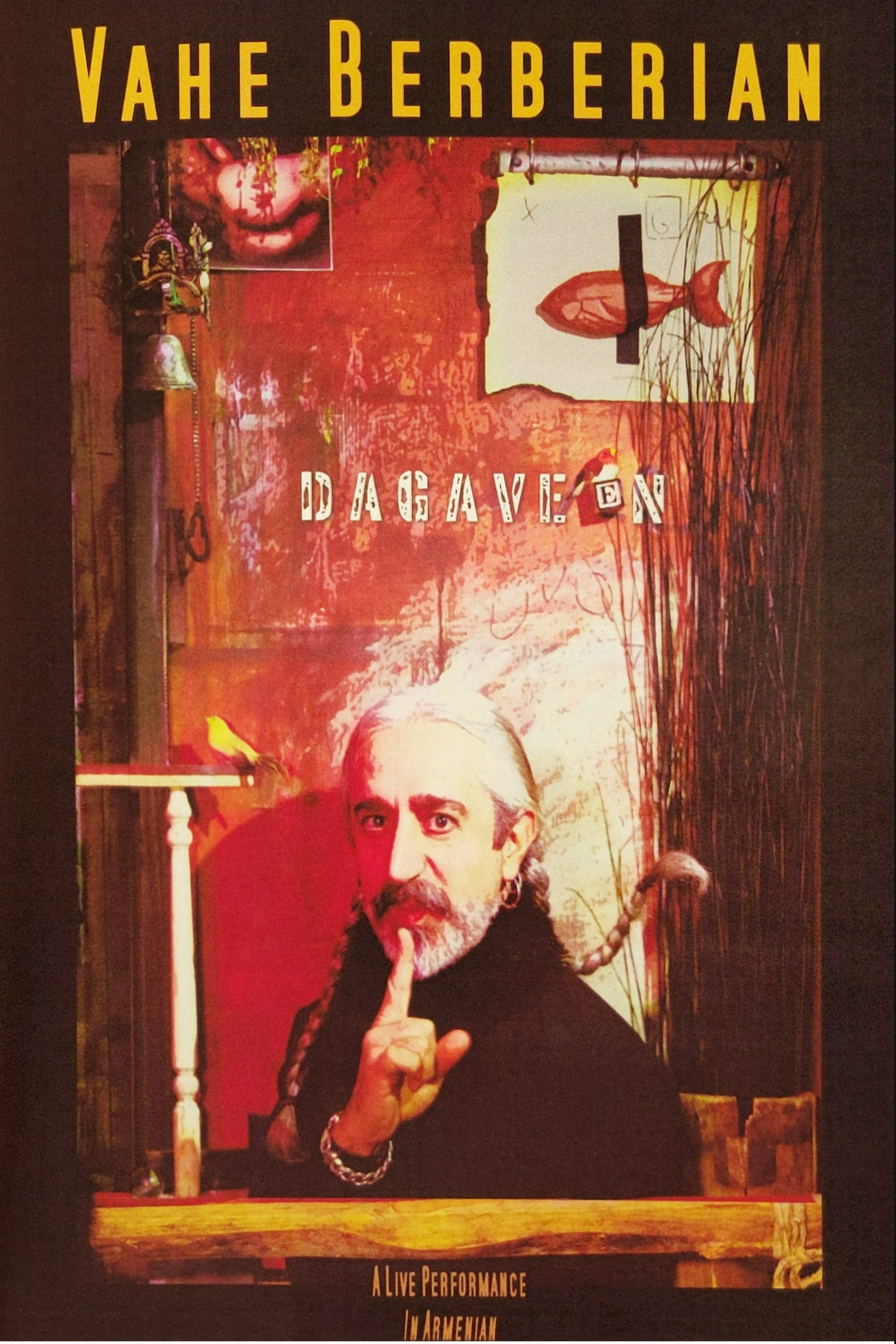
Dagaveen
Comedy
Overview
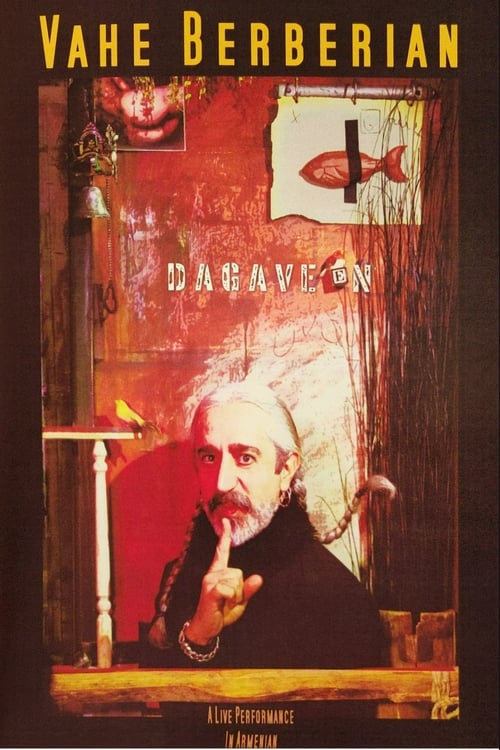
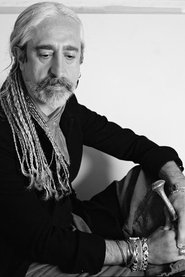
From the man who brought you "Yevaylen" and "Nayev" comes a hilarious peek into the Armenian condition and the necessity of laughter in life. Vahe’s third hysterically funny and engaging monologue tackles diverse topics such as family, marriage, surveys, concentrating on the Armenian American identity and finally the importance of laughter. Along with personal stories and meditations on the Armenian condition, Vahe tries to find an answer to the question “Are the Armenians truly happy, or – as an Irish newspaper claims – are we the saddest nation on the planet?” Vahe performed Dagaveen for over four months at Rococo in Pasadena, California, and has taken the show on the road to various cities in the U.S., Canada and Europe to packed audiences.
Top Cast


Vahé Berberian
Vahé Berberian
Vahé Berberian
Similar Movies
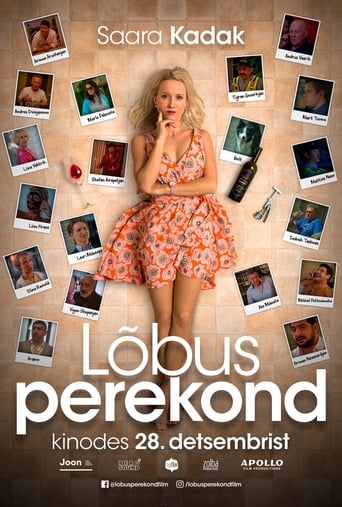
Artur is an Armenian guy who dreams about a career in filmmaking, but his grandfather wants him to take over the family wine business. When a bad review from an Estonian critic threatens to ruin the family business, Artur has to go to Tallinn to set things straight. There he meets the feisty Ingrid and things take an unexpected turn.
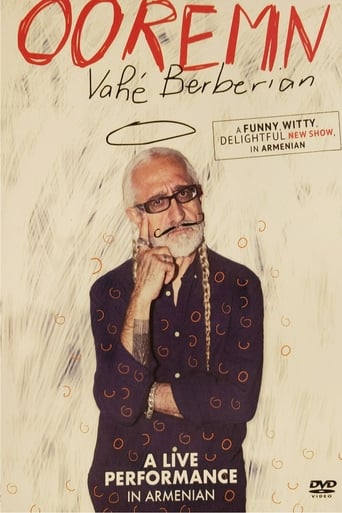
Ooremn, Berberian’s sixth and the latest monologue after Yevaylen, Nayev, Dagaveen, Sagayn and Yete is a witty and hilariously funny take on the many aspects that bring absurdity to our existence. The sharpest of Berberian’s monologues, Oormen takes jabs at all the facets of self deception in relation to love, marriage, religion, being Armenian and much more. Recorded live at the Glen Arden Club in Glendale, California.
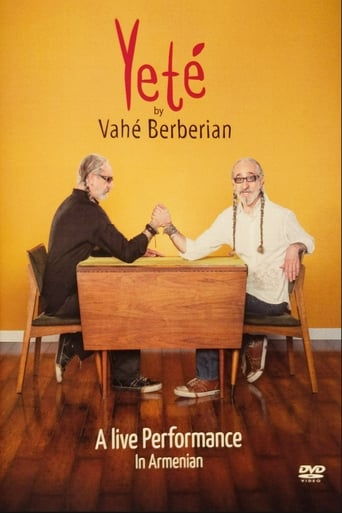
Berberian is a master of finding the comedy in personal, social, and cultural topics– in this case, he finds the humor in anxiety. Yete is Berberian’s fifth monologue after Yevayln, Nayev, Dagaveen, and Sagayn. Following 20 sold out shows in Los Angeles, his Sagayn tour took him to Yerevan, Beirut, Istanbul, Paris, Sydney, Cyprus, Geneva and a dozen other cities. Four years have passed since Sagayn and Berberian is thrilled about his new monologue. “I love writing, painting and directing, but being alone on that stage is a completely different sensation. I feel empowered, because there’s nothing more difficult than getting up on a stage and trying to make people laugh for an hour and a half. If you fail, you can’t blame anyone else for your failure and you’ll be crushed, but if you succeed, you feel exhilarated,” says Berberian.
Armenian Lullaby is based on the verse of my great-great-grandfather, Rafael Patkanian (1830-1892) about a mother who is singing a lullaby to her child, calling on different birds who are associated with various professions. The baby falls asleep only to the song of Falcon, who is singing battle songs, in other words, chooses the profession of a soldier. Traditionally it's considered a patriotic song: in the country that survived genocide, Soviet regime and recent war with Azerbaijan, sons' primary vocation is to become soldiers. This interpretation is dedicated to Mothers of all soldiers.
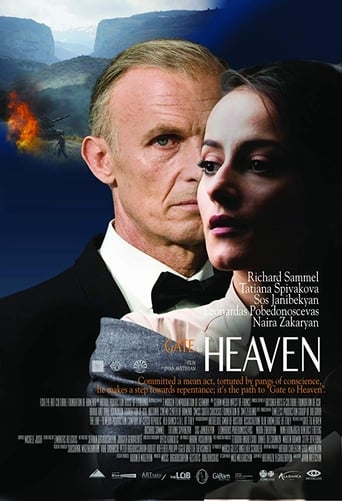
Robert Sternvall, a German journalist, returns to Artsakh in 2016 to cover the war which has been reignited after a 22-year ceasefire. In the result of his journalistic investigation, Robert meets Sophia, a young opera singer, who happens to be the daughter of missing photojournalist Edgar Martirosyan, whom Robert abandoned in captivity during the fall of the village of Talish in 1992. Robert and Sophia’s frequent rendezvouses ignite a passionate romance...
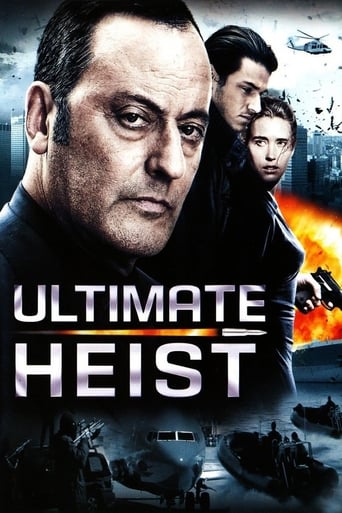
The Malakian clan, a family of ruthless gangsters, controls the underworld of Southern France. At its head, the violent godfather Milo Malakian rules his world with an iron fist. His son and heir, Anton, dreams of breaking free and making his own choices. But the gang's inner circle is engraved in blood. To escape, not only does Anton have to counter his own destiny, but also the man who has sworn to bring his father down.

The life of the revered 18th-century Armenian poet and musician Sayat-Nova. Portraying events in the life of the artist from childhood up to his death, the movie addresses in particular his relationships with women, including his muse. The production tells Sayat-Nova's dramatic story by using both his poems and largely still camerawork, creating a work hailed as revolutionary by Mikhail Vartanov.